Friends

How have I not written about this before? I practically have it memorized. But let’s be honest , the first season (or 2) of Friends was pretty bad. But clearly it resonated way, way back in 1994 despite all those atrocious hairstyles and the need to shove each character into a stereotyped package. (Ross is a nerd, Rachel is spoiled, Phoebe’s a flake, Joey is a womanizer, etc.) It took until season 4 to round it out to “married a lesbian, left a man at the altar, fell in love with a gay ice dancer, threw a girl’s wooden leg in a fire, lives in a box.” 

Eventually, each Friend become a well-rounded human being who we watched grow over a decade, but it was like the writers didn’t give us viewers credit for having the patience to get to know them. Who knows, maybe we wouldn’t have.

This pilot is so pilot-y. We are bombarded with back story, character quirks, and strained jokes. Everything is over the top: the hairstyles, the coffee cups, Joey’s accent. On the off chance that you haven’t seen it, the plot is that Ross (David Schwimmer) has just split from his wife, just as Monica’s (Courteney Cox) old high school friend Rachel (Jennifer Aniston) leaves her husband-to-be at the altar and runs off to Manhattan to get away from her suffocating suburban existence. Ross has had a thing for Rachel since puberty, and now the possibility of a relationship finally exists.

One thing we can observe from the pilot of Friends is that, although it’s purported to be an ensemble show, it’s really about Ross and Rachel. Always was, always will be. In this opening episode the other four are basically just comic relief. The jokes were pretty bad, too. Even Chandler is unfunny, for Chandler (Matthew Perry). The only part that makes me laugh out loud is when Rachel is on the phone to her father. She is all disheveled, still in her wedding dress, pleading with him for understanding. To paraphrase, she describes how everyone has always told her she’s a shoe and today she’s realized she’s a hat. There’s a pause, then: “No I don’t want you to buy me a hat. It’s a metaphor, Daddy!” So although she’s an ingénue, she’s wacky, and a solid comic actress (who gets funnier each season). You may have heard the story about how she originally auditioned to play Monica.

If for some reason you haven’t seen this, just watch one of the 500 channels that carry the show in syndication and you’re bound to catch it.

Rubicon

Rubicon, a new show on AMC has a cool title (a metaphor for a point of no return) and a cool tag line: “Not every conspiracy is a theory.” So I decided to see what they mean by that.

Things start off simply. A quote appears: “An invisible empire has been set up above the forms of democracy.” We’re asked to guess who said it, Ted Kacyzinski or Woodrow Wilson. Naturally the answer is the less obvious, and by extension, the more eerie, Wilson.

Next we see some kids running happily through the show. They’re shot from above, lending a starkness that says their happiness will be short-lived. A woman, we assume their mother (Miranda Richardson), joins in their game, while inside the stately manse, a man (their father? grandfather?) reads his morning newspaper. A four-leaf clover is pressed into the paper, giving him pause. He proceeds upstairs and blows his brains out.

The opening credits speak to anyone who is a fan of Dan Brown and the like. Numbers, symbols, words, and images are circled or connected, hinting at sinister hidden messages all around us. One of the images is of a freeway off/on-ramp “clover,” and immediately in the next scene people are sorting out a crossword clue about a four-leaf clover. So we’ve got a theme that is none too subtle.

Our protagonist is Will Travers (James Badge Dale), a moody academic. He is apathetic when a female co-worker reminds him it’s his birthday and offers to buy lunch. Will attends a staff meeting, which serves as an introduction to the other characters. Tanya, the most junior staff member, is chastised by Grant for forgetting the doughnuts. Grant is a jerk. Miles is a bearded version of Will. David, their boss (Peter Gerety), looks the part of esteemed university professor, complete with elbow patches. He gives each member of the team a cryptic assignment, starting with observing missile silos. It’s not entirely clear what this workplace is, or what the characters do. But that’s okay, because the real story seems to be Will’s obsession with a particular set of crossword puzzles.

Will brings the puzzles to David, for the elder gentleman’s expertise. There seems to be a pattern in the puzzles hinting at a mysterious fourth branch of government, the branches being symbolized by—you guessed it—clover leaves. It seems like a huge stretch to the viewer, but we have to buy that these guys are smart enough to see meaning where we laypeople would not. David gives him the brush off, only to pounce on the puzzles himself once Will is out the door. He in turn shows them to his boss, Kale (Arliss Howard).

A big reveal comes at lunchtime when Tanya asks Miles why Will walks around looking like his cat died. Miles replies, sanctimoniously, “Try wife and child. Try 9-11.” It’s a little ham-handed but adds an important layer to Will’s character. Another detail, this one handled with welcome subtlety is the revelation that David is Will’s father-in-law. “They’re gone,” he says. “It’s just something both of us have to accept.”

[SPOILER ALERT] David, we find is carrying the burden of knowing whatever Big Event is about to happen that will set off the storyline for the series. He warns Will to leave town, and then is killed in a train accident. Will, like any good conspiracy theorist, doesn’t accept that it was an accident. He reluctantly takes David’s job when it is rather insistently offered.

He enlists the help of a colleague, introducing us to another key character, Ed. Ed has that whole wise old hermit thing going on, so we figure he’s going to know some things.

So will the show be about solving David’s murder? Or about the crossword puzzle plot? Or both? And what of the man who killed himself in the opening? The pilot, though it has an arc, doesn’t really have an ending; and that’s a good thing. We’re in for some mellow-drama, to be sure, but it’s got the necessary hook.

WKRP in Cincinnati

You might remember this sitcom from 1978. If you’ve ever lived in Cincinnati, you probably remember it better than most. The pilot launches straight into an opening sequence, with a person’s hand adjusting a car radio, searching around before landing on what will be the show’s theme. We’re led to understand that the city itself will play a part. There are lots of shots of iconic Cincinnati landmarks: Fountain Square, skywalks, the Suspension Bridge, Riverfront Coliseum, Riverfront Stadium… there’s even a billboard for Frisch’s Big Boy in the background of one shot. Interestingly, only two actors’ names are given during this sequence (Gary Sandy and Gordon Jump).

The story is motivated by the introduction of Andy Travis (Gary Sandy), the new program manager at a lagging, independent radio station. Starting with what we can surmise is a typical morning, we see the buxom receptionist (Loni Anderson) water the plants as sleazy salesman Herb (Frank Bonner) hits on her. Andy arrives, with a hint of a southwest accent, wearing a cowboy hat, and we know he’s different. We soon discover that he’s smart and articulate, traits which further separate him from the Midwestern hodgepodge.

The characters go on entering, one by one, each full of warnings for Andy about the high turnover of program managers at WKRP. Les Nesman (Richard Sanders) is the uber-dorky newsman. Arthur Carlson (Gordon Jump), the boss, cares more for fishing—in his office, no less—than actually working. Johnny (Howard Hesseman) makes the grandest entrance as a confused, sleep-deprived, cool guy (today we’d call him a hipster) who has gone by a different moniker in every city where he’s worked. Drug use is implied though not spelled out. Bailey Quarters (Jan Smithers) is the mousy office assistant, who may have potential to do bigger things. If anyone is going to hook up, it’s going to be Bailey and Andy.

The station desperately needs an update in format to survive, despite the wishes of its owner, Carlson’s conservative mother. Andy boldly changes the format, in an exciting and funny scene with Johnny. The chronically tired DJ comes alive with the switch over from elevator music to contemporary rock-and-roll. We enjoy his triumph as he rocks out, rechristening himself Johnny Fever.

As in many shows of this era, the laugh track is used to exhaustion. The thing is, the show’s a riot on its own. The jokes are pretty lowbrow, ranging from sight gags like Carlson’s casting a fishing line over his desk, to funny song titles (How Can I Miss You if You Won’t Go Away?), to plain old stupidity.

Today, there’s the added humor of, well, the 70s. Records! Eight-tracks! And scarily, the clothes don’t look that out of style. The real humor, though, comes from the characters. In some ways, WKRP is a predecessor to The Office, following people who manage to get through their workday by doing next to nothing. If computer solitaire had been invented in 1978, you can bet these guys would be playing it. Andy is Jim. Carlson in Michael. Bailey is Pam. Johnny is a male Meredith. Les is Dwight. No such comparison exists for Venus Flytrap, the charismatic DJ, who looks for all the world like a pimp, introduced at the very end as the episode’s final button. Les calls him a Negro – can you still say that on TV?

The Donna Reed Show

Remember how, for a while in the 80s, the 50s were super cool? I guess it was brought about by Back to the Future, possibly Grease 2, and most definitely Nick at Nite. I was all about that trend, dressing as a “50s girl” for Halloween complete with saddle shoes, and I wanted to be Mary (Shelly Fabares) on The Donna Reed Show.

Some pilot traditions remain unchanged for decades. This one opens with the getting-ready- in-the-morning sequence. The teen daughter, Mary, and younger brother, Jeff, are complaining to their mother over breakfast about how little they see of their pediatrician father. The tone seems pretty naturalistic. In fact, the dialogue is a little rambly by today’s standards. But I can imagine a viewer in the 1950s thinking “Gee whiz, this is a regular family like mine.”

Mr. (Dr.) Donna Reed practices medicine out of his home. In this episode, Donna (whose last name in the show is Stone) wants Dr. Stone’s colleague, Bo, to cover his practice for the weekend so that the family can take a much-needed holiday. Bo and Donna are a little flirty, and if this were on the air today, we would swear they were destined for a hook-up.

Dr. Stone has to cancel the vacation so he can testify for a friend in traffic court. Right away, Donna is off to see the friend in question and solve that one. A pattern is staring to form; Donna is a meddling wife. The men around her tend to fall for her charms. Next, the joke is on Donna when it turns out she is supposed to host a luncheon over the weekend in question, once again putting the family plans in jeopardy. Her husband forgot to give her a phone message, a deed she punishes by making him fix his own dinner. They solve that conundrum, only to run into another one in the form of a sick patient. Donna meddles some more, and that’s solved. Finally, their weekend is cancelled once and for all when Jeff comes down with Chicken Pox. The moral is that all the meddling in the world can’t stop the everyday challenges life throws at parents.

The pilot gives broad brushstrokes of the family and their lifestyle. Through it all, Donna is never wrong, never admits a mistake. It doesn’t look as if the problems of the Stone family are going to be serious ones. While the show is filled with corny jokes and laugh tracks, it’s not all that funny, either. The main characters are so sweet and charming, we can anticipate that the conflicts will arise from other families doing bad stuff. Really, the Stones aren’t much different from the Huxtables or the Seavers. Donna Reed wasn’t breaking new ground at the time, either. Leave it to Beaver and several other family sitcoms were already on the air. That being said, there is obviously something timeless about this show, or we wouldn’t still be watching it.

Firefly

I have been putting off writing this entry for a long time, which is in no way a reflection on my opinion of the show. It’s more like I’m afraid I can’t do Firefly justice, especially considering the rapturous devotion of its fans. If you’re a loyal browncoat you probably know the pilot backwards and forwards. If you’re not, it may be that you blinked and missed it before Fox canceled it. (I won’t rehash the whole fan outcry/Serenity story.)

It’s not like Joss Whedon invented a new genre here; we’ve seen space anti-heroes before. And I, for one, was not a Whedon fan prior to this, so I wasn’t like “Hooray, a new show from the creator of Buffy.” The show just hit all the right notes with cool setting, fascinating characters, great dialogue, and a healthy dose of dark humor.

The show opens with an in-the-trenches war scene, which could be out of any number of movies. The clue that something is different is that the aircraft flying overhead look like nothing we’ve seen before. A man (Mal, played by Nathan Fillion) and a woman (Zoe, played by Gina Torres) are leading a shell-shocked contingent against an attack. Their language is slightly heightened; in fact, the whole scene is a bit confusing the first time around. All we really need to know is that the troops are forced to lay down arms when their back-up abandons them. The look on Mal’s face and the music playing tell us all we need.

Music is huge in this pilot. The score is a twangy, gritty collection of music reminiscent of old westerns. Its juxtaposition with high-tech space travel gives Firefly its own unique tone.

We jump ahead six years from the battle scene to a spacewalk by a crew of three. The striking quality of this scene is that it is very quiet—opposite the previous scene—with sound seemingly sucked up by the vastness of space. Meanwhile the pilot of the ship, who seems to be keeping an eye on the mission, is actually playing with dinosaur toys on his console. (I may have to add this to my list of best character introductions.) “Curse your sudden but inevitable betrayal,” cries the Stegosaurus to the Tyrannosaurus.

From there, we start to meet the rest of the crew. There is the ever-cheerful mechanic, Kaylee (Jewel Staite). There is a “companion,” or prostitute, Inara (Morena Baccarin). And there’s Jayne (super-dreamy Adam Baldwin), all-around tough guy. The pilot is Wash (Alan Tudyk), Zoe’s husband.

The crew has to quickly shut down the ship’s power as they pass an enemy, and we find out a few details. The ship our crew flies is an out-of-date model called a Firefly. Its name is Serenity, and it becomes a character unto itself over the course of the series. The ship and its crew are, for lack of a better term, off the grid. They’re clearly hiding from something.

Captain Mal and company land on a dusty planet and pick up some new passengers, a preacher, a doctor, and a third man. A lot of characters and a lot of information are introduced very fast. The show demands your attention and is worth watching over and over, because so much happens. The dialogue is layered with character revelations and plenty of wit. The basics are, they’re short on cash, carrying stolen cargo, and on their way to seek help from a woman who once shot Mal. This is not going to go smoothly.

If you haven’t seen this, watch and enjoy the twists and turns for yourself. No one is who they seem. They all have secrets. Some violence beaks out now and again. And the doctor is transporting some very unusual cargo. Our protagonist, Mal, seems cool on the surface, even when angry, but clearly that war experience—and maybe a lot of other pain—is seething beneath the surface. Oh, and there are enemies out there in space called Reavers, to whom the crew’s reaction is bone-chilling. Just watch it.

Pilot Types

Pilots tend to fit into one or more of a handful of categories. I don’t know if writers consciously choose among these when they set out to write pilots, or if it just happens organically. So this is a list of my own creation, which I will add to over the next several days. Let me know if you can think of others to add.

1. First Day on the Job/First Day of School

This is a super easy way for a writer to introduce a bunch of characters, since the protagonist is meeting them for the first time, too. Usually there will be a mentor character that tells the protagonist things that we, the audience, need to know about the setting and characters. The mentor will say a lot of stuff like “Look out for Bob, he’ll steal your lunch.” If done well it won’t sound contrived.

Examples: Scrubs, Beverly Hills 90210, Neighbors from Hell, Community, Privileged, Ugly Betty, Sit Down Shut Up, WKRP in Cincinnati

2. New Kid in Town

This can work in tandem with #1, a close relative. The character(s) might just be arriving in town and meeting the neighbors, sans jobs or school. It is especially handy for spin-offs; we already know the character but need to learn about a new location.

Examples: Buffy the Vampire Slayer, Angel, The Cleveland Show, Haven, Make it or Break It, The Riches, Joey

3. Happy Birthday, Dear Protagonist

This could actually be any significant date: the protagonist’s birthday, the anniversary of a life-changing event, or the day someone moves into a new life stage, like getting married or divorced.

Examples: Reaper, Chuck, The Brady Bunch

 4. Prodigal Son/Daughter or You Can’t Go Home Again

In this one, a protagonist who has been away returns. Usually that person has changed in some significant way, or else the place that person is from has changed.

Examples: Bones*, Jericho, Studio 60 on the Sunset Strip, Free Ride

*Bones doesn’t really fit any category I can identify. That’s why I love it. Read this post to see what I mean.

5. R.I.P. Main Character

This is most fun when the person who has died will go on being a character on the show. Otherwise it becomes a how-to-cope-with-loss story.

Examples: Dead Like Me, Pushing Daisies, Brothers and Sisters

 5. Howdy, Neighbor

The protagonist(s) get a new neighbor, for better or worse. This could also be a new roommate or officemate.

Examples: Big Bang Theory, Three’s Company

6. The First Day of the Rest of Your Life

This one is my favorite. It gives a reason for the show to exist; that the protagonist is starting a new journey, but in a totally natural way. The pilot isn’t forced into a birthday or first day of work, it grows out of the nature of a character. (Often, episode 2 is the First Day on the Job). This can happen in two ways; either the protagonist makes a conscious decision to change his/her ways, or the universe decides for him/her. Maybe the person almost dies and decides to lead a better life. Or maybe wax figurines start talking to her. This often works along with the Significant Day, but is even better when it doesn’t. A popular spin on this recently has been people having kids appear in their lives that they didn’t know they had.

Examples: My Name is Earl, Futurama, Sex and the City, Wonderfalls, Heroes, How I Met Your Mother, Friends, Chuck, Being Erica, The Riches, Glee, Life Unexpected, John Doe, Dollhouse

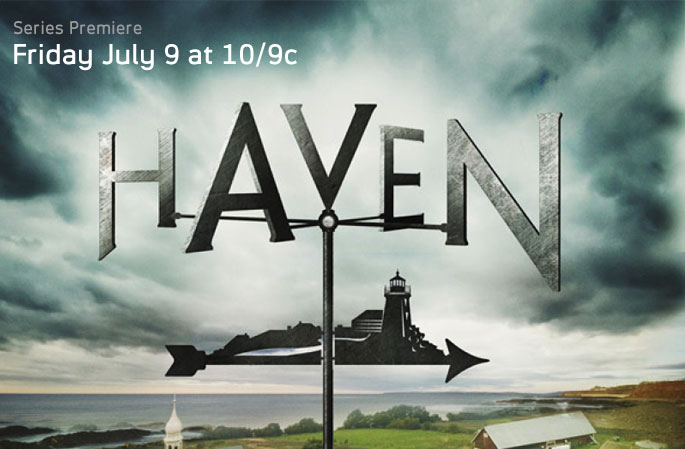
Haven

Some pilots don’t have to work very hard. Even if you don’t know that Haven, a new show on SyFy, is based on a book by Stephen King, you’ll likely figure it out pretty fast. A lone cop is sent to a small Maine town filled with colorful characters where something of a vaguely sinister super-nature is going on. Other things we already know: FBI agents and local police officers don’t get along. Female cops work super hard and don’t have time for dating. People who live on boats are odd.

So, putting all of those givens into place, let’s get to know Agent Audrey Parker (Emily Rose). A quick couple of aerial shots show us she lives in a big city. Her boss shows up with an assignment, pausing to comment on a teen vampire novel on her table. “FBI is nonfiction work,” he pontificates. Huh?

Agent Parker gets to Haven, a small harbor town with exceedingly strange weather. You know when a town on TV has a quaint, cozy-sounding name like Haven, bad things are going to happen there. (Point Pleasant, Wisteria Lane.)  She’s driving along when a chasm opens in the road in front of her, forcing her through a guardrail. We never get an explanation for that. It’s funny though, when her car is hanging half-way off a cliff, that she takes the time to turn off the radio so she doesn’t have to die to an annoying 70s song. Her first confrontation with local cop—and soon-to-be love interest, no doubt—is likewise pretty amusing.

The show succeeds with witty dialogue more so than in other areas. There are some truly funny moments. The banter between the cop, Nathan, and Audrey is delivered with the requisite cynicism. The jokes kind of pop up out of nowhere, making them the one element of the unexpected in a show that is supposed to be suspenseful.

The reason Audrey is in Haven is forgettable in light of everything that ends up happening, but she’s supposed to locate an escaped convict. The problem is, he’s already dead. Like a good television FBI agent in heels, she doesn’t let that deter her. She starts nosing around the town, meeting its various denizens.

The stand-out for creep of the year is a handyman named Conrad with “personal space issues.” Whenever this guy gets pissed off there’s bad weather. You would think every school kid in town would be vandalizing his house hoping for a snow day. Spoiler alter. It turns out, though, that it’s not really him that’s affecting the weather. It’s the pretty antique store owner who he hangs around. Audrey wraps this one up nice and neat, so possibly each episode will revolve around a different resident with a bizarre power.

The A plot is that Audrey is an orphan (paging Temperance Brennan) and there is an old photo in the town newspaper of a woman that looks just like her. A quick scene of Audrey’s boss at the FBI having a cryptic phone conversation reveals that she was sent to Haven for a reason we’ve yet to discover.

This pilot is so pilot-y it’s just boring. It could have had a later point of attack and possibly been much more interesting. I for one, probably won’t continue watching to see what becomes of Audrey.

Top 5 Character Introductions in Pilots

A pilot episode has a lot to accomplish. It has to introduce a time, a place, characters, and relationships, as well as the tone and style of the show. Every once in a while, a pilot really nails a character introduction. In a moment, an audience meets a character and just knows that character. It might be shocking, it might be funny, but it’s memorable. I am sure there are many, many examples of which I am not even aware, but here are my favorites, in no particular order. If you have other suggestions, I would love to hear them!

1. Rachel Green (Jennifer Aniston) on Friends

At this point in the pilot, we’ve had a little while to get to know the other 5 members of the Central Perk gang. You don’t need me to review them. Ross is on the couch in the coffee house, lamenting the dissolution of his marriage. He whines, “I just want to be married,” and in walks this disheveled, rain-soaked bride complete with full-length veil. (Chandler counters, “And I just want a million dollars.”) Rachel hasn’t said a word, but her entry makes its own statement. You see a bride out of context like that and you know you’re in for a story.

2. The Devil (Ray Wise) on Reaper

Sam has already seen some strange sh*t on this, his 21st birthday. But as he’s cruising home from work in his parents’ station wagon, the smarmiest looking guy you’ve ever seen appears out of thin air in the back seat. “Is this a car-jacking,” Sam cries. “For this?” comes the response, “If it was an Escalade maybe.” After a few seconds of this fruitless back-and-forth the stranger reveals, “I’m not a carjacker. I’m the Devil.” Sam wrecks the car, and the Devil vanishes as quickly as he appeared. And that’s the kind of crap Sam is going to put up with for the next 2 seasons. This pilot gets better every time I watch it.

3. Sarah Walker (Yvonne Strahovski) on Chuck

What is cooler than a ninja? A ninja who turns out to be a super hot chick. In the episode, we have already met Sarah when she comes into the Buy More with a broken cell phone, but her true colors are unveiled when she shows up to steal Chuck’s computer. Each and every character on this show is awesome. But nobody makes an entrance quite like Sarah.

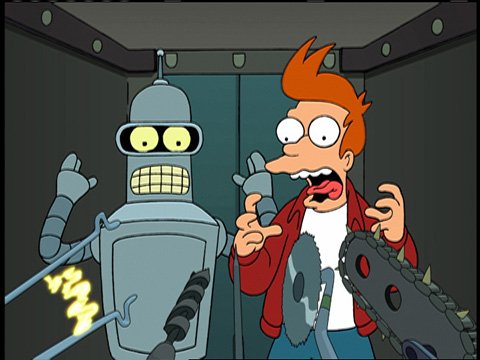
4. Bender Rodriguez (John Di Maggio) on Futurama

I don’t what is the best part of this character introduction; that there is such a thing as a suicide booth, that there is a robot in line to use the suicide booth, or that said robot wants to rip off the suicide booth with a coin on a string. On top of that, the viewer is in the same place as the protagonist, Fry: fresh out of the year 1999, with this whole new world unfolding more and more strangely by the minute. It’s funny, it’s bizarre, and it perfectly captures the tone of the show overall.

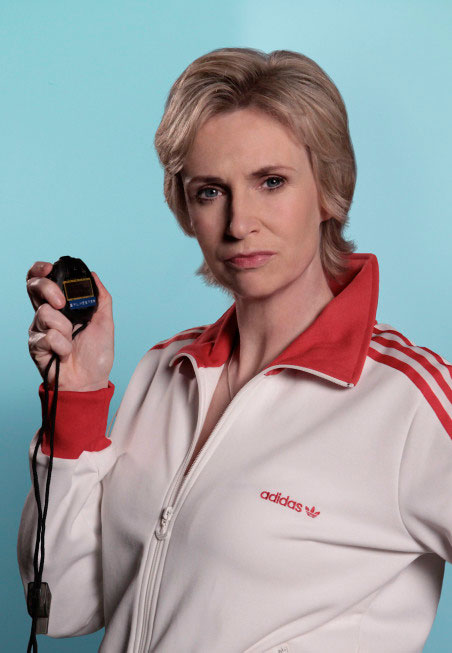
5. Sue Sylvester (Jane Lynch) on Glee

“You think this is hard? Try being waterboarded–that’s hard.” This first line by the sadistic cheerleading coach, the first, in fact, of the pilot, tells us everything we need to know. Although some unexpected complexity to the character was revealed later in the season, that uber-bitch, no-mercy exterior never faltered.

Futurama

Futurama fans are rejoicing. After being cancelled from Fox, then revived in the form of some straight-to-DVD movies, and given another shot with reruns on Comedy Central, the little animated show that could has returned with new episodes. And we didn’t even have to order any Subway footlongs. In celebration of the return (and the fact that the new episodes are hilarious, at least so far), I thought I would take an overdue look at the pilot episode of Futurama. I read once where someone referred to this as “the perfect pilot.” If not perfect, it’s pretty close.

When Futurama aired it was “the new Matt Groening show.” Fortunately for us and Matt Groening it is nothing like the Simpsons. The Simpsons does its thing—well—and Futurama does its just-as-witty- but-totally different thing. In fact, Futurama is more original. The Simpsons basically took an existing TV formula and animated it. Futurama mashed up situation comedy, science fiction, 20-something slackerdom, political satire and Y2K fear.

In the pilot we meet Philip J. Fry (Billy West), a pizza delivery boy with slouching shoulders and gravity-defying orange hair. His life is as miserable as we, the viewers, have ever thought ours were. He finds out his girlfriend is leaving him as she drives by him in a cab with her new man. He’s good at one thing at least, a 1980s-era video game that allows him to fly through space and shoot stuff. For anyone who ever fantasized that their gaming skills would come in handy in the real world someday, Fry is about to live out their fantasy.

Tonight it’s new year’s eve 1999. A newspaper headline reads, “2000. Doomsayers Cautiously Upbeat.” (It’s these simple little gags that fill every moment of the show with humor and make it worth watching over and over.) Fry, as the victim of a crank call, is delivering a pizza to a cryogenics lab when he falls into a cryogenic chamber set to thaw in 1,000 years. A montage of the next millennium shows us Groening’s satirical prophecies for the human race. New York rises, falls, rises, falls, and rises once more. There are many details worth slow-mo’ing.

Fry finds himself in the year 3000, in an unfamiliar New York City. The future has many of the things you would expect—robots, space travel, and flying cars—and many you wouldn’t. It’s got celebrity heads in jars and suicide booths. One of the funniest and weirdest scenes ever takes place when Fry meets the wisecracking robot Bender. “Well, I don’t have anything else planned for today,” Bender declares, “Let’s go get drunk!”

Next we meet Leela (Katey Sagal), whose job is to program other people with a chip that determines their vocation. Apparently their system is pretty accurate, because it labels Fry as a Delivery Boy. Leela is kinda hot considering she’s got one giant eye in the middle of her head, and there is no denying that she’ll be Fry’s love interest for the series. (We’re told she’s an alien, but a later episode will reveal otherwise.) We also meet Professor Farnsworth, who hires Fry, Leela, and Bender as his new flight crew aboard the Planet Express. And, voila, Fry is a delivery boy again. Context is everything; he couldn’t be more excited. Thus, Fry and the audience are off on a series of adventures.

It is brilliant how Groening can say so much about our own time with a story set a thousand years in the future. Bits of what happened since 1999 are filled in here and there like little warnings. And yet, some things never change. Human beings—and other species as well—will probably have the same neuroses in the future that they have now.

Angel

Spin-off pilots are their own breed. In some ways they have it easier than regular pilots, already having a waiting audience. For Joss Whedon creations, this effect is even greater. In other ways, they have it harder, since fans can be demanding. The pilot for a spin-off has to balance enough familiar information to let existing fans feel like they’re in on something, but still lay out the exposition and character introductions needed to get the series started.

In Angel, we’re reintroduced to the title character (David Boreanaz), now living in Los Angeles. He brings us into the setting with a few words describing the City of Angels (pun not spelled out but certainly implied), while he sits somberly in a dive bar. We get that the city is going to be as a much a character as anyone. Angel is drunk off his ass, and we could open a whole discussion on the chemistry of vampire intoxication, but not here. He is slobbering to the unwitting barfly next to him about the girl who got away, without naming Buffy. (For some reason, there is a giant rainbow flag hanging in the bar, but there is no other indication that it’s a gay bar. Or why Angel would be in a gay bar.)

Within moments our hero is dispatching with some evil vampires about to feed on some nubile young clubbers. It’s a big, bad comic-book style brawl that leaves Angel jonesing for blood. He heads home, to his dark basement apartment, to find a half-human Irishman named Doyle (Gleen Quinn) waiting for him. Doyle fills us in on Angel’s origin story and the Buffy-Angel relationship. Doyle is some sort of psychic with migraines. He’s got an assignment for Angel, to go meet a woman at a coffee shop who is some kind of trouble.

The girl is being hunted by a wealthy investor who turns out to be a powerful vampire named Russell. Angel tries to protect her, but she gets herself killed, and Russell decides to lure Cordelia (Charisma Carpenter), who is now an aspiring actress, into his lair. And some other stuff happens.

It’s best not to think too much about the plot. Everything happens a bit too easily: Doyle just pops in and Angel obeys without question, then Angel just happens to be at a party where Cordelia is, then the same vampire that kills the girl in the coffee shop just happens to have his sights set on Cordelia as his next victim. Angel, like Buffy the Vampire Slayer before it, succeeds more on its wit.

For all its action-packed mellowdrama, this pilot is full of laughs. Even Charisma Carpenter’s painful acting is saved by some great one-liners. My favorite is, when she calls Russell out as a vampire, she accuses: “I’m from Sunnydale. We had our own Hellmouth.”  Another one is, after Cordelia babbles on about her fabulous life and then walks away to talk to more important party-goers, Angel remarks, “It’s nice to see she’s grown as a person.” Other bits are more subtle and surprising. Angel jumps gallantly into his convertible to chase after bad guys only to realize it’s not his car.

David Boreanaz’s social awkwardness is just adorable. Lest we forget how beautiful he is, the writers remind us at least twice in this episode. As a character he is oblivious to his own hotness (vampires don’t have reflections, remember) which makes him that much more appealing. Darn it, he just wants to do the right thing.

So for Buffy fans or the uninitiated, this pilot is super entertaining. And it ends with a beginning, the launch of Angel Investigations, so it keeps the viewer coming back for more.