New Girl

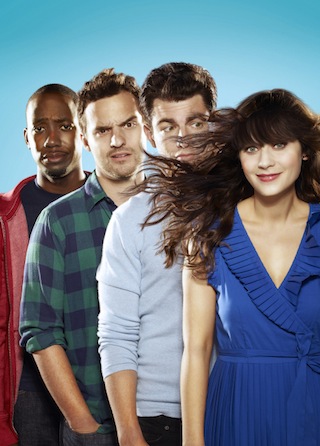
Just in case you’re not one of the reported 10 million people who tuned in for the much-ballyhooed premiere of New Girl last week, here’s the deal. It’s terrible. Okay, maybe that’s a bit harsh, but as someone who loves most of Zooey Deschanel‘s work going back to Almost Famous, I found this show to be a huge disappointment. You can pick apart whether the jokes are cliche or the characters are likeable, but I don’t generally expect much from network sit-coms in that regard.

My main problem: Why Dirty Dancing? What is the fascination with that movie? And is Zooey’s character Jess even old enough to remember it?? It came out in 1987, and she’s probably supposed to be 30, tops, so what exactly is her attachment to a trite film about a skeevy old guy (no disrespect to the late Patrick Swayze, who played said skeevy old guy) preying upon an idealistic teenager wearing Keds? Continue reading

Will It Fly?

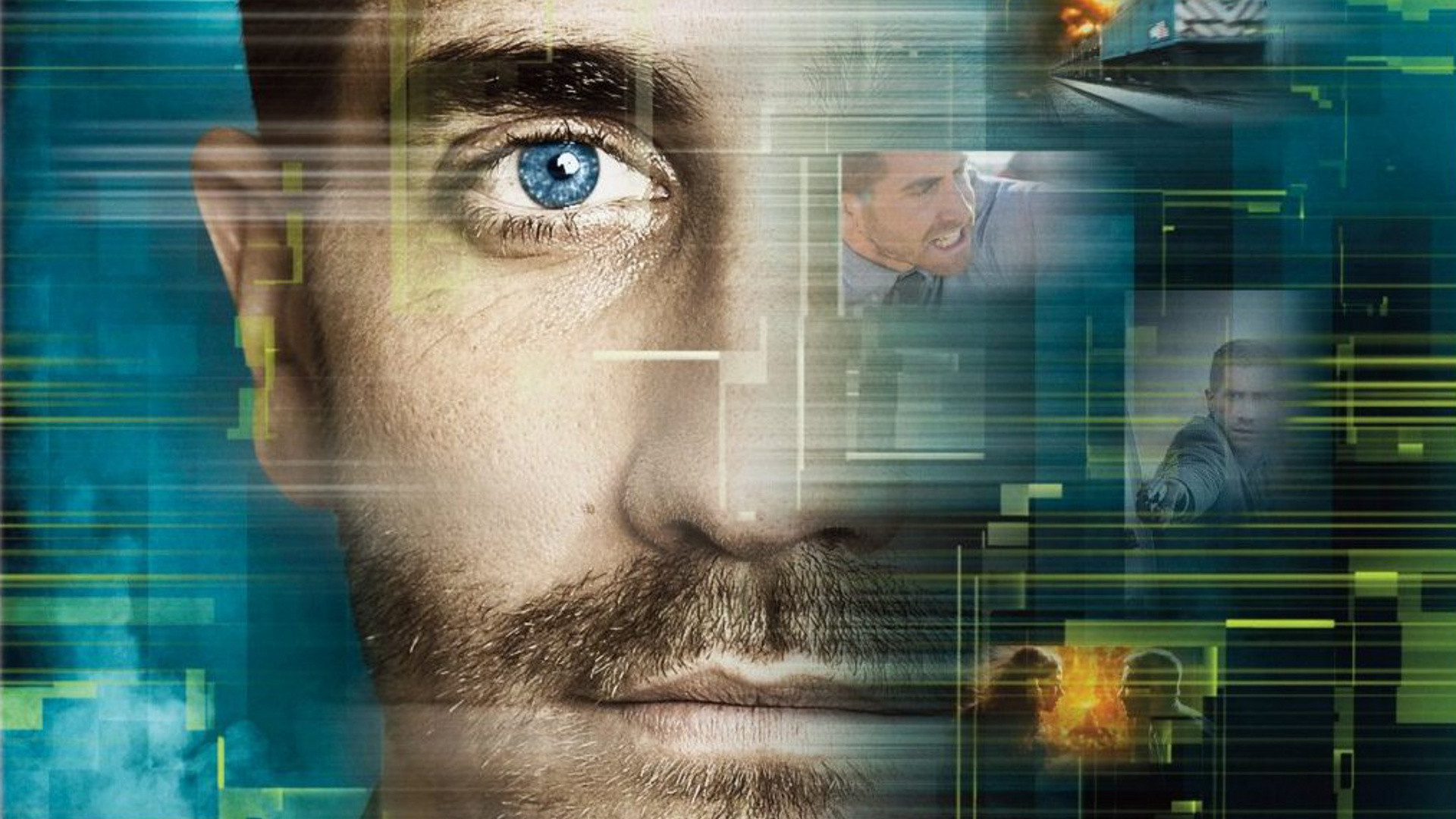
Source CodeWhen I first heard that the movie Source Code, which I haven’t seen but which looks pretty cool, is being developed for TV, my instinctive first question was, “What network?” (The answer is CBS.) Because, with sci-fi and genre TV, the network is everything. It will largely determine how the material will be handled and whether it will succeed. Continue reading

Parks and Recreation

When this show debuted, viewers went into it thinking they knew what to expect. It was another The Office, with a “female Michael Scott.” In fact, this mockumentary was originally conceived by creators Greg Daniels and Michael Schur and a spin-off of The Office. You would be forgiven for maintaining that assumption even after viewing the pilot, although there are hints here of greater potential. To be sure, Parks and Recreation took a little time to find its own voice, and with a powerful comedienne like Amy Poehler in the lead, it’s not surprising that it did so. Here is what audiences saw in April 2009. Continue reading

Husbands, the Series

Husbands, the Series premiered via UStream tonight at 6:30 PST. “Why now?” co-writer and star Cheeks was asked. “Why not?” he replied.

Whether or not you think the world is ready for a series starring a gay married couple, it is here. And when you think about it, it’s kind of hard to believe it hasn’t been done before. Prior to the premiere, Executive Producer Jane Espenson, a woman with serious geek cred (Buffy, Angel, Dollhouse, Warehouse 13, Battlestar Galactica…), and stars Cheeks and Sean Hemeon, gave a little sneak-peek. They discussed what prompted Espenson to create this show, on her own dime, for the web. In a nutshell, she felt that this show needed to exist, and the web gave her the right outlet for it. “If Joss hadn’t done [Dr. Horrible’s Sing Along Blog], I wouldn’t have done this,” she said.

The looming question was, is it funny? The pilot, titled Waking Up in Vegas, runs just a minute and a half and, like most webisodes is basically one joke. It opens with the characters, Cheeks and Brady, accompanied by bestie Haley (Alessandra Torresani) talking about their recent secret wedding. They kept it quiet because, we learn, Cheeks is a famous actor while Brady is a professional baseball player. Then we flash back four days to Las Vegas, just following the legalization of gay marriage, and we learn how the blessed union came to be.

The characters live up to a lot of stereotypes in this little snapshot. But it’s interesting that Brady is a professional athlete, an area where, unlike in Hollywood, being gay is still probably taboo. (If you’ve ever seen the hilarious play Take Me Out by Richard Greenberg, you know the potential of this subject matter.) And this is clearly just an introduction. There aren’t any big surprises but it sets us up for situations relate-able to any married couple, as well as those unique to gay men.

My favorite exchange is when Cheeks asks, “Do you have batting rehearsal?” to which Brady replies sweetly, “We call it practice.” So yes, it was funny, as well as quirky and colorful. I look forward to seeing where it goes. We don’t have to wait long. Episode 2 debuts on Thursday.

I saved the best part for last. Nathan Fillion is going to appear on the show!!!

Dr. Who: The Eleventh Hour

Dr. Who Eleventh HourI have a confession.

I’ve never watched Dr. Who. I have a passing familiarity with who The Doctor is and what a TARDIS is, mainly via geek osmosis (geekmosis?), having a lot of friends and Tweeps who are fans. I’ve caught bits and pieces of a few episodes since it began airing on BBC America, but the whole thing seemed too overwhelming to try and jump in mid-stream. I mean, the show is in the Guiness Book of World Records as the longest running science fiction show and its lead has been played by eleven different actors. Where do you start?

You start, I’ve discovered, with The Eleventh Hour.

This is the first episode of season 5 (of the show’s modern incarnation) and the introduction to Matt Smith as The Doctor. It functions very much as a pilot, and I highly recommend it to any Doctor Who virgin. It is a continuation from the end of season 4 and includes many significant updates and references for loyal viewers, but you don’t have to know that to enjoy it.

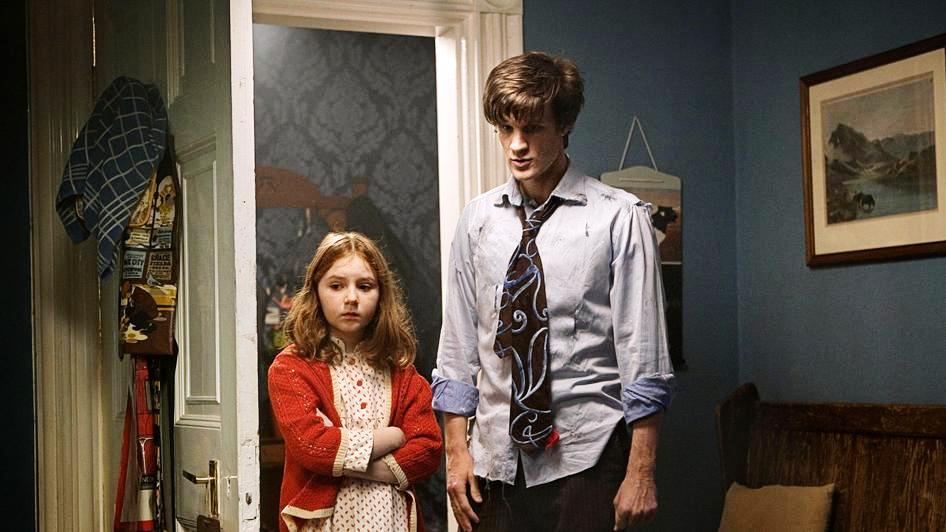
It’s action-packed from the first moment. The Doctor–in this case a gangly 20-something in a shirt and necktie–clings precariously to his police call box, hurtling across the London night sky, narrowly missing Big Ben. He crash lands in the backyard (the garden, as they say in the U.K.) of a young red-headed Scottish girl, just as she is praying to Santa Claus for someone to fix the crack in her bedroom wall. He climbs from the box, soaking wet and demanding an apple. Though these two characters have never met, neither is the slightest bit shy about speaking his or her mind.

“I’m the Doctor,” he announces. “Do everything I tell you, don’t ask stupid questions, and don’t wander off.” Though the girl, Amelia Pond, (Caitlin Blackwood) isn’t a particularly docile kid, she’s game to go along with whatever he says. They banter like a brother and sister as they bounce around the kitchen trying to find something he likes to eat. From this we learn that the Doctor is not himself. He has just acquired a new body, which he is still getting used to, and he’s not even sure of his own tastes. This is part is not explained but, according to Wikipedia, The Doctor regenerates a new body when mortally wounded; a convention that protects the show against jumping the shark even after 5 decades.

The Doctor and Amelia inspect the crack with the help of a gadget that’s something like a Swiss Army laser pointer (an iconic Doctor prop known as the Sonic Screwdriver). The crack is a crack in the fabric of the world and, though it, an alien being is searching for an escapee called Prisoner Zero. Before The Doctor can catch Prisoner Zero, though, he has to secure a glitch with his police box, explaining to Amelia as he climbs aboard that it’s a time machine. He makes a heartfelt promise that he will return in five minutes. She packs a suitcase and plops down on top of it to await his return.

These first 15 minutes is an absolute delight. It has fun, fairy tale-like air with a hint of foreboding; that crack is scary, especially when considered through the eyes of a child. And her complete acceptance of The Doctor as her friend and protector is completely endearing.

The Doctor returns in daylight and runs to the house. We’re led to believe a few hours have passed. Then, wait, it’s six months. There are clues that it’s longer–the house looks a bit worse for wear and the foliage has grown up in the yard. But he said five minutes. Inside the house, a police woman whacks The Doctor with a cricket bat and handcuffs him to a radiator. Her outfit is a little to sexy to be believable as a standard issue police uniform, and she eventually admits that it’s a “kiss-o-gram” costume.

Here we find the twist that–if you somehow have not seen the show since Matt Smith took on the role of The Doctor–just might take you by surprise. Ready?

This cheeky young woman (Karen Gillan) is Amelia, and twelve years have passed.

“I grew up.”

“You never want to do that.”

Caitlin Blackwood and Karen Gillan are real-life cousins, which brings a true family resemblance, and both girls just light up the screen with their charisma. The monster-of-the-week arc provides a wealth of background about the characters and the world of the show. The escaped alien is still living in her house. Its jailer has resumed an active and aggressive search for it, spurred by The Doctor’s return.

It is revealed that Amelia, now going by Amy, held out hope for the return of the man she called “The Raggedy Doctor” for years. She told friends and neighbors about him, drew pictures of their adventures, and even role played their relationship. It’s enough to break your heart, but the action doesn’t stop long enough.

The aliens are about to incinerate the Earth if Prisoner Zero is not handed over, so The Doctor and Amy, with help from her boyfriend and a couple of neighbors, must scramble to save it.

The Eleventh Hour has everything a pilot needs: a great episode arc, along with a hook into a season arc; characters we want to get to know better; enough back story to pique curiosity without slowing the pace; and endless possibilities for where the story can go–quite literally in this case.

Did I mention I recommend it? It’s available on Amazon if you need to catch up.

Bob’s Burgers

For my last post I tried to figure out what I disliked about the pilot of what sounded like a great show; now I’m trying to figure out what I love about the pilot of a show that sounds hopelessly derivative.

The first time I saw the pilot of Bob’s Burgers, when it debuted on January 9, 2011, I was bored to tears. Hearing H. Jon Benjamin‘s voice and not LMAO off is actually a little disorienting. But his character, Bob Belcher is just a dumpy, boring guy; another animated oaf with a family of five. I’ve only stuck with the show–and I’m guessing I’m not alone in this–because it’s sandwiched into the middle of Fox’s Animation Domination. Ratings are good but critical reaction is less than stellar.

Somehow, the show has grown on me, and when the pilot re-aired recently, I found myself cracking up. It’s definitely one of those shows–like The Office–that gets funnier the more you feel like you know the characters.

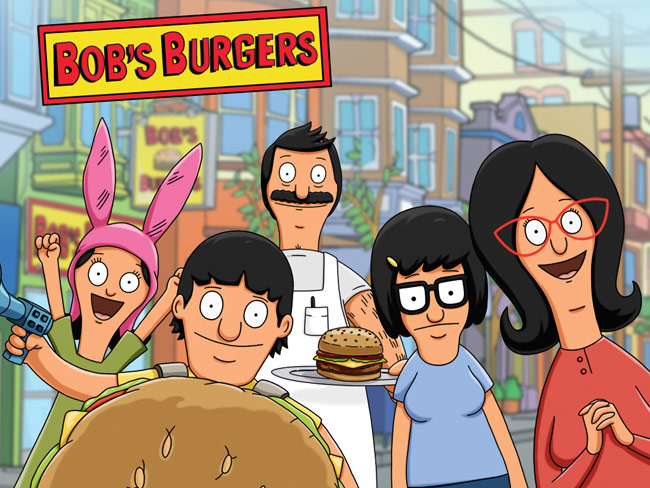
The pilot is set during Labor Day weekend, as the Belcher family restaurant is prepping for it’s grand re- re- re-opening. The whole family is part of the act; the three kids are left in the restaurant to welcome the onslaught of business while husband Bob (Benjamin) and wife Linda (John Roberts) grind meat–not a euphemism–in the basement. We also learn that it is Bob and Linda’s anniversary, which he has forgotten, and she optimistically reads his ignorance as a ruse. From their conversation we learn that they have worked hard for their little family business, even on their wedding night–again, not a euphemism.

One of the primary tasks of this pilot is to establish its mashup of family and workplace comedy. Many of the jokes stem from the supporting characters’ dual roles as Bob’s offspring and employees. “My crotch is itchy,” reports Tina. Bob’s response: “Are you telling me as my grill cook or as my daughter?”

Like King of the Hill, for which Executive Producer Jim Dauterive was a writer, the show has a slower pace than the Seth McFarlane panoply has conditioned us for. The charters even talk a little slowly. What’s gotten really old, though, is shows with fat guy protagonists who mistreat their wives and kids.

Bob’s kids are horrible. They were described (accurately) by an IGN reviewer as “two Barts and a Milhouse.” The eldest, Tina, (Dan Mintz) is the Milhouse, shuffling around scratching her genitals and mumbling.

Louise: “She’s autistic, she can’t help it.”

Tina: “Yeah, I’m autistic.”

Bob: “You’re not autistic, Tina.”

Middle child Gene (Eugene Mirman) is the showman, happily donning a giant burger suit and using a noise-maker to attract/harass customers. We learn that youngest daughter Louise (Kristen Schaal) has told her class at school that her family’s burgers contain human meat. Throwing a wrench into plans for a profitable weekend, a pasty-faced health inspector, who turns out to be an ex-boyfriend of Linda’s, slaps up a yellow warning sign until he can conduct a test on the meat. Only when the lovesick inspector works through his issues can the day be saved.

So, we’ve got horrible kids, a wife who’s a little off, but here’s the thing. As on King of the Hill, the husband is the grounded center around which the lunatics revolve. He’s imperfect–he forgets important dates from his wedding anniversary to his own birthday. Still, he’s basically a good, hardworking guy trying to make an honest living. He’s likable, something we cynics are so used to anymore. So, just don’t compare him to Archer, who despite sharing a voice, is his polar opposite, and you might find that he and his brood are pretty funny.

The Middleman

On paper The Middleman sounds like an amazing show: young struggling artist and gamer girl gets recruited by mysterious crime-fighting agency to battle comic book-style villains. (So many words to love in that sentence.)

It’s based on a graphic novel by Javier Grillo-Marxuach and Les McClaine, and the production style echoes that origin. It’s got a Scott Pilgrim thing going on, but its tone also reminds me of Wonderfalls or Pushing Daisies. Yet, it only takes about five minutes of the pilot to notice that this show is terrible. That could be why it only lasted 12 episodes in 2008, but then, better shows have lasted even less (e.g. the aforementioned Wonderfalls). And, for all I know, there is a die-hard Middleman fan base out there cranking out fan fiction and tweeting to the network to revive it. So what’s wrong with it?

First of all, it was on ABC Family. ABC Family seems to think it has an audience for campy genre TV (Three Moons Over Milford) yet only succeeds with teen soap operas (Secret Life, Pretty Little Liars). They also tend to keep things in a safe-for-family-viewing zone that doesn’t necessarily work for genre TV.

Middleman banks on its audience’s existing knowledge of comics, gaming, sci-fi, and action movies. It packs in the references like digitally-added TIE fighters. Geeks love them some references (see Tropes are Not Bad), but personally I prefer my references baked into the plot (The Big Bang Theory) rather than flung at me like paper napkin fireballs (Breaking In).

So what makes this hour-long pilot feel like its the length of the bonus footage from LOTR? Let’s back up and look at the plot.

We start at A.N.D. Laboratories (tagline: We scramble your DNA. Get it?) A young dark-haired secretary (Natalie Morales, seen more recently on Parks and Recreation), sits flipping a silver lighter open and shut and chatting with her mother as things go haywire in the laboratory behind her. The mom conversation serves as exposition. The heroine, Wendy, who looks kinda like Hilary Swank, is an art school graduate with a boyfriend her mother disapproves of. Suddenly an amorphous monster with many eyeballs bursts through the glass windows of the laboratory and Wendy fights it off with a letter opener, dropping her lighter in the process.

A clean-cut man in a dated military uniform shows up, makes her promise not to tell anyone what she’s seen. He calls himself The Middleman (Matt Keeslar). Wendy’s lighter is blamed for the ensuing explosion, and she is unable to get another temp job, so winds up getting recruited by The Middleman’s shadowy employer. What we have here is a typical Hero’s Journey. The hero(ine) is seen in her ordinary world, meets her mentor figure, is called to adventure, refuses the call, accepts the call, then faces an ordeal*.

So here’s the problem. I don’t like the hero. Wendy moves through these stages way too easily, without any introspection or suffering. We don’t get to know her in the ordinary world (i.e. pre-hero) for long enough to give a Gungan’s ass about her. Then, when she’s called to join this crime-fighting task force, she doesn’t show anything other than vague annoyance. Is she surprised, honored, scared? Don’t know. The reason that she has a change of heart and decides to join is only that her loser of a boyfriend dumps her for completely superficial reasons. We’ve had no opportunity to see them together as a couple, so we’re not invested in the relationship to begin with. When he dumps her, we don’t know what she’s feeling; should we be sad that her heart is broken or cheer that she is free from a bad relationship? And is the end of this seemingly insignificant courtship really enough to send her running to join “the paramilitary version of Amway,” as she calls it.

As with the line quoted above, this pilot actually has a few nuggets of great dialogue. Unfortunately they’re buried under a pile of crap. I’ll leave you with one more, spoken by The Middleman in the climactic scene and arguably the best line of the whole thing: “The only thing I hate more than mad scientists trying to take over the world is mad scientists trying to take over the world and using the brains of innocent primates in order to do it.”

*If you’re into this sort of thing check out The Writer’s Journey: Mythic Structure for Writers by Christopher Vogler.

Eureka

When a character in TV or film stumbles into a Town with a Dark Secret… or Cleveland… they do so one of two ways: by relocating to make a fresh start, usually following a tragedy, (Secret Circle, Manhattan, AZ, Locke and Key) or by getting stranded there (Lost, Hot in Cleveland). Eureka‘s Jack Carter (Colin Ferguson) falls into the latter category.

The show opens, however, with a wife calling her husband to bed. We pan down to the basement to find the husband tinkering with a large mechanical device reminiscent of the launchpad from the movie Contact. As its concentric circles spin the nerdy-looking man exclaims, “Susan, it works!” The sinister score lets us know that, whatever the gadget is doing isn’t good.

We meet Jack, a U.S. Marshall, as he is driving along an otherwise deserted road in his police car, with a mouthy young girl riding in back. Zoe (Jordan Hinson) and Jack are presented as prisoner and arresting officer, but bicker more like smartass teenager and protective but frustrated father. So it’s not really a big reveal when we later learn that he is, in fact her father.

They run off the road trying to avoid a dog, But not before Zoe witnesses a supernatural sight: She sees a duplicate of Jack’s car, with duplicate passengers inside, passing them on the road. Jack doesn’t believe her.

While he sets off to get the car repaired, Jack hands Zoe over to the local police station for incarceration. There, we meet Sheriff Bill Cobb and Deputy Jo Lupo (Erica Cerra), a bitter overgrown tomboy. Up to this point the characters seem relatively normal if slightly standoffish. The only major hint that something is unusual in this picturesque Oregon town is a boy of no more than nine, carrying a book on theoretical physics, gives oddly articulate directions.

As tends to happen in these situations, the car cannot be repaired right away. Local mechanic Henry Deacon (Joe Morton) informs an exasperated Jack that the job will take a few days. So, in the meantime, Jack winds up helping solve a local mystery of national interest. A big hole has been blown in the back of an RV belonging to Walter, the nerdy man from the opening scene. While he is clearly hiding something, he seems well liked by the townspeople.

Next Jack meets Allison Blake (Salli Richardson-Whitfield) who trumps his U.S. Marshall status by announcing she represents the Department of Defense.  The RV isn’t the only thing blown apart–there has been mysterious damage to other locales and some cows. We find that whatever can of worms Walter has opened is causing a lot of trouble, and that representatives from a local research agency are trying to cover it up.

Each scene takes us a little deeper into WTF territory. This town is definitely hiding something. As Jack and Allison enter a secured area he askis, “Where are you taking me, Area 51?” She replies, “Please, they wish they had our security.” At the midpoint, we finally get some explanation: Eureka was founded by President Truman, at the request of Albert Einstein, to house the greatest scientific minds in the country. We’re still not sure just what they’re up to at the moment or why explosions from Henry’s garage are treated as commonplace. The town has an isolationist nature that begins to get creepy; it reminds me of the corporate-run communities in Margaret Atwood’s Oryx and Crake.

As Jack delves deeper into the mystery–he has nothing else to do–we get to know him a little better. He is recently separated from his wife. From Zoe’s snarky remarks we glean that he is a workaholic who hasn’t made time for his wife and child.

…And some other stuff happens. This pilot is little rambly and long (2 hours) as the writers attempt to introduce–it seems–the whole freaking town. And on top of setting up characters and conventions, the episode still basically follows a mystery-of-the-week formula. The problem is solved, the world is saved, and Jack and Zoe seem to be on their way out. But just as we reach end, we witness a murder. And it turns out Jack has been appointed Sheriff of Eureka and will be hanging around for a while.