Unknown's avatar

About meekthegeek

Writer, animal lover, environmentalist, pop culture fanatic, and Star Wars fan.

Charlie’s Angels

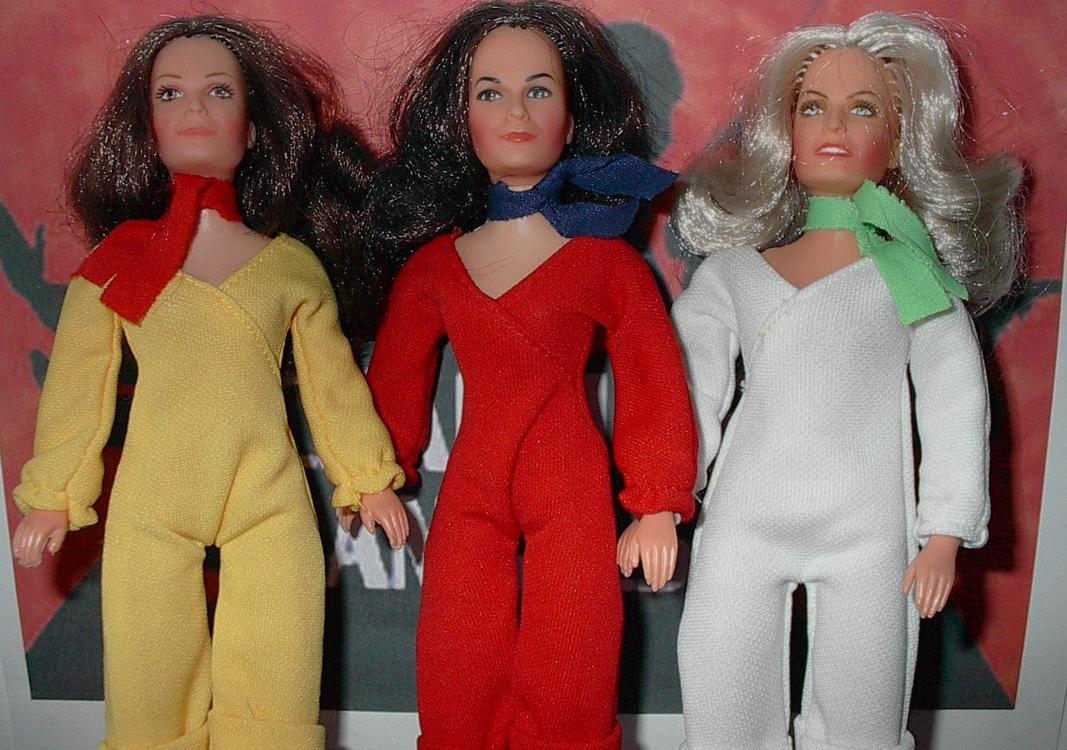
Image borrowed from Charlie’s Angels Forever

With the announcement that ABC is going to launch a reboot of Charlie’s Angels, I just had to revisit this show that I loved as a kid. (I had all the dolls and their van.) It kicked off with a movie-of-the-week (MOW) in September of 1976.

Other than the slightly longer-than-normal length, there is nothing to give away that this isn’t just a random episode; this is a pilot with virtually no exposition. The premise is laid out for us right in the opening credits, as in every episode. Three female cops, frustrated by menial assignments, left the force to go work as private investigators for a man named Charlie.

As in most episodic police dramas, we open not with the main characters, but with the scene of a crime. At a dusty racetrack populated by female drivers, a car explodes in a glorious fireball; we know we’re in for action.

Our introduction to the trio of protagonists comes as they learn of the tragedy in their office. These three impossibly skinny women with blinding white smiles sit languidly around the posh room, while a cheery-looking man, Bosley (David Doyle) sits at the desk showing slides of the crime scene. Charlie, whose voice we know from the opening sequence, speaks to them by phone, explaining what is known about the case. The head mechanic from the track, Jerry, has hired them to investigate the crash on suspicion of murder.

Each of the women, in turn, asks an intelligent question so we get a good look at each one. They’re gorgeous and well-dressed. Each of their names is worked into the dialogue; Kelly (Jaclyn Smith), Jill (Farah Fawcett-Majors) and Sabrina (Kate Jackson). As if the show’s creators feared we might forget Sabrina’s name, it’s emblazoned as a gold necklace across her tanned neck, and later on a fitted T-shirt.

The gag with Charlie is that he seems to be off living the high life, in perhaps less than well-kept secret, while conducting his business long distance. There is a pretty shockingly suggestive joke, for the era. Charlie is moaning in apparent pain about his lower back, but the audience sees that he is in the midst of a massage administered by a bikini-clad woman standing between his shoulder blades. “It will just be the matter of some deft manipulation before I’m standing as erect as ever,” he declares.

As the case unfolds, we are introduced to the angels’ and Bosley’s under cover talents. Sabrina coincidentally has marginal experience as a racecar driver, so she rolls in as the new girl on the track. Bosley shows up in a battered camper as an evangelical preacher with Jill as his Bible-peddling daughter whose legs inspire anything but piety. Kelly plays the damsel in distress, fiddling with her VW Bug’s engine to attract the attention of a suspicious mechanic.

Possibly one of the most memorable scenes takes place when Jill joins in a poker game to milk information from the pit crew. The blonde bimbo routine, we can predict, will come in handy for her on a regular basis. As she feigns ignorance only to reveal herself as a shark, the audience gets a look at her arsenal of talents, as well as a few laughs. But if she is just there to get information out of the mechanic why does she need to clean house in the game? Oh well…

Variations on the show’s now well-known theme music are used throughout to build suspense. The women find themselves in danger as the culprits grow suspicious of them. There are a couple of intense moments, and we really don’t know what the angels are capable of physically. The toughest thing we see is Kelly weakly waving a handgun toward the end. Personally I think Sarah Walker could kick all their asses. They prevail, of course, over the murderer and his accomplices. We go out on some good-natured ribbing and a shot of Charlie in a hot tub, surrounded by babes.

NOTE: The pilot described above kicked off the first full season of Charlie’s Angels in the fall of 1976. I’ve since discovered, via Ultimate Charlie’s Angels, that a different MOW aired the previous spring, having to do with the angels solving the mystery of a missing vintner. I’ll have to blog about that one of these days.

Mercy

So Mercy is supposed to be about strong women. This show is earnestly trying to tell us at lot of Truths: that war vets deserve our respect, that nurses can be as smart and competent as doctors, that the human spirit triumphs over adversity… but the message I got out of it was that women fall for men who stalk them.

What is with these female characters and their suitors who just stroll idly into a hospital, traipsing into patients’ rooms and interrupting hospital business? Despite some obligatory kicking and screaming, the women inevitably cave. And no supervisor ever says, “Hey, can you get your ex-husband out of this dying old lady’s room?”

Let’s back up a minute. We meet Ronnie (Taylor Schilling) as she is having a nightmare about being shot while a radio report about a memorial service for a soldier plays in the background. She wakes, in what is apparently her girlhood bedroom with her mother smoking a cigarette over her. Mommy dearest yells something about  Ronnie needing to take back her husband, in light of what Ronnie’s parents shelled out for the wedding.

The next scene is far more powerful and might have been a better point of attack. Ronnie witnesses a car accident and springs into action to save the life of the driver. She saves his life using a soda straw and gets him safely to the hospital, only to have the victim’s fiancé tell her off for being “just a stupid nurse.” That moment paints a clear picture of Ronnie as a smart, capable, and chronically underestimated woman; a character an audience could respect. Even when we learn more, that this hardass veteran who takes Paxil but isn’t intimidated by authority or cowed in the face of bodily fluids, she seems like a protagonist we can root for.

Then we get into the relationship stuff. Ronnie is estranged from her cheating husband, Mike (Diego Klattenhoff), and lives with her liquor-soaked parents and younger brother Bobby—the offspring appear to follow in their parents’ alcoholic footsteps. Her best friend at work is the sexy Sonia (Jaime Lee Kirchner), who is playing games with a lawyer she likes while also being courted by a cop. Further complicating the picture, Ronnie is screwing around with—and possibly in love with—a fellow soldier who is now coming to work at the same hospital.

The hospital atmosphere is Scrubs-like; a mixture of irreverent humor and touching, music-filled moments of human connection. There are some wryly funny moments, like this one: “We’re gonna go get a drink, do you wanna come?” “I’d love to, but first I just have to kill Mr. Weintraub.”

Every workplace pilot has to have a character whose first day it is. In this case that’s Chloe Payne (Michelle Trachtenberg), the sympathetic character if only because she isn’t falling at the feet of some macho douchebag. That is, until the episode’s final moment when all three of the female characters are mooning over a hot bartender. Really? This is how educated, battle-hardened women behave?

One Day at a Time

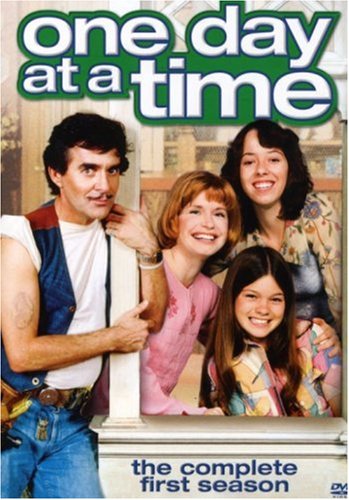
Since I recently wrote about Hot in Cleveland, I thought it would be fun to look back at an earlier Valerie Bertinelli vehicle, One Day at a Time. She was just 15 when she started playing Barbara Cooper in 1975.

The pilot gives a slice-of-life picture of the Romano/Cooper family of Indianapolis. It’s not their first day in town, it’s no one’s first day on the job, and no characters are meeting for the first time. The writers could have chosen to start the story with Ann leaving her husband, or with her breaking the news to the girls that they were moving, or with their first day in the apartment. But since that transitional period is behind us, we have more opportunity to see the relationships among the characters as they function on a relatively normal day.

We open with a typical family discussion, in which older daughter Julie (Mackenzie Phillips), tries to manipulate her mother into letting her go on a co-ed camping trip. Like most teenage girls, she considers her social engagements the highest household priority and can storm out of a room as well as any modern day reality “star.”

While Julie is stomping around in self-pity, younger sister Barbara has just become the first girl on the school basketball team. Her tomboyish attitude stands in stark contrast to Julie’s girlishness, setting up for plenty of future conflicts. Valerie doesn’t get a ton of screen time, but her snarky strength here is little like what she displays in Hot in Cleveland.

The show finds its edge in exploring the age of the liberated woman. Ann jokes about—and struggles with—wearing the mantle of both mother and father to two headstrong teenage girls. She’s a strong woman and lets her daughters be strong women, too. Independent though she may be, Ann is pursued by two men; her younger, charming divorce lawyer, David (Richard Masur), and the smarmy, married building superintendent, Schneider (Pat Harrington, Jr.).

The show was taped in front of a live audience, so we get our cues when to laugh and how hard. However, the jokes arise naturalistically out of the dialogue. The only time the jokes get ham-handed is in the banter between the two sisters. Barbara calls Julie “the pits,” like that’s the worst insult ever. Was that a thing in the 70s?

Importantly, in addition to laughs, the show has heart. At the mid-point we finally learn what is the “first” that makes this day pilot-worthy. Ann makes her first crucial solo parenting decision , calling Julie’s bluff on a threat to move out. As Julie disappears down the hall, Ann makes the speech on which the pilot rests: “For the first 17 years of my life, my father made the decisions. For the next 17, my husband the decisions. The first time in my life I make a decision on my own, I blew it.” Bonnie Franklin gives an versatile performance, moving easily from glib to passionate, from funny to moving. Her face when Julie returns speaks volumes.

Other feminist ideas are woven in, like when Ann ponders whether God is a woman, and when she mentions that she has returned to using her maiden name. Though they were probably uncommon at the time, such ideas are treated as matter-of-fact. Today, in contrast, “feminism” is often treated as a dirty word and such ideas are lampooned—my, how far we’ve come. Unfortunately the Julies on television seem to have outnumbered the Barbaras; just look at the women on Hot in Cleveland.

Hot in Cleveland

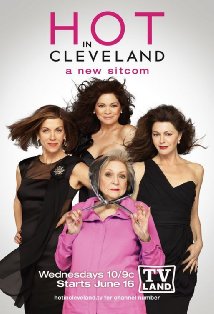
It’s a pretty safe bet if a series opens on a plane, the plane is going down. This one goes down in Cleveland. Three beautiful middle-aged women, all familiar faces from earlier sitcoms, are headed to Paris for some gal pal time. The very first line speaks to the theme of body image insecurity. “Airplane mirrors aren’t accurate, are they?” asks Valerie Bertinelli’s character, Melanie. Her loyal friends are quick to assure here that they most definitely are not.

The in-air conversation doesn’t get much more complex than that, but gives us a taste for each character. Melanie has written a book listing things a woman should do before she dies. She is going through a divorce, and hasn’t abandoned hope of a reunion, until finding out her ex is already engaged. Joy (Frasier’s Jane Leeves) is an eyebrow… um, stylist? And Victoria (Wendie Malick) is a longtime soap opera actress who loves being recognized. She’s basically her character from Just Shoot Me so we don’t have to work hard there.

The joke is pretty simple. Women who feel old, fat, and ugly in L.A. can feel gorgeous in Cleveland. It’s a set-up for a million jokes, particularly biting if you happen to have traded a Midwest life for one filled with palm trees (and there are a lot of us). You know what’s coming; the women are amazed at real estate costs, at the attention they receive from men, at the fact that there are museums in Ohio!

The pilot is brimming with funny—if not completely unpredictable—lines, like “Friends don’t let friends move to Cleveland,” and “That price has got to missing a zero.” Personally, and again perhaps it’s personal experience talking, I about fell on the floor when one of the women exclaimed, “Plumbers in Ohio can afford boats?”

It’s easy to believe that Melanie instantly wants to set up home and hearth in the Buckeye state, especially when she points out that a month in the large 2-story house she’s renting costs the same as a night in a Paris hotel. What’s harder to buy is that her friends want to stay, too, and that the creators are going to stretch out that stay long enough to make a whole series.

Surely a key to the show’s success (Season 2 starts January 19) is Betty White. She plays Elka, the 80-year-old caretaker who lives on the premises. Granted, Betty White is amazing, but these jokes, too, are low-hanging fruit. You can’t go wrong with an elderly-person-smoking-weed bit. Elka is delightfully bitter and wry and particularly hates Joy. She can wither even these hardened L.A. babes with a look, and she dispenses wisdom like, “When you’re 80 you dress for the bathroom.”

Basically, Hot in Cleveland doesn’t ask much of its audience but the situation in the pilot has built-in humor. I watched a couple other episodes, and it seems to evolve into just another show about single people trying to get dates. The pilot may have been the high point.

Best Pilots of 2010?

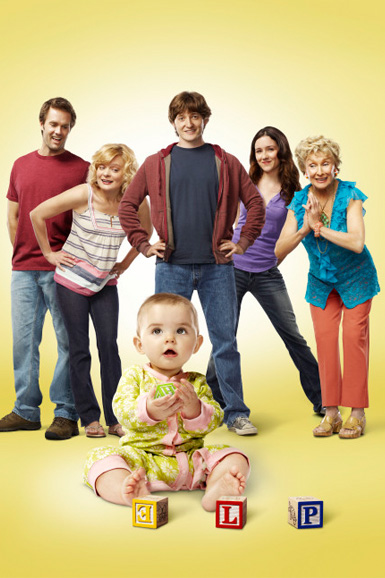
I would love to make a list of the Best Pilots of 2010, but I didn’t really see enough of them to make a comprehensive analysis. Two definite contenders that I did see would be Raising Hope (pictured at right) and The Walking Dead. One that would definitely not make the cut is Hellcats. (How is that still on the air?)

What did YOU think were the best pilots of 2010? Let me know in the comments!

Defying Gravity

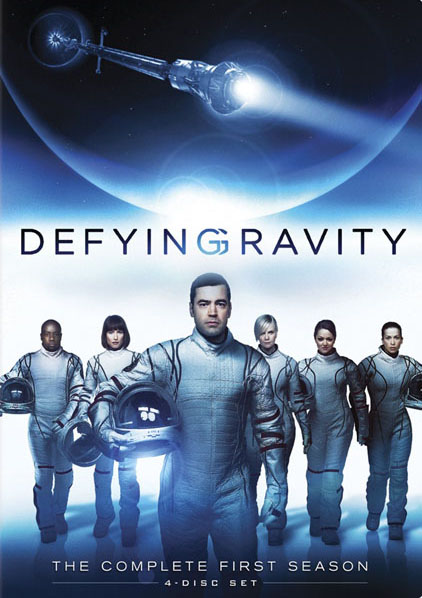
I knew when I first saw this show it was going to break my heart. It was too cool to hold up on network TV. It blends science fiction with relationship drama and a hint of philosophy, somewhere between Firefly and Being Erica. It started airing during the summer of 2009, it went away, it came back it went supposedly on hiatus, and in the end the only place to see the last episodes was on DVD.

The story is partially in flashbacks, but the “present” is the year 2052 and a group of astronauts is about to embark on a landmark journey to seven planets, over six years. The story is told primarily through the eyes of the first character we meet, Maddux Donner (Ron Livingston). The opening scene is dark and concerting, showing us a sad picture of Donner’s life at home with his father, who is either an alcoholic or senile, or both. The dreary room is lit only by the television where a group of smiling astronauts is introduced. Donner’s father asks, “Which one are you?” A flashback shows us the tragic end to Donner’s space travel career, as he is forced to leave the surface of Mars amid a storm with two crewmates still on the planet’s surface.

Although the next scene is one of exuberant celebration, opening the pilot this way sets a tone that we, the viewer, cannot shake. Heartbreak lurks beneath the glossy, high-tech surface in this future. The episode is sprinkled with mentions, by the ground control team, of an “it” that is being kept secret from the crew. To be honest, these didn’t catch my attention on first viewing, but in hindsight they hold much significance.

The next character we meet is Zoe Barnes (Laura Harris, playing the polar opposite of her Dead Like Me character). With a simple look between her and Donner, the romantic tension is established. Later in the episode it is suggested, if not spelled out, that the two characters have a history.

Ted Shaw (Malik Yoba) was Donner’s partner on the Mars mission, and though the two of them still work for the International Space Organization, they are marked forever as the men who abandoned their crewmates.

The Mission Commander is Rollie Crane, whose new wife Jen is also part of the mission. Also on the crew are Nadia, Paula, Ajay, Evram, and Steve. We get a snippet of each one as they talk into a camera, reality show-style.

The show’s creators didn’t waste time or energy making the future look “futuristic.” A bar still looks like a bar, and people still wear jeans and tees. They saved the budget for the ship, The Antares. There are beautiful images of the expanse of space, seen through panoramic windows in a shining, pristine vehicle.

The business of explaining the technology is accomplished by having one of the crew members, Paula, carry around a mini-DV camera and talk to an audience of school children. There are holes in the science, of course. It is explained that the astronauts’ suits have special fibers that pull them toward the floor of the ship in the absence of gravity. Yet, their hair lays flat. Not being a physicist, I am probably missing other problems as well, but the story is exciting enough to let those go.

Odd things are happening to both Donner and Zoe. Donner is having dreams about being on the mission and seeing Zoe float naked out into the vacuum of space. Zoe is hearing the far-off sound of a baby’s cries. In flashbacks, we are filled in on the fact that Zoe got pregnant during training, but had an illegal abortion. These moments are just breadcrumbs at this stage but promise to lead to something amazing, possibly frightening.

The twist in the plot comes when two of the crew members, Rollie and Ajay, already aboard the space station orbiting the Earth, suddenly develop identical and unusual heart conditions. Before the ship can start on the mission proper, Donner and Ted must be subbed in for the two ailing astronauts. Ted  knows the secret—whatever it is—that mission control is keeping from the crew.  The question raised, the theme of the episode, is whether fate determined who was on the mission and who was not. We are promised more back story about the training, which may answer that question. But the show appears to be one that will raise as many questions as it answers.

Though many viewers blinked and missed Defying Gravity, I’m not the only one to appreciate it; here is a good analysis from Spill.com.

Surface

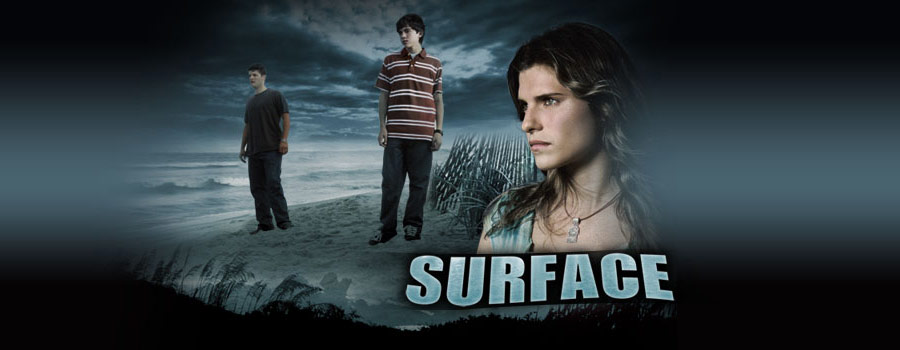
NBC has been toying with science fiction for years now, with a few hits and many misses. Surface is one of the latter, being cancelled after 15 episodes in 2005-06.

The show introduces us to four separate locations and character groupings: some kids in North Carolina, the crew of the U.S.S. Ronald Regan in Antarctica, a group of fishing buddies in Louisiana, and an oceanography team in Northern California. It establishes the strangely-connected-incidents-happening-to-otherwise-unconnected-people-in-disparate-places element that Heroes would do more successfully a year later.

We meet the kids first. Since they’re out drinking and screwing around we can expect something bad to happen, so the suspense builds quickly when one of them, Miles (Carter Jenkins) is separated from the boat. The Scary Thing we’re expecting is more mysterious, since we are not sure what we’ve seen. A dark creature slithers from a buoy into the water, freaking out the kid who witnesses it. But it’s forgotten pretty quickly when the Coast Guard busts the kids for drinking.

The scene on the aircraft carrier has the air of an action movie, something that would star Harrison Ford. A gruff military officer has little patience for the “civilian biologist” and his team who have come to check out an abandoned submarine.

We spend the most time with the oceanography team. The hero is Marine Biologist Dr. Laura Daughtery (Lake Bell). She is the divorced mother of a little boy. The introductory scene of these characters is warm and humorous, conveying that Laura both loves her son and refuses to take any crap from him. She holds a pair of scissors, ready to cut the ear off of his stuffed pal until he agrees to get ready to go to his dad’s.

Once we have gotten to know Laura as a woman, we see her as a researcher. She is off to visit some vents on the ocean floor in an expensive submersible. “More people have been to the moon than have been to the hot vents,” she informs us. Despite being a supposedly highly respected scientist, Laura has a decidedly girlish air, wearing her hair loose and chewing gum while she works; you can decide whether this is endearing or just makes her hard to take seriously. Weird note: in this super high-tech craft she writes with a pen and paper? You would think she’d at least have a laptop.

Things get intense while Laura is on her dive, with some pretty cool special effects and a moment where we would think she was a dead woman if the writers hadn’t invested so much time in introducing her.

The juxtaposition of different settings, and different tones, keeps the audience off balance, always waiting to grasp onto the common thread. We know that thread is some type of sea creature, but just what kind of danger it represents remains unknown until one of the fishermen is killed.  Before long, intimidating government officials have arrived to learn more about Laura’s encounter.  Why are people on TV always smart asses when they’re being questioned by the authorities?

The most exciting moment of the episode comes when one of the creatures bursts out of a fish tank, where Miles has stowed an egg. The moment isn’t a complete surprise, but the look on Miles’ mother’s face is pretty entertaining.

This pilot feels really long. It’s as if you’ve sat through a whole SyFy original movie (which is okay if you’re into that). Perhaps too much is revealed too early. Coming right out with the mention of sea monsters, and even showing them to us, probably could have waited an episode or two. It seems like these writers wanted to tell the whole story in the pilot instead of drawing it out. I have not seen any subsequent episodes, but perhaps this is why the show didn’t last.

Cliffhanger or Closure? Top 5 of Each

Pilots, when well executed, make the viewer want to come back for more. However I’ve noticed that pilots fall along a continuum in terms of how they leave you feeling at the end. Some just get the action going, and then abruptly end. They leave you chomping at the bit for episode 2 because you just have to know what happens next. Some shows, say 24, couldn’t work any other way. (That show is such an obvious example it’s not worth listing below.)

Other pilots are more self-contained. Sure, they introduce characters and situations and, ideally, make you want to keep watching. Yet, they wrap up neatly and can be enjoyed again and again like mini-movies.

Still others lie someplace in between. Here are five of the best at either end of the spectrum. It’s by no means an exhaustive list; as I’ve said before I don’t claim to have seen every pilot, or even every great pilot out there! (BTW, spoiler alert.)

What else should be on the list? Let me know in the comments or on Twitter.

Best Pilots that Leave You Hanging

Veronica Mars – So. Much. Stuff. Happening in this pilot. We just get a taste of the Lily murder, which will keep us guessing even after it’s solved.

Heroes – Again, this pilot just scratches the surface of everything that is set to happen. Absolutely no questions are answered.

Jericho – The ending of this pilot scared the bejeezus out of me. You see the map of the U.S. with all these pushpins marking places that were nuked and ask, “Just how bad is this disaster?”

The Walking Dead – Did the sight of Rick in that tank and the sound of the voice over the intercom not make you just want to hit the fast-forward button to the following Sunday?

How I Met Your Mother – This leaves you hanging not for a week, but for… well, it’s been five freaking years. How did you meet their mother for f’s sake?

Best Pilots that Can Stand Alone

The Simpsons – It’s a Christmas special. Need I say more?

Studio 60 on the Sunset Strip – This was so good, it is inexplicable why the series went so far downhill. It was a prodigal son (or sons) story that wrapped up beautifully.

Friends – It’s a happy ending to a story about a woman who walked out on her wedding. It offers possibility—will Ross get Rachel?—but it’s a happy ending.

Glee – This necessarily had to be good all by itself because it aired way before the season actually started. And it wildly succeeded.

Dead Like Me – This pilot delves deeper than it needs to, explaining the whole back story of the character plus the rules of the show’s world all in one go. But even with all the change she’s just faced, George gets a sense of closure by going to see her mom.

Pretty Little Liars

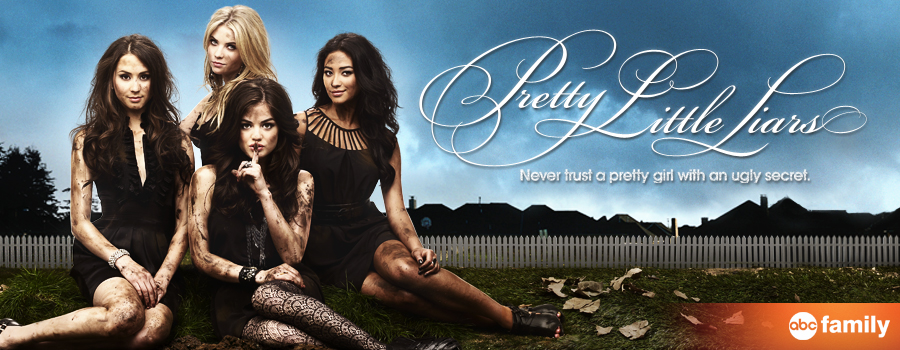
ABC Family is hyping the heck out of the Season 2 premiere of Pretty Little Liars in January, so time to catch up. This show that looks something like Desperate Housewives for teenagers has a slick look and sinister-sounding previews.

The pilot opens in full-on horror movie mode. A group of cute girls are sitting around a candle-lit barn while the wind howls against the creaky door. They’re creeped out by a sound from outside and stand, as a group, ready to face terror. It turns out to be just their friend sneaking up on them. We do a 180 into a much-too-quick scene of some slumber party chatter. (Is the fact that they like Beyonce important, or is this just an awkward attempt at natural-sounding teen banter?) Then they pass a big cup filled with some dark liquid. There’s a mention of the beverage making people share secrets, and one of them says, “Our secrets are what keep us close.” This last quote is imbued with a kind of weight cluing us into its importance.

In the morning the last girl to have arrived, Alison (Sasha Pieterse, who showed up in the later, less-watchable episodes of Heroes), has disappeared. Up to this point we have jumped from one situation to another with lightening speed and absolutely no chance for character development. So are we shocked that this girl is gone? Not really.

At last we start getting to know one of the girls, Aria (Lucy Hale of Privileged). One year has passed since the opening scenes, and Aria’s family has just moved back to town after her father’s sabbatical in Europe. Aria’s mother (Holly Marie Combs) encourages her to reconnect with her friends, but clearly things have changed. In fact, we are reminded at every turn how much things have changed. This is one example of how this show tells the audience things rather than showing them.

The town is Rosewood, Pennsylvania, the kind of pretty East Coast town with an air of evil reminiscent of Amityville. Aria’s return to school gives the opportunity for exposition and further character introductions. It’s the “Prodigal Son/Daughter” pilot formula. Although Aria’s mother points out for the audience that a year is a long time in the life of a 16-year-old, it feels like the passage of time is treated a little too seriously. “I almost didn’t recognize you,” says a classmate to Aria. “Last time I saw you, you had a pink streak in your hair.”

 The only point about the school social hierarchy that seems important to remember for now is that a formerly geeky girl, who our heroines picked on, is now popular and cute (translation, she got contacts). In scenes with each of the four remaining girls, Aria, Spencer, Hanna, and Bianca, we begin to see that honesty is not a virtue in Rosewood. They lie, they shoplift, and they flirt with sisters’ boyfriends. Each of the girls receives a mysterious message—either by text or note—warning her that someone is watching her unethical behavior, and signed “A.”

Alison’s body is discovered, and a funeral is held. At this point we’ve begun to suspect that one or more of the girls might know more than they’re saying about Alison’s death. Yet, from the cryptic conversation of the girls combined with the semi-anonymous messages, it seems she might not really be dead. Certainly these pretty little liars have a secret, but it turns out that their secret—one of them, anyway—concerns not Alison, but a girl named Jenna.

It’s clear there are a lot of layers here, and while the delivery may not be the most sophisticated, the show promises to ask for some loyalty on the part of the audience. It’s great when a pilot leaves you with no clue what’s going on, and this one does that.

The Walking Dead (in retrospect)

I always say that pilot can only be truly appreciated in retrospect. You can’t know how good it is until you see how the whole season—sometimes the whole series—plays out. So I’ve waited until now to blog about The Walking Dead.

This show, which had a 6-episode first season on AMC, has been reviewed and analyzed extensively, for the most part favorably (in places like these.) So I won’t bother raving about how entertaining, exciting and original it is. Though it is all of those things.

The thing to understand about this show is, it’s not a zombie show. It’s a suspenseful, end-of-the-world drama that just happens to have zombies. The pilot lets us know that, giving us rich character introductions and a bleak, ominous landscape.

The opening scene lets us know something isn’t right. A police officer, Rick Grimes (Andrew Lincoln), parks his squad car and makes his way through an intersection littered with overturned vehicles. Beyond that he finds an abandoned camp site where bodies rot in cars. Rick appears completely calm, as though he is finding only what he expected. And, while the sight of him putting a bullet in the forehead of a little girl with a teddy bear and half a face packs a punch to the audience, it doesn’t seem that out of the ordinary for Rick.

In hindsight this opening scene feels odd. Where are we? When are we? When Rick first leaves the hospital, trying desperately to figure out what happened to the world during his coma, he is understandably freaked out. He doesn’t know the ways of the new frontier until at least episode 2. Suddenly it’s not clear when in the timeline of the show this scene takes place; maybe we haven’t seen it yet? Why did the writers choose this point of attack? Just to shock us with Cindy Lou Who getting her head blown off? Rick shows much more emotion when, mid-way through the pilot, he shoots the half-woman crawling across the lawn.

A flashback is used to set up the relationship between Rick and his partner, Shane (John Bernthal). This relationship is crucial to the story arc, and its position in the script suggests that. The writers don’t miss a chance to also mention Lori (Sarah Wayne Callies), the woman who will represent the point in their love triangle. In the chase of a suspect, Rick and Shane are clearly the competent ones. More importantly, they’re both basically good guys. They have each other’s backs, and together they defend the public good. These characteristics will leave us torn as the story unfolds, unable to paint Shane as a hero or villain. This will prove especially true in the opening scene of episode 6, in a flashback to when the hospital was overrun with zombies. The relationship between the men is also a source of frustrating dramatic irony later in the pilot, when Rick radios through to the campsite having no idea Shane is there.

We don’t get to know any of the other characters in the campsite at this stage. We see just enough to see that a group of survivors is making the best of it on the outskirts of town.

The pilot spends a good chunk of its 66 minutes having us get to know the character Morgan (Lennie James); he has a big dramatic introduction and the possibility of a reunion with Rick for later on. There’s no payoff through, at least this season. Morgan, although a rich character, winds up being no more than a device for explaining the world to the viewing audience. (I, for one, want to know if he ever shoots his wife).

One of the questions running through this episode—for viewers, not the characters—was “how far will they go?” This is a horror show on basic cable. The opening with the little girl gives a pretty strong hint, but we wonder how gross, how shocking, how scary AMC will be. The show does not disappoint in this respect.  The pilot leaves us with a bizarre, gag-worthy gut feast that didn’t let us forget about the show until the following Sunday.