Unknown's avatar

About meekthegeek

Writer, animal lover, environmentalist, pop culture fanatic, and Star Wars fan.

Sex and the City

I have long held mixed feelings about Sex and the City. I never watched it regularly, but caught it here and there. There is something about it that holds my interest and makes me want to watch reruns that I catch while flipping channels; maybe it’s the gorgeous clothes, the excitement of New York City. At the same time, there is something that I really hate about this show. It’s a gut feeling; something primal. The feminist in me screams that something is very wrong, despite the fact that the show purports to be about independent, sexually liberated women.

To get to the bottom of this I decided to watch the pilot, which I had never seen before. I’m going to talk about the pilot as if I’ve never seen another episode, and this is all new. It’s June 1998. Sarah Jessica Parker is known to me as the chick from Girls Just Want to Have Fun… (cue flashback fx)

A narrator, our protagonist, speaks to the audience in voiceover. The story starts out seeming to be about an English journalist who moves to New York and finds love, then loses it. She turns out to be a sort of everywoman, representing single life in today’s New York… and the stereotypes start flowing. Women all want to get married, men don’t. Women are really, really picky about men. All single women are willing to spend $400 on a pair of designer shoes (news to me, but I don’t live in New York).

The information that will ostensibly form the rules of this TV world is delivered in the form of brief monologues by various New Yorkers. We know which ones are going to become regular characters, because they get their names, job titles, and marital status subtitled on the screen. The only guy who has anything remotely non-assholish to say about women, is naturally a computer geek with glasses and awful hair. It’s implicit that single women are friends only with other single women. Or a token gay man.

But, we’re told, a new age is dawning. In 1998, women “get” to treat men as sex objects. Objectification is a gift you give yourself. The four main female characters form a continuum of thought on this subject from bang-anything-that-moves to romance-is-still-possible. They talk about it and talk about it.

At the midpoint, our main character has sex “like a man,” getting hers with someone she hardly knows and then leaving with a thin excuse before he is satisfied. She is chagrined to find out, a few days later, that he’s okay with it. None of the other women fare too well on this particular evening, either. So we’re told that this is what the show is going to be about: women who try to be like men, only to find out that they’re still, you know, women. Through it all, Carrie keeps bumping into a business mogul whose name I don’t ever remember hearing, so we figure this will be a source of sexual tension to last the season, if not the series.

And what’s with all the smoking? Maybe it’s a New York thing. There was that fad in the 90s of women smoking cigars, but is Kim Cattrall with a giant stogie hanging out of her mouth attractive to anyone? At least to anyone who would watch a girl power show?

So here it is, the problem. The show is not really about single life in New York. It’s about the single life of upwardly mobile, hot women with hundreds of dollars to blow on shoes, who feel they’re being empowered by having sex. Now, whether or not promiscuous sex is empowering is, I suppose, a matter of personal opinion. And, Carrie very responsibly has a purseful of ribbed condoms, so we can supposedly write off concerns about safety. But are there only extremes? Hook the guy and start reeling, or simply hook up? We hope the show will be about finding the balance.
My Five Favorite Pilots of All Time (So Far)

This is no attempt to list the “best five pilots of all time,” as there are many thousands of pilots I have not seen (yet!) but I felt like a list was called for. Perhaps it will change in time… who knows.

In no particular order, these are my five favorite pilots.

1. The Simpsons

The pilot was also a Christmas special. What’s not to love? Having never seen the Tracy Ullman Show, I at this point only knew the yellow-skinned quintet as “the Butterfinger family.” Their commercials were funny, so why not check out their holiday antics? Over 20 years later, the pilot, “Simpsons Roasting on an Open Fire,” still holds up. There was something a little looser, a little wackier about the Simpsons in those days, in the animation, the voices, and the story lines. You can make a drinking game out of the continuity problems. But what better setting in which to teach us all we need to know about a TV family than their Christmas holidays, split between a school recital, a shopping mall, and a dog track? Priceless.

Memorable line: “If TV has taught me anything, it’s that miracles always happen to poor kids at Christmas. It happened to Tiny Tim, it happened to Charlie Brown, it happened to the Smurfs, and it’s gonna happen to us!” (Quoted that from memory, thank you very much.)

2. Heroes

This was show that you HAD to keep watching. Not so much these days, but that pilot was so, just, wow. Peter was immediately endearing, and you’re thinking he might just not be crazy in wondering if he can fly. And Claire throws herself off that railroad trellis. And Hiro is so darned determined to be a super hero. Oh, and I guess the Jessica/Niki eye candy didn’t hurt either if you happened to be male. You were like “where is this thing going?” We had seen super hero shows before, but not like this. On a side note, the actual pilot, which was screened at ComicCon and is availble on DVD, is not as good. Ted was a terrorist. Much too low-hanging fruit for such a creative show.

3. Studio 60 on the Sunset Strip

See my previous entry on why this rocks.

4. King of the Hill

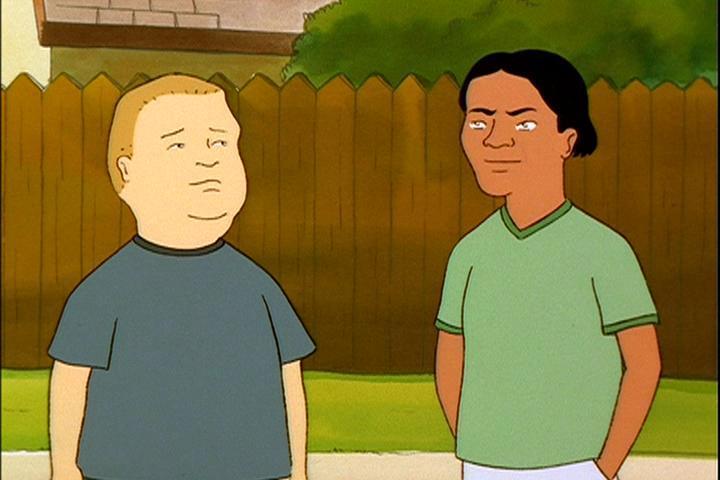
Okay, I know you’re like, “really?” The show, despite running for 10 years, went steadily downhill, either on its own or by comparison to other emerging animated entertainment that has raised the bar considerably. But it was fresh and unique. I can remember sitting around at school the day after the pilot aired and talking about it, so it obviously made an impression on people. It wasn’t the Simpsons, and it certainly wasn’t Beavis and Butthead, Mike Judge’s previous show. It walked a line between edgy and family friendly. That moment when Joseph appears on screen and you see he looks nothing like his white father and a lot like his mother’s Native American “friend” is ROTFL-funny.

5. Glee

I laughed. I cried. It was better than Cats—way better; Cats is lame. This is musical theatre for the 21st century. While I can just picture the starry-eyed teenagers at home shrieking over Finn, or wanting to sing just like Rachel, for us grown-ups, there’s the Emma-Will-Terri love triangle. (And isn’t it weird how there are three former Heroes cast members in this completely different show?) The pilot did a great job of capturing the whole mood of this show and now, having seen the five additional episodes to have aired, it was right on track. It had the snark of Veronica Mars, the pathos of My So-Called Life, and the embarrassing-to-watch moments of The Office. It’s a feel-good show, but it’s not sappy. Okay, it’s sappy. But not in a Cats way. More in a Wicked way.

Cougar Town

It’s easy to think you have this show all figured out based on the title and a few teasers. I wanted to give it a chance to defy my expectations. I prepared to be offended by sexist/ageist jokes.

I must say it’s refreshing to hear women be obnoxiously sexist, and not under the guise of feminism like those materialistic know-it-alls on Sex in the City. This was genuinely funny. And the name “Cougar Town” actually refers to the high school football field, although the double meaning comes through loud and clear.

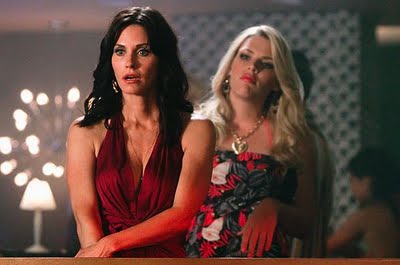
Courteney Cox, as Jules, is a riot. She is very close to the Courtney Cox we remember from Friends, with a little older-and-wiser edge. Even though she is still gorgeous, I think it’s great that the show opens with her checking out all her imperfections in the mirror. (I saw an interview where she confirmed that is it’s really her body we see.) This from the actress who was reportedly a size 0 when we knew her as Monica Gellar. Also, I was delighted to see Christa Miller of Scrubs, who must have majored in snarkiness in drama school.

I love that, despite her purported intentions to go all cougar on the boys of her community, Jules is actually really uncomfortable when a man comes a-calling. She retains some dignity this way; she’s not Stiffler’s mom. Plus, we’re set up from the first few minutes to expect that she’s going to fall for her divorced, similarly-aged neighbor.

The poor son. His mother’s cleavage is all over town on real estate posters and his dad is cutting the lawn at his high school. We don’t worry about him too much, though—what teenager isn’t embarrassed by their parents? Jules shows that she does care by standing up for him towards the end.

By the time Jules ends the episode by hitting the sheets with a 20-something, we’ve gotten to know her. I for one felt like she was just trying to enjoy life, not that she has turned into some sort of sexual predator, as the term “cougar” might imply. If this show lasts as long as Friends, however, we should hope that she won’t spend the entire decade on the prowl. It could get old.

Memorable lines: “Give me twenty bucks. I’ll buy you a drink.”

[Son taking banana away from mom] “You’re not allowed to eat these any more.”

Dead Like Me vs. Wonderfalls

Dead Like Me castThe pilots of Dead Like Me and Wonderfalls warrant an old-fashioned, English class compare-and-contrast. Both were created by Bryan Fuller, who has a clearly defined style and a cult following. Despite being a consulting producer on the awesome first season of Heroes, Fuller seems to have earned a reputation as the creator of brilliant but cancelled shows.

Each of these two shows could be called a “genre” show. Or as an acquaintance of mine put it, “the kind of show that people who go to ComicCon like.” Their premises required a strong suspension of disbelief, which probably would have been strained over the course of three, four, five seasons. (Just look at Heroes. How many times is the world going to need saving, for Christ’s sake?)

Dead Like Me and Wonderfalls both feature young, smart, misanthropic, take-no-shit, female protagonists with male-sounding names. By the ends of their respective pilots, both George of D.L.M. and Jaye of Wonderfalls have acquired super powers. Okay, powers. Neither of them understands why she was chosen to wield these dubious abilities.

Jaye is given assignments by inanimate animals come-to-life. George is tasked with helping souls leave the bodies people who die in grisly accidents. Both start off “refusing the call,” a step in the hero’s journey, but find that acceptance is not optional. Each has the Gen-Y apathetic thing down pat. The pilots find Jaye using her degree from Brown to work an hourly retail job, and George, a college drop-out, grudgingly accepting a job at a temp agency.

Both shows introduce casts of relative unknowns, with the exception being Mandy Patinkin in D.L.M. The supporting characters are all pretty flawed, but you might say the ones on Wonderfalls have more redeeming qualities. Those on D.L.M., being dead, have no incentive to overcome their narcissism, substance abuse issues, or general assholery. (Not that they’re not likeable.) Even George’s parents, still alive, are jerks. This is a good place to mention that each protagonist is completely misunderstood by her upper middle-class parents.

Each show opens with a legend; the Maid of the Mist and the frog that unleashed death. Both skirt religion despite having supernatural themes. (George mentions god in the legend, but specifies that it’s with a lower case “g.”) Both shows achieve, somehow, a moral middle ground. We end each pilot wondering whether the transferring of souls or the obedience to talking chotzkies is good or bad. There are no villains, and our heroes aren’t particularly heroic. Things just are as they are. Destiny. Maybe that is why these shows didn’t generate sufficient viewer interest. People like black and white.

Both shows have a “look” that I don’t know enough about television technology to explain properly. Something about the lighting and camera work reminds you that you’re not dealing with Desperate Housewives.

Now for a few differences. D.L.M. uses a New Kid on the Block approach, where the world of the show (death) already exists, and the character is introduced to it along with the audience. Since the character is clueless, everything can be explained without making the script feel too heavy with exposition. Wonderfalls jumps right in. Something changes in the life of the protagonist on this particular day, and we don’t know why it happens when it does. We don’t understand what is happening any more than she does. You have to stick with Wonderfalls for a while to figure it out, a quality I personally enjoy in a show.

D.L.M. had the advantage of being on cable. You just know both of these protagonists have potty mouths, but only George gets the satisfaction of throwing the “f” word around. And it’s so damn dark. The pilot finds George having to reap a kindergardener. A kindergardener. Yet, amidst all the death—the body count is at least 5 in this one episode—the pilot ends on a hopeful note. In death, George may find a way to make peace with her family and her identity.

Memorable quote: “I excel at not giving a shit.” – George

Wonderfalls

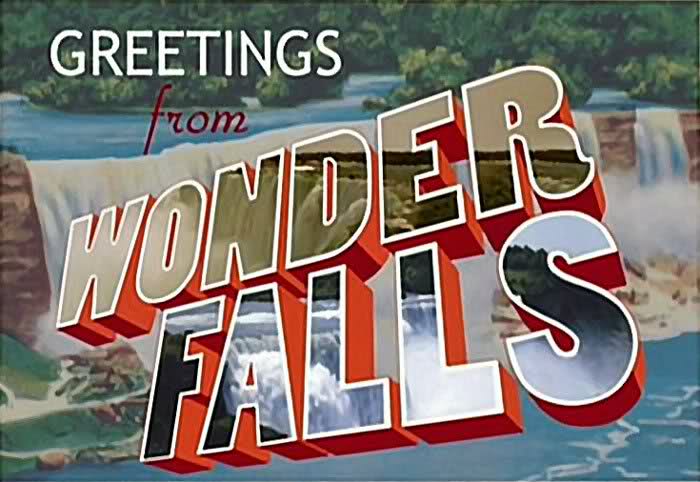
WonderfallsWonderfalls aired for just four weeks in spring 2004. So clever, so misunderstood; much like the show’s heroine. It was created by Bryan Fuller, the man behind Dead Like Me.

We open with the legend of the “Maid of the Mist,” a Native American Princess who sacrificed herself to Niagara Falls to satisfy an angry god. This tale of destiny will become a theme of sorts. The story is recounted by protagonist Jaye (Caroline Dhavernas), an apathetic, 24-year-old sales clerk at a gift shop at the falls.

Next, we have the convenient plot device of an old high school classmate dropping by. This gives the audience the chance to learn that Jaye was uncool in high school, majored in Philosophy in college, and has wound up “over-educated and unemployable.”

We get to the show’s premise when a tiny wax lion figurine come to life and talks to Jaye. She faints, and soon her WASPy family swoops in to shunt her off to a shrink. At the shrink’s office, a monkey-shaped bookend follows suit with the lion figure.

And, we’re off. Inanimate objects talk to this chick. We’re never told exactly why—in the pilot or ever. Is she crazy? Gifted? A modern version of the Maid of the Mist? Dr. Dolittle meets Joan of Arc? Do these talking things want her to commit good or evil? We keep watching to figure it out. It’s all so weird, and coupled with the snarky dialogue, this makes for engaging viewing. 

The love interest character, Eric (Tyron Leito, lately of Being Erica), has an intriguing back story, too. He has run away from his cheating new wife to hide behind a bar in Niagara Falls. Will he go home? Will his wife track him down? Will he fall for Jaye? More importantly, will she fall for him, or will she be too distracted by her newfound powers/psychosis?

The look of this show is great. Shot on location, it feels very real and unglamorized. You can practically feel the damp, cold weather. The grey backdrop makes the animated figures and shlocky, colorful souvenir shop pop.

By the end of the pilot, Jaye loses a promotion to a mouth-breathing dork, gets yelled at by a customer, makes a UPS guy cry and later, almost kills him, gets arrested for disorderly conduct, is busted stealing from the shrink, and has her mother advise her to “do something” with her hair. It’s a pretty shitty week. Some good comes out of it; Jaye has a bonding moment with her polar opposite sister, and begins to accept was is apparently her destiny.

People love an underdog. Especially one with smarts and a matching smart mouth. It all makes Jaye a great character and her journey a fun one. Unfortunately, it didn’t last. The premise was probably too far-fetched to be sustainable beyond one season, anyway.

Here’s the UNAIRED pilot.

Lamenting Cancelled Shows

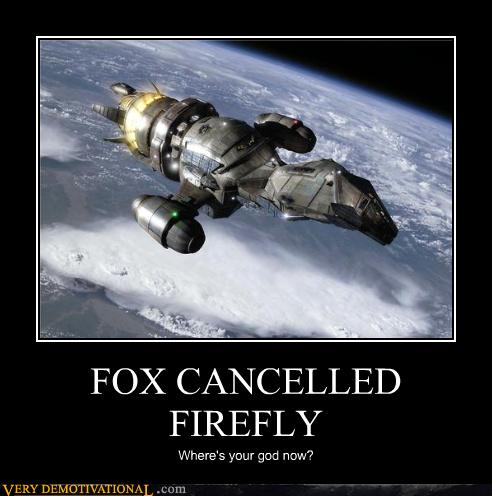
Image from Cheezburger.com

There are lots of lists floating around out there of TV shows that were cancelled before their time, but it does seem that Fox is responsible for a disproportionate number of them. Family Guy has alluded to this trend at least twice (I expect they’re already writing jokes about the cancellation of The Cleveland Show, but more on that later.) Topless Robot recently posted their list of the 20 Greatest Show Cancelled by Fox Before Their Time.

I have not seen all of the shows on the list—I don’t even remember a couple of them—but that’s part of the fun in lamenting cancelled shows. You feel a certain sense of ownership when you can say you just loved a show, and most people have never heard of it. Case in point, Wonderfalls, which ranks #7. This was a brilliant, clever, funny show by the guy behind Dead Like Me and Pushing Daises–other brilliant, cancelled shows. (Oh, Bryan Fuller, you’re so misunderstood.) Given that it only aired for four weeks before being pulled, it’s understandable that it is little remembered. There were 13 episodes filmed, though, and they are available on DVD. A post on the Wonderfalls pilot is high on my to-do list.

I have to wholeheartedly agree with Topless Robot’s # 1 and 2 picks, Firefly and Futurama, respectively. Both had fantastic pilots that pulled the viewer into a whole new world. Both lived beyond cancellation, Firefly as the film Serenity, and Futurama in a series of straight-to-DVD movies and a forthcoming reincarnation on the Cartoon Network. And any Comic-Con attendee can tell you both of these properties inspire mad loyalty from fans. So check back here in the future for posts on all three of these kickass shows.

Freaks and Geeks

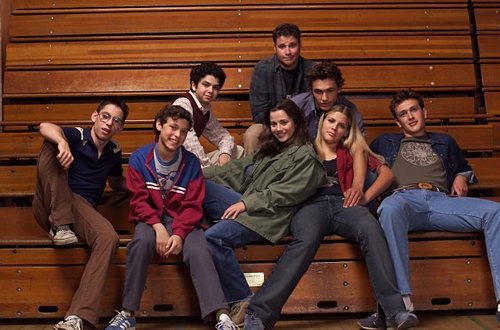
In honor of its 10th anniversary, I decided to watch the pilot of a little show that lasted only 18 episodes, Freaks and Geeks.

It’s 1980 in Michigan. High school kids are doing high school things. Each social group is shown in the first minutes with its own little musical intro. Not much explanation is needed since, if you went to high school in the 80s—or ever—you know all the players.

The main plot centers around an older sister, Lindsay and younger brother, Sam, a freak and a geek, respectively. The brother is an adorable pre-growth spurt John Francis Daley (Bones’ Lance Sweets). Other recognizable faces abound: James Franco, Seth Rogan, and Jason Segel.

Although it’s by and large just another school day, for a pilot there has to be something in transition. We eventually find out that Lindsay has been acting differently since the death of her grandmother. She’s less interested in being a mathlete, and more interested in becoming friends with a bunch of stoners. She’s also a defender of the weak, be it her brother or the token retarded kid.

The characters are three-dimensional and engaging. I can imagine getting to know them over the season would be a fun ride. And I must give the show kudos for bucking a stereotype for having a cheerleader who’s not a total bitch.

This show has been lauded by fans for being cutting edge. Maybe it was. Today geeks are cool, and maybe this show paved the way. But really, the geeks aren’t even that geeky, compared to say, the cast of The Big Bang Theory. And it has a similar aesthetic to My So-Called Life, which debuted 5 years earlier. Other shows debuting in the fall of 1999 included Big Brother, Judging Amy, Law & Order: SVU, The West Wing, and Angel. Maybe Freaks & Geeks stood out by way of comparison to adult-centered dramas and reality shows. What is this show anyway, a comedy or a drama? At any rate, it didn’t last, but it did launch writer Judd Apatow and several successful acting careers.

Quotable line: “She’s a cheerleader. You’ve seen Star Wars 27 times. Do the math.”

My So-Called Life

I pretty much missed the 90s as far as TV is concerned, so once in a while I “discover” a show that other people raved about back then, but I’ve never seen. That was the case with My So-Called Life.

The first thing you notice is all the darkness and slow-mo. That’s how this show paints high school—full of deep feelings and crucial choices. It’s easy to laugh off, but if you think back to how life looked through teenage eyes, it’s pretty accurate. I knew I was interested in this show when, two minutes in, the main characters says, in her deep, almost bored voice-over: “Cheerleaders… can’t people just cheer… on their own?”

Angela Chase (Claire Danes) is the poster child for grunge-era angst, a teenager who ends sentences with “…because if I didn’t I would die, or something.”

As the show begins, she has just changed best friends, a sea change moment in a teenage life, from a quiet, mousy, yearbook club type to a loud, nervy, club-going type. On advice from the new BFF, Rayanne (A.J. Langer), Angela has dyed her hair red. Her new hair color stands for her new outlook on life, rebellion against her mother, and her determination to get The Guy, the gorgeous Jordan Catilano (Jared Leto).

The use of narration, which sounds so realistic, eliminates the need for a lot of exposition. (Too much exposition sinks a pilot fast than anything. Case in point, the new Jenna Elfman show that premièred this week. I couldn’t make it past the first two minutes, let alone remember the title.) Since teenagers have this self-reflective inner monologue running a mile a minute anyway—at least I did—the voice over thing works perfectly.

“Lately I can’t even look at my mother without want to stab her repeatedly,” thinks Angela. The show is great at capturing familial awkwardness. Mom tiptoes awkwardly around Rayanne and the apparently gay Ricky. Dad mutters awkwardly at the sight of his pubescent daughter emerging from the bathroom in a towel. “My boobs have come between us,” Angela observes.

There are so many quote-worthy lines in this one episode, I could just transcribe the whole thing. It’s so edgy and honest, even 15 years in retrospect.

“My parents keep asking how school was. That’s like asking, ‘How was that drive-by shooting?’” I don’t know if they hired actual 15-year-olds to write this or what, but I love it. Seriously, though, Winne Holzman was the creator, and she went on to write the book of the musical Wicked, about the ultimate female misfit.

And god, the clothes. Flannel and plaid everywhere. Big, dumpy dresses with boots. I had these clothes. Maybe it’s better that I’m enjoying this in retrospect, as a piece of nostalgia. Maybe in 1994 it would have seemed blasé. Who knows? But in 2009 I’m glad it’s available on Hulu.

UPDATE: This show begins airing on the Sundance channel April 25, 2011

Community

So, how about a brand, spanking new show? Community, which premiered September 17, is set at Greendale Community College, and apparently designed to exploit every stereotype you ever had about community college.

The school’s Dean, incompetent from the very first moment of the show, serves as a fitting introductory device, asking, “What is community college?” As he names off the different “types” found in a community college, the camera shows us each principal character, matching those descriptions.

The expositional responsibility soon shifts to Jeff (Joel McHale), a lawyer who is going back to school to right some old wrongs:

“I thought you had a Bachelor’s from Columbia.”

“Well now I have to get one from America.”

Ba-dump, bump.

Jeff forms a fake study group to hit on a hot girl, and it quickly turns into a real study group, where we get to have all misfits from the various social groups thrown together. We get a diversity officer’s wet dream of colors, ages, and genders. (Thankfully, there’s no wheelchair-bound guy to give an excuse for easy disabled jokes.) There’s no reason to believe this group of people would willfully stay together. It’s one of those premises you just have to accept to get on with the show.

The thing is, Jeff thinks he’s got community college in the bag with an old client/friend, Professor Duncan (The Daily Show’s hilarious John Oliver), running the department, who’s going to get him the answers to every test. But Duncan wants to teach Jeff a lesson in integrity. So Jeff has no answers, and he ends up having to stay with the group.

If nothing else, the episode deserves credit for its Breakfast Club references and for being dedicated to the recently departed John Hughes.

It’s a pretty typical pilot. It’s got the “New Kid on the Block” thing going for it, where it’s everybody’s first day in a new universe, so the audience gets introduced to everyone/thing along with the characters. Nobody has any gigantic hurdles set up for them, though. Ostensibly, we’ll get to each one’s inner turmoil in later episodes. I can’t say I’m dying to find out about those. We’ll see if it lasts.

Bones

I must start by saying this is my favorite show currently on TV. It’s funny, suspenseful, well-written, and demands some level of viewer commitment to follow, to say nothing of the eye candy.

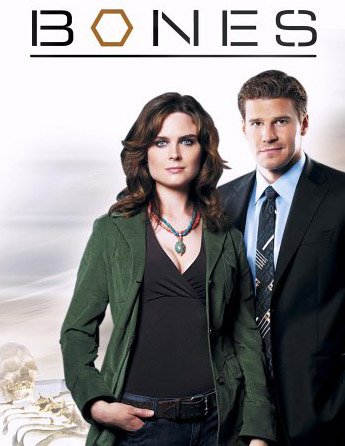
What I love about the pilot is it doesn’t feel like a pilot. Special Agent Sealy Booth (David Boreanaz) and Dr. Temperance “Bones” Brennan (Emily Deschanel) have worked together before. They don’t like each other much, but there is respect, and none of that weirdly forced sexual tension usually found on shows where a man and a woman are partners. (Suggestions of romance come later for these two.)

We meet secondary character Angela first. She flashes her boobs to a clerk for information at Dulles airport. Brennan is flying in from Guatemala, where she was identifying remains in a mass grave, and she gets detained by Homeland Security for having a skull in her bag. It turns out Booth is behind this embarrassing little episode. He needed to snatch her up to help with a potentially high-profile murder case.

And, we’re into the week’s (largely forgettable) mystery. Do we care who murdered a congressional intern? Not really. Do we care how this seasoned FBI agent and genius scientist are going to work together? Hell yeah; the show is now in its fifth season.

Always with this show, the B Plot is far more interesting than the A Plot. The A Plot serves as a backdrop on which to paint character traits. In this mystery, for example, we learn that Booth is tactful, even reverent, when dealing with a victim’s family. Bones would rather lay out all the facts, feelings be damned. But nothing about these character development tactics is unique to the pilot. With every episode, the characters grow. In my opinion, Booth and Bones’ relationship doesn’t even begin to hit its stride until episode 15, when Booth saves Bones’ life for the first time.

We get briefly introduced to the other “squints,” Jack and Zach, and their boss, Dr. Goodman, who only lasted one season. We have plenty of time to learn about all of them.

The pilot gives us one quintessential moment to hang onto throughout the series; indeed I believe it was used in commercials for the show throughout Season 1. Booth: “C’mon, we’re Scully and Mulder.” Bones: “I don’t know what that means.” She doesn’t. Her ignorance of pop culture is used as a joke again and again. Oh, right, the pilot also includes Bones’ ex-boyfriend showing up to reclaim his TV. We see that Bones isn’t likely to miss him or it.