Sex and the City

I have long held mixed feelings about Sex and the City. I never watched it regularly, but caught it here and there. There is something about it that holds my interest and makes me want to watch reruns that I catch while flipping channels; maybe it’s the gorgeous clothes, the excitement of New York City. At the same time, there is something that I really hate about this show. It’s a gut feeling; something primal. The feminist in me screams that something is very wrong, despite the fact that the show purports to be about independent, sexually liberated women.

To get to the bottom of this I decided to watch the pilot, which I had never seen before. I’m going to talk about the pilot as if I’ve never seen another episode, and this is all new. It’s June 1998. Sarah Jessica Parker is known to me as the chick from Girls Just Want to Have Fun… (cue flashback fx)

A narrator, our protagonist, speaks to the audience in voiceover. The story starts out seeming to be about an English journalist who moves to New York and finds love, then loses it. She turns out to be a sort of everywoman, representing single life in today’s New York… and the stereotypes start flowing. Women all want to get married, men don’t. Women are really, really picky about men. All single women are willing to spend $400 on a pair of designer shoes (news to me, but I don’t live in New York).

The information that will ostensibly form the rules of this TV world is delivered in the form of brief monologues by various New Yorkers. We know which ones are going to become regular characters, because they get their names, job titles, and marital status subtitled on the screen. The only guy who has anything remotely non-assholish to say about women, is naturally a computer geek with glasses and awful hair. It’s implicit that single women are friends only with other single women. Or a token gay man.

But, we’re told, a new age is dawning. In 1998, women “get” to treat men as sex objects. Objectification is a gift you give yourself. The four main female characters form a continuum of thought on this subject from bang-anything-that-moves to romance-is-still-possible. They talk about it and talk about it.

At the midpoint, our main character has sex “like a man,” getting hers with someone she hardly knows and then leaving with a thin excuse before he is satisfied. She is chagrined to find out, a few days later, that he’s okay with it. None of the other women fare too well on this particular evening, either. So we’re told that this is what the show is going to be about: women who try to be like men, only to find out that they’re still, you know, women. Through it all, Carrie keeps bumping into a business mogul whose name I don’t ever remember hearing, so we figure this will be a source of sexual tension to last the season, if not the series.

And what’s with all the smoking? Maybe it’s a New York thing. There was that fad in the 90s of women smoking cigars, but is Kim Cattrall with a giant stogie hanging out of her mouth attractive to anyone? At least to anyone who would watch a girl power show?

So here it is, the problem. The show is not really about single life in New York. It’s about the single life of upwardly mobile, hot women with hundreds of dollars to blow on shoes, who feel they’re being empowered by having sex. Now, whether or not promiscuous sex is empowering is, I suppose, a matter of personal opinion. And, Carrie very responsibly has a purseful of ribbed condoms, so we can supposedly write off concerns about safety. But are there only extremes? Hook the guy and start reeling, or simply hook up? We hope the show will be about finding the balance.
My Five Favorite Pilots of All Time (So Far)

This is no attempt to list the “best five pilots of all time,” as there are many thousands of pilots I have not seen (yet!) but I felt like a list was called for. Perhaps it will change in time… who knows.

In no particular order, these are my five favorite pilots.

1. The Simpsons

The pilot was also a Christmas special. What’s not to love? Having never seen the Tracy Ullman Show, I at this point only knew the yellow-skinned quintet as “the Butterfinger family.” Their commercials were funny, so why not check out their holiday antics? Over 20 years later, the pilot, “Simpsons Roasting on an Open Fire,” still holds up. There was something a little looser, a little wackier about the Simpsons in those days, in the animation, the voices, and the story lines. You can make a drinking game out of the continuity problems. But what better setting in which to teach us all we need to know about a TV family than their Christmas holidays, split between a school recital, a shopping mall, and a dog track? Priceless.

Memorable line: “If TV has taught me anything, it’s that miracles always happen to poor kids at Christmas. It happened to Tiny Tim, it happened to Charlie Brown, it happened to the Smurfs, and it’s gonna happen to us!” (Quoted that from memory, thank you very much.)

2. Heroes

This was show that you HAD to keep watching. Not so much these days, but that pilot was so, just, wow. Peter was immediately endearing, and you’re thinking he might just not be crazy in wondering if he can fly. And Claire throws herself off that railroad trellis. And Hiro is so darned determined to be a super hero. Oh, and I guess the Jessica/Niki eye candy didn’t hurt either if you happened to be male. You were like “where is this thing going?” We had seen super hero shows before, but not like this. On a side note, the actual pilot, which was screened at ComicCon and is availble on DVD, is not as good. Ted was a terrorist. Much too low-hanging fruit for such a creative show.

3. Studio 60 on the Sunset Strip

See my previous entry on why this rocks.

4. King of the Hill

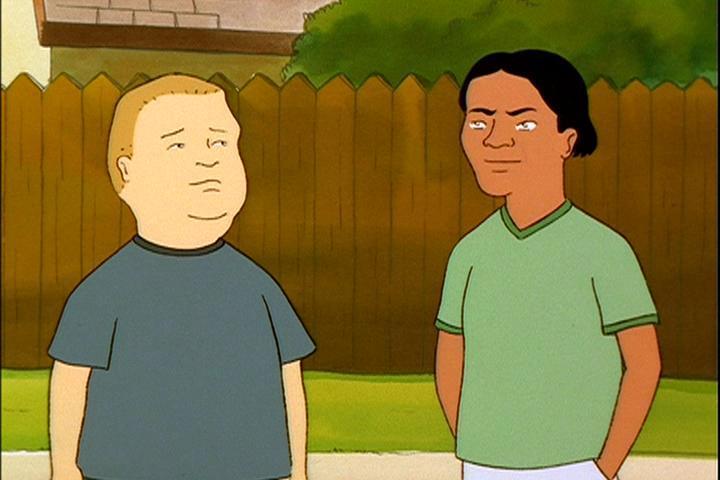
Okay, I know you’re like, “really?” The show, despite running for 10 years, went steadily downhill, either on its own or by comparison to other emerging animated entertainment that has raised the bar considerably. But it was fresh and unique. I can remember sitting around at school the day after the pilot aired and talking about it, so it obviously made an impression on people. It wasn’t the Simpsons, and it certainly wasn’t Beavis and Butthead, Mike Judge’s previous show. It walked a line between edgy and family friendly. That moment when Joseph appears on screen and you see he looks nothing like his white father and a lot like his mother’s Native American “friend” is ROTFL-funny.

5. Glee

I laughed. I cried. It was better than Cats—way better; Cats is lame. This is musical theatre for the 21st century. While I can just picture the starry-eyed teenagers at home shrieking over Finn, or wanting to sing just like Rachel, for us grown-ups, there’s the Emma-Will-Terri love triangle. (And isn’t it weird how there are three former Heroes cast members in this completely different show?) The pilot did a great job of capturing the whole mood of this show and now, having seen the five additional episodes to have aired, it was right on track. It had the snark of Veronica Mars, the pathos of My So-Called Life, and the embarrassing-to-watch moments of The Office. It’s a feel-good show, but it’s not sappy. Okay, it’s sappy. But not in a Cats way. More in a Wicked way.

Freaks and Geeks

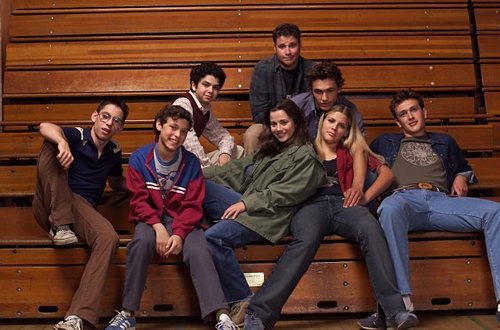
In honor of its 10th anniversary, I decided to watch the pilot of a little show that lasted only 18 episodes, Freaks and Geeks.

It’s 1980 in Michigan. High school kids are doing high school things. Each social group is shown in the first minutes with its own little musical intro. Not much explanation is needed since, if you went to high school in the 80s—or ever—you know all the players.

The main plot centers around an older sister, Lindsay and younger brother, Sam, a freak and a geek, respectively. The brother is an adorable pre-growth spurt John Francis Daley (Bones’ Lance Sweets). Other recognizable faces abound: James Franco, Seth Rogan, and Jason Segel.

Although it’s by and large just another school day, for a pilot there has to be something in transition. We eventually find out that Lindsay has been acting differently since the death of her grandmother. She’s less interested in being a mathlete, and more interested in becoming friends with a bunch of stoners. She’s also a defender of the weak, be it her brother or the token retarded kid.

The characters are three-dimensional and engaging. I can imagine getting to know them over the season would be a fun ride. And I must give the show kudos for bucking a stereotype for having a cheerleader who’s not a total bitch.

This show has been lauded by fans for being cutting edge. Maybe it was. Today geeks are cool, and maybe this show paved the way. But really, the geeks aren’t even that geeky, compared to say, the cast of The Big Bang Theory. And it has a similar aesthetic to My So-Called Life, which debuted 5 years earlier. Other shows debuting in the fall of 1999 included Big Brother, Judging Amy, Law & Order: SVU, The West Wing, and Angel. Maybe Freaks & Geeks stood out by way of comparison to adult-centered dramas and reality shows. What is this show anyway, a comedy or a drama? At any rate, it didn’t last, but it did launch writer Judd Apatow and several successful acting careers.

Quotable line: “She’s a cheerleader. You’ve seen Star Wars 27 times. Do the math.”

My So-Called Life

I pretty much missed the 90s as far as TV is concerned, so once in a while I “discover” a show that other people raved about back then, but I’ve never seen. That was the case with My So-Called Life.

The first thing you notice is all the darkness and slow-mo. That’s how this show paints high school—full of deep feelings and crucial choices. It’s easy to laugh off, but if you think back to how life looked through teenage eyes, it’s pretty accurate. I knew I was interested in this show when, two minutes in, the main characters says, in her deep, almost bored voice-over: “Cheerleaders… can’t people just cheer… on their own?”

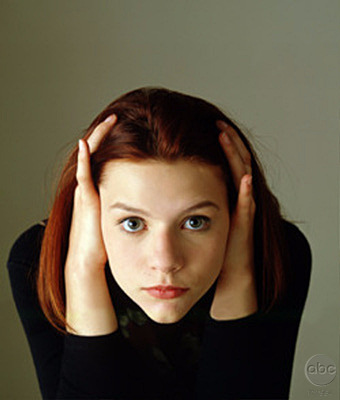
Angela Chase (Claire Danes) is the poster child for grunge-era angst, a teenager who ends sentences with “…because if I didn’t I would die, or something.”

As the show begins, she has just changed best friends, a sea change moment in a teenage life, from a quiet, mousy, yearbook club type to a loud, nervy, club-going type. On advice from the new BFF, Rayanne (A.J. Langer), Angela has dyed her hair red. Her new hair color stands for her new outlook on life, rebellion against her mother, and her determination to get The Guy, the gorgeous Jordan Catilano (Jared Leto).

The use of narration, which sounds so realistic, eliminates the need for a lot of exposition. (Too much exposition sinks a pilot fast than anything. Case in point, the new Jenna Elfman show that premièred this week. I couldn’t make it past the first two minutes, let alone remember the title.) Since teenagers have this self-reflective inner monologue running a mile a minute anyway—at least I did—the voice over thing works perfectly.

“Lately I can’t even look at my mother without want to stab her repeatedly,” thinks Angela. The show is great at capturing familial awkwardness. Mom tiptoes awkwardly around Rayanne and the apparently gay Ricky. Dad mutters awkwardly at the sight of his pubescent daughter emerging from the bathroom in a towel. “My boobs have come between us,” Angela observes.

There are so many quote-worthy lines in this one episode, I could just transcribe the whole thing. It’s so edgy and honest, even 15 years in retrospect.

“My parents keep asking how school was. That’s like asking, ‘How was that drive-by shooting?’” I don’t know if they hired actual 15-year-olds to write this or what, but I love it. Seriously, though, Winne Holzman was the creator, and she went on to write the book of the musical Wicked, about the ultimate female misfit.

And god, the clothes. Flannel and plaid everywhere. Big, dumpy dresses with boots. I had these clothes. Maybe it’s better that I’m enjoying this in retrospect, as a piece of nostalgia. Maybe in 1994 it would have seemed blasé. Who knows? But in 2009 I’m glad it’s available on Hulu.

UPDATE: This show begins airing on the Sundance channel April 25, 2011