When this show debuted, viewers went into it thinking they knew what to expect. It was another The Office, with a “female Michael Scott.” In fact, this mockumentary was originally conceived by creators Greg Daniels and Michael Schur and a spin-off of The Office. You would be forgiven for maintaining that assumption even after viewing the pilot, although there are hints here of greater potential. To be sure, Parks and Recreation took a little time to find its own voice, and with a powerful comedienne like Amy Poehler in the lead, it’s not surprising that it did so. Here is what audiences saw in April 2009. Continue reading →
On paper The Middleman sounds like an amazing show: young struggling artist and gamer girl gets recruited by mysterious crime-fighting agency to battle comic book-style villains. (So many words to love in that sentence.)
It’s based on a graphic novel by Javier Grillo-Marxuach and Les McClaine, and the production style echoes that origin. It’s got a Scott Pilgrim thing going on, but its tone also reminds me of Wonderfalls or Pushing Daisies. Yet, it only takes about five minutes of the pilot to notice that this show is terrible. That could be why it only lasted 12 episodes in 2008, but then, better shows have lasted even less (e.g. the aforementioned Wonderfalls). And, for all I know, there is a die-hard Middleman fan base out there cranking out fan fiction and tweeting to the network to revive it. So what’s wrong with it?
First of all, it was on ABC Family. ABC Family seems to think it has an audience for campy genre TV (Three Moons Over Milford) yet only succeeds with teen soap operas (Secret Life, Pretty Little Liars). They also tend to keep things in a safe-for-family-viewing zone that doesn’t necessarily work for genre TV.
Middleman banks on its audience’s existing knowledge of comics, gaming, sci-fi, and action movies. It packs in the references like digitally-added TIE fighters. Geeks love them some references (see Tropes are Not Bad), but personally I prefer my references baked into the plot (The Big Bang Theory) rather than flung at me like paper napkin fireballs (Breaking In).
So what makes this hour-long pilot feel like its the length of the bonus footage from LOTR? Let’s back up and look at the plot.
We start at A.N.D. Laboratories (tagline: We scramble your DNA. Get it?) A young dark-haired secretary (Natalie Morales, seen more recently on Parks and Recreation), sits flipping a silver lighter open and shut and chatting with her mother as things go haywire in the laboratory behind her. The mom conversation serves as exposition. The heroine, Wendy, who looks kinda like Hilary Swank, is an art school graduate with a boyfriend her mother disapproves of. Suddenly an amorphous monster with many eyeballs bursts through the glass windows of the laboratory and Wendy fights it off with a letter opener, dropping her lighter in the process.
A clean-cut man in a dated military uniform shows up, makes her promise not to tell anyone what she’s seen. He calls himself The Middleman (Matt Keeslar). Wendy’s lighter is blamed for the ensuing explosion, and she is unable to get another temp job, so winds up getting recruited by The Middleman’s shadowy employer. What we have here is a typical Hero’s Journey. The hero(ine) is seen in her ordinary world, meets her mentor figure, is called to adventure, refuses the call, accepts the call, then faces an ordeal*.
So here’s the problem. I don’t like the hero. Wendy moves through these stages way too easily, without any introspection or suffering. We don’t get to know her in the ordinary world (i.e. pre-hero) for long enough to give a Gungan’s ass about her. Then, when she’s called to join this crime-fighting task force, she doesn’t show anything other than vague annoyance. Is she surprised, honored, scared? Don’t know. The reason that she has a change of heart and decides to join is only that her loser of a boyfriend dumps her for completely superficial reasons. We’ve had no opportunity to see them together as a couple, so we’re not invested in the relationship to begin with. When he dumps her, we don’t know what she’s feeling; should we be sad that her heart is broken or cheer that she is free from a bad relationship? And is the end of this seemingly insignificant courtship really enough to send her running to join “the paramilitary version of Amway,” as she calls it.
As with the line quoted above, this pilot actually has a few nuggets of great dialogue. Unfortunately they’re buried under a pile of crap. I’ll leave you with one more, spoken by The Middleman in the climactic scene and arguably the best line of the whole thing: “The only thing I hate more than mad scientists trying to take over the world is mad scientists trying to take over the world and using the brains of innocent primates in order to do it.”
When a character in TV or film stumbles into a Town with a Dark Secret… or Cleveland… they do so one of two ways: by relocating to make a fresh start, usually following a tragedy, (Secret Circle, Manhattan, AZ, Locke and Key) or by getting stranded there (Lost, Hot in Cleveland). Eureka‘s Jack Carter (Colin Ferguson) falls into the latter category.
The show opens, however, with a wife calling her husband to bed. We pan down to the basement to find the husband tinkering with a large mechanical device reminiscent of the launchpad from the movie Contact. As its concentric circles spin the nerdy-looking man exclaims, “Susan, it works!” The sinister score lets us know that, whatever the gadget is doing isn’t good.
We meet Jack, a U.S. Marshall, as he is driving along an otherwise deserted road in his police car, with a mouthy young girl riding in back. Zoe (Jordan Hinson) and Jack are presented as prisoner and arresting officer, but bicker more like smartass teenager and protective but frustrated father. So it’s not really a big reveal when we later learn that he is, in fact her father.
They run off the road trying to avoid a dog, But not before Zoe witnesses a supernatural sight: She sees a duplicate of Jack’s car, with duplicate passengers inside, passing them on the road. Jack doesn’t believe her.
While he sets off to get the car repaired, Jack hands Zoe over to the local police station for incarceration. There, we meet Sheriff Bill Cobb and Deputy Jo Lupo (Erica Cerra), a bitter overgrown tomboy. Up to this point the characters seem relatively normal if slightly standoffish. The only major hint that something is unusual in this picturesque Oregon town is a boy of no more than nine, carrying a book on theoretical physics, gives oddly articulate directions.
As tends to happen in these situations, the car cannot be repaired right away. Local mechanic Henry Deacon (Joe Morton) informs an exasperated Jack that the job will take a few days. So, in the meantime, Jack winds up helping solve a local mystery of national interest. A big hole has been blown in the back of an RV belonging to Walter, the nerdy man from the opening scene. While he is clearly hiding something, he seems well liked by the townspeople.
Next Jack meets Allison Blake (Salli Richardson-Whitfield) who trumps his U.S. Marshall status by announcing she represents the Department of Defense. The RV isn’t the only thing blown apart–there has been mysterious damage to other locales and some cows. We find that whatever can of worms Walter has opened is causing a lot of trouble, and that representatives from a local research agency are trying to cover it up.
Each scene takes us a little deeper into WTF territory. This town is definitely hiding something. As Jack and Allison enter a secured area he askis, “Where are you taking me, Area 51?” She replies, “Please, they wish they had our security.” At the midpoint, we finally get some explanation: Eureka was founded by President Truman, at the request of Albert Einstein, to house the greatest scientific minds in the country. We’re still not sure just what they’re up to at the moment or why explosions from Henry’s garage are treated as commonplace. The town has an isolationist nature that begins to get creepy; it reminds me of the corporate-run communities in Margaret Atwood’s Oryx and Crake.
As Jack delves deeper into the mystery–he has nothing else to do–we get to know him a little better. He is recently separated from his wife. From Zoe’s snarky remarks we glean that he is a workaholic who hasn’t made time for his wife and child.
…And some other stuff happens. This pilot is little rambly and long (2 hours) as the writers attempt to introduce–it seems–the whole freaking town. And on top of setting up characters and conventions, the episode still basically follows a mystery-of-the-week formula. The problem is solved, the world is saved, and Jack and Zoe seem to be on their way out. But just as we reach end, we witness a murder. And it turns out Jack has been appointed Sheriff of Eureka and will be hanging around for a while.
I decided to look at Manhattan, AZ and Eureka* back-to-back since they both center around police officers finding themselves in strange, new towns. Both fit squarely into the Town with a Dark Secret trope. (See also Haven.) The similarities go even further; both Daniel of Manhattan, AZ and Jack of Eureka have teenage children with bad attitudes and are recently separated from their wives (one by death, the other by choice). Each meets a series of oddball people including a hard ass female law enforcement official. And yet, these shows could not be more different.
The first word that comes to mind in describing Manhattan, AZ is “wacky.” It’s wacky in the way that Pushing Daisies was wacky, but with an irreverence reminiscent of It’s Always Sunny in Philadelphia with a dash of My Name is Earl. Unfortunately, Manhattan, AZ predated all of these, so I can’t image how it would have been described in the fall of 2000.
The clash of serious subjects and ridiculousness is almost confusing for the first 2-3 minutes of the pilot. The protagonist, Daniel Henderson (Brian McNamara), narrates certain events but what is seen on screen doesn’t quite match up. Once you get the hang of this, you can’t help but wonder where it’s going to go next.
Daniel describes his perfect life in the perfect house with his perfect wife, perfect son and perfect job. The job is as an under cover officer for the LAPD, where we see Daniel and other officers prepping for “Operation Thong Sausage,” a prostitution sting. The seriousness with which Daniel treats this assignment juxtaposed with his ridiculous appearance in an evening gown and wig is one example of the show’s exercise in contrasts. His wife, Charlie pursues the “insignificant little hobby” of chasing down Dolphin poachers. When she dies in a diving accident and is canned as tuna (her name is Charlie, get it?), an event to which he reacts by watching “anything with Alec Baldwin in it” while his son stuffs his face and plays video games.
As Daniel continues his narration, describing his decision to move to Arizona and take a new job he tells us, “everything looked different,” and suddenly a different actor (Vincent Berry) is playing the kid. This is the kind of apropos-of-nothing joke that litters the script. As father and son land in Manhattan, Arizona about six minutes in, the show shifts from voice-over to ordinary dialogue. They meet the mayor, Jake Manhattan, played by Chad Everett (for whom the town is named… I guess?) and learn about Area 61, essentially just Area 51. (The name is trademarked… I guess?)
Daniel soon learns that a lot of the neighborhood pets are turning up with missing right hind legs, a scandal the townspeople blame on the “government guys over at Area 61.” In an absurd town hall meeting scene, Atticus returns the missing animal limbs and takes responsibility for the crimes. The town of Manhattan has the same small town feel of Eureka, but the people are strange, not in a like-able way but just plain strange. It is hard to sympathize with these characters–even the son, who we know is struggling with major change.
Daniel soon figures out that Atticus is just creating drama to convince his dad to move them back to L.A. and hasn’t actually harmed any animals. The mystery of the week is wrapped up pretty quickly and easily. Being a comedy and only half an hour long, this pilot focuses more on introducing a tone and style, with a few laughs–if you’re into it’s particular brand of humor. The single-camera style and absence of a laugh track differentiate it from the typical sit-com, so it takes a little adjustment. It doesn’t have the benefit of Eureka’s two hours to subtly build character and setting. Based on the presence of Area 61 we’re expecting some type of alien plot, yet aliens don’t figure into the pilot at all. It’s a little hard to see where this is all going. It didn’t go far, in fact–the show only lasted for eight episodes. From this, it doesn’t appear to have been any great loss.
*I’ll be posting about Eureka within the next few days!
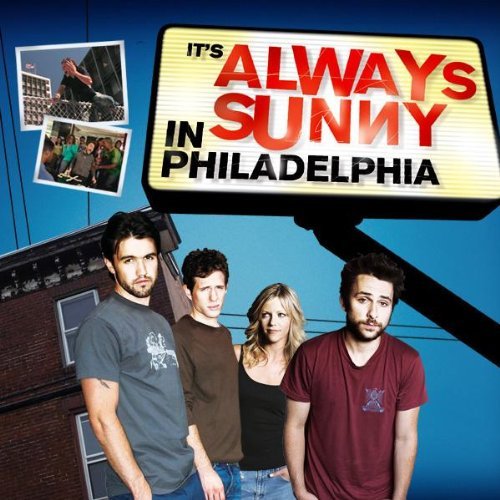
Attempts to describe It’s Always Sunny in Philadelphia usually center around how despicable the characters are. If you have watched the show at all, you’ve probably seen the gang–Charlie, Mac, Dennis and “Sweet” Dee–do some pretty despicable things, to everyone around them including each other. The lowest of lowlifes. So, if you’re going to write a pilot about the scum of the Earth and expect people to keep watching, how do you do it?
Not only did the show’s creators, Rob McElhenney (Mac) and Glenn Howerton (Dennis) get their show noticed, they did it on almost no budget. The story of their bargain basement pilot catching the attention of FX, who re-shot it on location is a well-known piece of It’s Always Sunny lore.
If you rewatch the pilot, “The Gang Gets Racist,” you’ll notice something interesting. The gang isn’t that horrible. The episode opens as Dee (Kaitlin Olson) innocently introduces a friend from her acting class, Terrell (Malcolm Barrett), to the three guys as they’re closing up the pub they own.
As Terrell enters, Mac, Dennis, and Charlie (Charlie Day) react with slight alarm, as though Terrell poses a threat. Once Dee explains who he is, they trip all over themselves trying to sound casual and dropping awkward, racially insensitive remarks. So they look like idiots, but it’s easy to buy that they just got caught off-guard. We can relate cuz we’ve all been caught with a foot in our mouth at one time or another. It’s all smoothed over once everyone has some beers and the gang decides to hire Terrell to promote the ailing bar.
As the show unfolds, we meet The Waitress (Charlie Day’s real-life wife, Mary Elizabeth Ellis), who works at the local coffee shop. Dennis observes that Charlie is obsessed with her; the introduction to one of the show’s longest running gags that only intensifies. Charlie is again misinterpreted as a racist when The Waitress enters just in time to hear him quote Terrell’s mention of “n—ers hanging from rafters.” Naturally, she is horrified, but we sympathize with Charlie, seeing him as just a sweet guy with a crush and bad timing.
We start to notice something about Terrell is not what it seems when he ducks a kiss from the gorgeous Dee and instead eagerly embraces Dennis. It’s then quickly revealed that he is gay and his strategy to increase business for the pub is to turn it into a gay bar, a wildly successful undertaking.
A disappointed Dee demands, “How could you not tell me you were gay?” Answer: “I’m a musical theatre actor.” It might only be because I have a musical theatre background, but I love this joke and it’s decidedly simple and mainstream. Something you could say on prime time network TV.
We delve a bit deeper into the characters’ dark sides as we see Dennis lap up attention from gay men like a dehydrated puppy, and then watch as Charlie parades a black date in front of The Waitress to prove he isn’t racist. Meanwhile Mac feels left out because black people don’t take to him like they do to Charlie. Through it all Dee seems pretty normal and nice. Theeeennnn… We get to the climax of the episode.
Dee decides to teach both Dennis and Charlie a lesson and set everything back to normal. Her plan is effective and more than a little shocking–with a twist at the end that makes it even worse.
The pilot gives a good look at the show’s dark sense of humor and its edginess. It’s laugh-out-loud funny. It has fun with political incorrectness. But only now, as the show prepares to launch its eighth season, can we look back and see that it was only Family Guy offensive in 2005. It took a little while to reach what we can now call It’s Always Sunny offensive. It set a bar now being sought (and reached) by such shows as Wilfred and Louis C.K.
So no matter how despicable they get, no matter how much we feel like we need a shower after witnessing their actions, we care what happens to these characters. We’re hooked. Like Dee and Dennis were when they did crack in order to exploit the welfare system.
So I’m sitting at Comic-Con singing along to Dr. Horrible’s Sing Along Blog and loving Felicia Day in spite of her questionable singing ability and thinking “How the hell have I not blogged about The Guild“? (Felicia even stopped by to say hi and thank the fans–she’s adorable.)
In case you’re not familiar, The Guild is a web series that’s been running since 2007, about a group on online gamers. It was created by Felicia Day, previously known in the Whedonverse as Vi on Buffy the Vampire Slayer.
We meet our heroine as she’s having a bad Friday night. She’s sitting at home alone, unemployed, and having not left the house in a week and recently dumped by her therapist. What we quickly realize, though is this is pretty much a normal Friday night for her.
In this 4-minute episode, titled Wake-Up Call, we have just brief introductions to protagonist Codex and the other players in her guild. We flash back to the phone conversation Codex had wherein her therapist dumped her. As the therapist accuses her of lacking motivation to conquer her addiction, Codex fumbles with the computer, participating in a heated guild run. The game is not named but we assume it’s World of Warcraft. (It probably helps to be a gamer, but you don’t have to be one to get the show.)
Each of the other four players is seen in turn, and the show does not shy away from gamer sterotypes. There’s an overweight woman who’s neglecting her kids, an unattractive guy who eats constantly, a skeevy younger guy who weaves sexual innuendo into all conversation, and a perky Asian girl accessing the web on multiple devices at once. One guy, however, is missing, and we’re about to find out why.
It doesn’t take long to realize that this group of disparate warriors is closeknit in a way that only people who have never seen each other can be. “I hear them. It’s good enough for the blind,” Codex tells her therapist. This is the perfect example of this show’s wry style of humor.
However, the line that really sums up our heroes’ situation comes a couple of episodes later: “You can’t log off of your own life.”
The Guild, in many ways, set a precedent for web TV, employing strong writing, production values, and acting, while catering to a niche audience. Here’s an interview Felicia did about the show early in its run.
Breaking Bad is gearing up for Season 4 this Sunday, which is sort of a spoiler in and of itself if you’ve never seen the show, but perhaps, like me, you are behind the curve. If so, here’s a look at where it started.
This pilot opens in media res–an intense scene where the hero is in deep s**t–before flashing back to tell us how he got here. It’s a technique used in everything from The Odyssey to Ratatouille. I must say, though, Breaking Bad threw me for a loop. Our hero, Walter’s (Bryan Cranston) life is such a mess when we open, I thought we were going to take a whole season to get there. It only takes one episode.
As the show opens, a pair of pants fly through the air just as an RV careens into view. It is driven by a pants-less man in a gas mask while another man is passed out or dead in the passenger seat and two others roll around the floor. The driver loses control and runs off the road, then grabs a video camera to record what we expect may be his final words.
No-pants is Walter Hartwell White of Albequerque, NM. He tells his family he loves them and, he says, despite what they are about to learn about him, “I only had you in my heart.” He leaves his wallet and the camera on the ground and steps into the dusty road aiming the gun at whatever is headed his way.
We then flash back three weeks, into “a day in the life” mode. It’s Walter’s 50th birthday and he shares a simple, low-cholesterol breakfast with his wife Skyler (Anna Gunn) and son Walter Jr. (RJ Mitte) Other than the fact that Skyler is a bit of a nag and teenage Walter Jr. is a bit of a smartass, they seem like a pretty loving middle-class family.
The next succession of scenes gives us a taste for how mundane Walter’s life is, but it’s not tragic. The writers could have made Walter into a Lester Burnham (American Beauty), and there are parallels, but Walter’s even more middle-of-the-road, if that’s possible. And, we have to like him to make this show work. Walter teaches a high school chemistry class, giving a presentation that you can see he thinks is snazzy and hip, which his students receive as if Ben Stein is teaching.
Next, Walter moves on to his night job at a car wash, where his boss bullies him into staying late–after Skyler has specifically asked that Walter not let this happen. He arrives home late to find a surprise birthday party in progress. Here we meet his brother-in-law, a loud-mouth cop who just made a big meth bust. Walter’s curiosity about the bust, specifically the amount of money involved, is the first spark we see in him that he just might hold aspirations for something else.
As if to top off–or put into perspective–his sad existence, Walter soon learns that he has inoperable lung cancer. But for a guy who’s just gotten really shitty news, his luck seems to be changing. A series of serendipitous events including bumping into one of his former students while on a ride-along with his brother-in-law, leads him on a fast spiral into making crystal meth. He blackmails the former student, Jesse Pinkman (Aaron Paul), into help him, snags some lab equipment from the school and buys an RV, and there’s no looking back.
While Jesse is an arrogant, punkass kid who prides himself on the artistry of his “cooking,” Walter is his antithesis. Walter’s methods are meticulous and thorough. He’s the kind of guy who, if he’s going to commit crime, he’s going to do it the best he can. And that’s why we like him. He may be “breaking bad,” but he’s got fierce integrity and devotion to his family. A scene where he stands up to some bullies picking on his son in a store is inspired. It gives us a sense that being faced with death is giving Walter a new-found confidence. Walter turns out to be a genius at making meth, which leads him and Jesse to run afoul of some drug dealers, eventually leading to the chase scene we see at the beginning. But Walter doesn’t die. Or get arrested. Or suffer any consequences at all. It’s as if a condemned man is suddenly leading a charmed life; it’s a fascinating premise to kick off a highly original show.
Check out this post on how AMC has become a force to be reckoned with where TV drama is concerned.
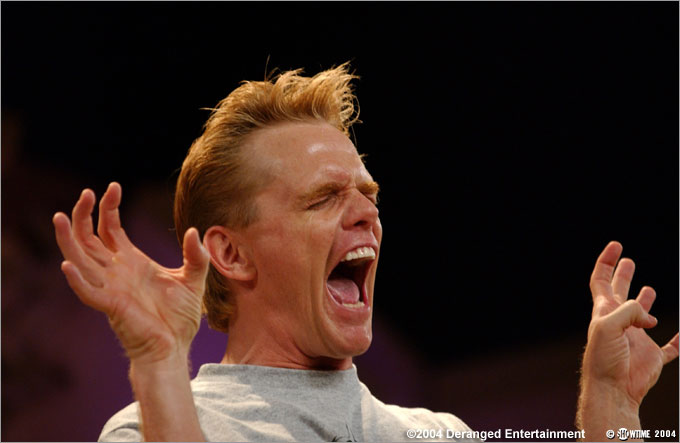
When comedian Christopher Titus got a development deal for a sitcom based on his stand-up routine, “Normal Rockwell is Bleeding” it could have been a slam dunk. Instead, his show “Titus,” despite getting decent reviews was cancelled after 3 seasons and some shark-jump-type changes that are usually a telltale sign of a show on the bubble.
(UPDATE: Please see Christopher Titus’s comment below. Network politics were to blame for the cancellation. And lest it seem that I didn’t like the show… I LOVED it. Just thought that first episode wasn’t representative.)
To say his routine is based on his true story of growing up in a dysfunctional family would be an over-simplification. Every comedian grew up in a dysfunctional family. But shows based on stand-up tend to be about family life, with relatively unattractive guys being nagged by better-looking wives and obnoxious kids, with love winning out over all manner of adversity.
In Titus, which debuted in March 2000, Christopher is a single guy still shell-shocked from what he’s been through with his insane family. (“Not as in, ‘your mom is insane,’ but as in, ‘We the jury find the defendant…'”)
It is remarkable when someone like Christopher Titus can not only survive what he went through but embrace it. If you don’t know the whole story watch “Normal Rockwell,” but suffice it to say his dad was the worst imaginable role model and his mom killed her husband and then herself. The series focused primarily on Titus’s relationship with his father, Ken, played with no redeemable qualities by Stacy Keach. His younger brother Dave (Zack Ward) is something of a sidekick, while his friend Tommy (David Shatraw) and girlfriend Erin (Cynthia Watros) round out the cast.
Word is that Titus wanted the episode “Dad’s Dead” to be the pilot. In watching the episode that actually aired as the pilot “Sex With Pudding,” you can see where the show may have gotten off on the wrong foot. It’s freaking awful. In the end, however, the show was cancelled for being too edgy. So maybe the blandness of “Pudding” was an attempt at a safer choice. It makes one wonder how it’s decided in what order a show’s episodes will air. Except in a show where the pilot involves heavy exposition and character introduction, there is some choice available. The first episode of Firefly to air was “The Train Job,” a great episode but not the “pilot.” Could a different choice have changed that show’s fate?
But back to “Sex With Pudding.” Isn’t that an awful title? The episode is not, like most of the others, set in the Titus household, the scene of so much of the referenced crime. It’s not about Christopher’s dad, or about his family at all, aside from the fact that his brother is always hanging around. It’s a stereotypical sitcom story about a jealous guy who thinks his girlfriend is cheating. It opens, as does every episode, with Titus talking directly to the camera in a dimly lit, sparsely furnished room. He talks to the camera about trust. His inability to trust, thanks to his parents, affects his relationship with Erin. But although trust is the theme of the episode, if you will, it’s a story we’ve seen a million times.
Most of the episode is set in Erin’s workplace, a bland office environment that might as well be Veridian Dynamics or Dunder Mifflin. Christopher makes an ass of himself going down there to try and gather evidence. Erin soundly reprimands him in a series of exchanges that tells us nothing about their relationship. And the big twist is, the person who has a crush on Erin, the person calling themselves “Pudding” is a woman. Shock me, shock me, shock me.
By contrast the episode “Dad’s Dead” captures the personality of the show. Christopher opens it with, “The Los Angeles Times states that 63% of American families are now considered dysfunctional. “That means we’re the majority.” He goes on to explain, “Normal people terrify me. They haven’t had enough problems in their lives to know how to handle problems when they come up.” And that’s really what makes him a good “character”–he’s been through some shit and come out stronger.
Titus arrives at the home his dad and brother share to find Dave freaking out. Dave thinks their dad may be dead since he hasn’t emerged from his bedroom for a beer in four days. See, that’s funny. Things get a little scattered midway through, when we meet a nurse that Ken is nailing, but that’s kind of a good thing. It’s not formulaic, and nothing is resolved by the end. Titus is just going to keep on living this life because it’s what he knows. And it will keep on making us laugh–and cringe a little, too. Would anything have been different if “Dad’s Dead” were the pilot?
It wasn’t really The Big Bang Theory that inspired me to start this blog; it was Studio 60 on the Sunset Strip. But for my 100th post I wanted to write about a show that I really, really love but for some reason hadn’t written about yet.
Actually there is a reason. I’ve been holding out hope that I would someday get to see the unaired pilot and blog about that, but Chuck Lorre isn’t letting that particular Schroedinger’s cat out of the bag/box. In our minds it will remain simultaneously great and terrible.
…except for the cold open, available on YouTube here: http://youtu.be/jftzOTnB30I (No embed code, for some reason.)
Like the opening scene of the aired pilot, it’s set in a high I.Q. sperm bank, and the dialogue is similar. The main difference is that here, Sheldon Cooper (Jim Parsons) and Leonard Hofstadter (Johnny Galecki) have already made their “deposits,” while in the aired pilot they have a change of heart and leave. Personally, thinking that they couldn’t go through with it makes me like them a little better.
Even in the aired version, this scene feels tacked on, and a few things don’t quite fit with what we now know of the characters. Leonard makes a masturbation joke to Sheldon: “You’re a semi-pro.” (Sheldon? Really?) And donating sperm just isn’t the sort of thing Sheldon and Leonard would do. They never seem to lack for money and Sheldon seems incapable of anything remotely sexual. And Leonard just acts like a jerk telling the receptionist the answers to her crossword puzzle–sure, he’s smart but he’s not a jerk. (Weird trivia: both Parson’s and Galecki’s fathers died in accidents.)
Once you get past that scene, however, the show comes to life. As the guys trudge up the three flights of stairs past the forever broken elevator in their apartment building, they get a glimpse of the beautiful, tan blonde (Kaley Cuoco, previously the jump-the-shark character addition on Charmed) unpacking in the unit across the hall. A lesser show would have had them do something like trip and fall or stutter when they talk to her. Instead, Leonard extends a heartfelt but off-kilter greeting.
In the original the guys meet a girl on the street—rather than a new neighbor— and let her stay with them. I can’t see them sustaining that plotline for very long. Perhaps the plan was to have the girl eventually take the apartment across the hall.
And who doesn’t love the theme song? It was almost “She Blinded Me with Science,” but the Bare Naked Ladies’ recitiation of the formation of the universe is infinitely more satisfying.
Many of the show’s recurring elements are introduced in the pilot: Sheldon’s spot on the couch, the broken elevator, Leonard’s previous relationship with Joyce Kim (who we later learn was a North Korean spy), and Raj’s inability to talk to women. Also, Sheldon wears a Flash T-shirt, the first in a collection.
One of the great things about TBBT is Penny isn’t just an empty-headed blonde bimbo, though unfortunately this is how she comes across in the pilot. Her reference to astrology acts as short-hand for “she’s a ditz” while her bangs give her a little girl look that she outgrows as the character develops. She even seems to talk in a higher voice than normal. Sheldon, on the other hand, is a little too astute about sexual proclivities. He knows Leonard’s intentions almost before Leonard does.
Raj (Kunal Nayyar) and Wolowitz (Simon Helberg) are introduced about midway. Their characters are fairly one-dimensional and would remain so for at least a season. That goodness they’ve come so far! In hindsight it’s kind of hard to believe that Chuck Lorre, the creator of such douchebags as the Harper brothers also created such loveable characters.
Though Sheldon and Leonard are introduced with equal weight, it’s suggested that Leonard is the one most desiring to sleep with Penny and is thus assumed to be the protagonist. As the show has progressed, it could be argued which one of the guys is actually the star. Sheldon continues to grow as a person, in the meantime garnering Emmy nominations for Jim Parsons, while Leonard has a followed a typical boy-pines-for-girl-gets-girl-then-loses-girl trajectory. Sheldon makes the show. Even on their Comic-Con panels, Parsons tends to grab the spotlight.
Throughout the episode the geek jokes abound, ranging from Klingon Boggle and Luke Sykwalker shampoo to complex equations worked out on a whiteboard just for fun, complete with jokes that no one without a Ph.D. would get. This stuff is just the icing on the cake, though. Although a good portion of us fans are no doubt geeks, the truth is most of us are somewhere in between the guys and Penny on the genius spectrum. We might have Lukeskywalker shampoo (or want some – do they have that at Rite Aid?) but we probably didn’t build anything that’s currently orbiting a moon of Jupiter. If you did, mad props.
…math, science, history, unraveling the mystery that all started with a big bang. (Bang!)
We’ve probably had enough of the mockumentary format for TV shows. We had probably already had enough of it in 2006 when Lovespring International ran for one basic cable-length season. But damned if it doesn’t make a handy format for introducing all of your characters in a pilot.
The trick is to capture the essence of each character in a just a handful of lines. If you go back to the pilot of The Office and look at Pam’s face when she says, “Jim said mixed berry?” you witness a real where-it-all-began moment. But I digress…
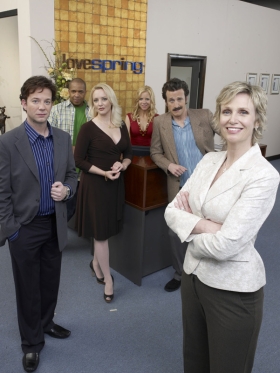
Lovespring International was produced by Eric McCormack of Will and Grace (who guest stars in ep. 2). It was partially improvised and features a cast familiar to fans of improv/sketch comedy. We are introduced to Lovespring International, elite Beverly Hills dating service (located in Tarzana, CA) by each member of the staff telling us what they do.
Victoria Rachford (Jane Lynch) is founder and CEO. Burke (Sam Pancake) claims to “run the place.” Lydia (Wendi McLendon-Covey, of Reno 911 and more recently the inappropriate mother from Bridesmaids) is a Relationship Consultant who asserts that she can find a match for anyone and assures the viewer that she is “married in her heart” to her partner of 20 years. Steve (Jack Plotnik, also of Reno 911), the company psychologist doesn’t mince words about his job saying he is “in charge of weeding out the crazies.” Alex (Mystro Clark) directs client videos, making people appear hotter than they are. Tiffany (Jennifer Elise Cox) is the whiny blond receptionist smacking her gum. Burke reminds us repeatedly that he is in charge of all of these people–we see more of him than anyone else.
All of these introductions might be an effective way to introduce characters quickly, but it feels a bit like spoon-feeding the viewer. Introducing the characters this way tells us a couple of things: It’s going to be an ensemble effort. The workplace is going to be a constant battle of egos. And the irony is going to stem from a bunch of so-called relationship experts who suck at relationships.
The meat of the episode happens as the agency’s top gold-level client files a complaint that too many men are falling in love with her. Victoria, learning that the agency is in danger of losing a major client, threatens to fire someone if they don’t save the account. Lydia comes up with a plan, which Burke co-opts as his own and then turns into a disaster with the assistance of Alex and plenty of booze.
The character we get the least time with, regretably, is Jane Lynch’s Victoria. She is just returning from a vacation in this ep. and it’s looking like her repeated absences are set up to become a bit.
The whole show has a sketch comedy feel that prevents the viewer (me, at least) from feeling really invested in the characters. Maybe it’s the improv element, the mockumentary format, or maybe it’s just the actors’ clowny make-up. It feels like, perhaps they might have grown on you over enough time. The Office felt really weird and cartoonish in the beginning (and the pilot wasn’t well-received), but after a couple of season you could say stuff like, “That is so Dwight.” Maybe the Lovespring crew could have grown on audiences if they had been allowed to hang around long enough.

 When this show debuted, viewers went into it thinking they knew what to expect. It was another The Office, with a “female Michael Scott.” In fact, this mockumentary was originally conceived by creators Greg Daniels and Michael Schur and a spin-off of The Office. You would be forgiven for maintaining that assumption even after viewing the pilot, although there are hints here of greater potential. To be sure, Parks and Recreation took a little time to find its own voice, and with a powerful comedienne like Amy Poehler in the lead, it’s not surprising that it did so. Here is what audiences saw in April 2009. Continue reading




 Anatomy of a Pilot