New Girl

Just in case you’re not one of the reported 10 million people who tuned in for the much-ballyhooed premiere of New Girl last week, here’s the deal. It’s terrible. Okay, maybe that’s a bit harsh, but as someone who loves most of Zooey Deschanel‘s work going back to Almost Famous, I found this show to be a huge disappointment. You can pick apart whether the jokes are cliche or the characters are likeable, but I don’t generally expect much from network sit-coms in that regard.

My main problem: Why Dirty Dancing? What is the fascination with that movie? And is Zooey’s character Jess even old enough to remember it?? It came out in 1987, and she’s probably supposed to be 30, tops, so what exactly is her attachment to a trite film about a skeevy old guy (no disrespect to the late Patrick Swayze, who played said skeevy old guy) preying upon an idealistic teenager wearing Keds? Continue reading

Husbands, the Series

Husbands, the Series premiered via UStream tonight at 6:30 PST. “Why now?” co-writer and star Cheeks was asked. “Why not?” he replied.

Whether or not you think the world is ready for a series starring a gay married couple, it is here. And when you think about it, it’s kind of hard to believe it hasn’t been done before. Prior to the premiere, Executive Producer Jane Espenson, a woman with serious geek cred (Buffy, Angel, Dollhouse, Warehouse 13, Battlestar Galactica…), and stars Cheeks and Sean Hemeon, gave a little sneak-peek. They discussed what prompted Espenson to create this show, on her own dime, for the web. In a nutshell, she felt that this show needed to exist, and the web gave her the right outlet for it. “If Joss hadn’t done [Dr. Horrible’s Sing Along Blog], I wouldn’t have done this,” she said.

The looming question was, is it funny? The pilot, titled Waking Up in Vegas, runs just a minute and a half and, like most webisodes is basically one joke. It opens with the characters, Cheeks and Brady, accompanied by bestie Haley (Alessandra Torresani) talking about their recent secret wedding. They kept it quiet because, we learn, Cheeks is a famous actor while Brady is a professional baseball player. Then we flash back four days to Las Vegas, just following the legalization of gay marriage, and we learn how the blessed union came to be.

The characters live up to a lot of stereotypes in this little snapshot. But it’s interesting that Brady is a professional athlete, an area where, unlike in Hollywood, being gay is still probably taboo. (If you’ve ever seen the hilarious play Take Me Out by Richard Greenberg, you know the potential of this subject matter.) And this is clearly just an introduction. There aren’t any big surprises but it sets us up for situations relate-able to any married couple, as well as those unique to gay men.

My favorite exchange is when Cheeks asks, “Do you have batting rehearsal?” to which Brady replies sweetly, “We call it practice.” So yes, it was funny, as well as quirky and colorful. I look forward to seeing where it goes. We don’t have to wait long. Episode 2 debuts on Thursday.

I saved the best part for last. Nathan Fillion is going to appear on the show!!!

Bob’s Burgers

For my last post I tried to figure out what I disliked about the pilot of what sounded like a great show; now I’m trying to figure out what I love about the pilot of a show that sounds hopelessly derivative.

The first time I saw the pilot of Bob’s Burgers, when it debuted on January 9, 2011, I was bored to tears. Hearing H. Jon Benjamin‘s voice and not LMAO off is actually a little disorienting. But his character, Bob Belcher is just a dumpy, boring guy; another animated oaf with a family of five. I’ve only stuck with the show–and I’m guessing I’m not alone in this–because it’s sandwiched into the middle of Fox’s Animation Domination. Ratings are good but critical reaction is less than stellar.

Somehow, the show has grown on me, and when the pilot re-aired recently, I found myself cracking up. It’s definitely one of those shows–like The Office–that gets funnier the more you feel like you know the characters.

The pilot is set during Labor Day weekend, as the Belcher family restaurant is prepping for it’s grand re- re- re-opening. The whole family is part of the act; the three kids are left in the restaurant to welcome the onslaught of business while husband Bob (Benjamin) and wife Linda (John Roberts) grind meat–not a euphemism–in the basement. We also learn that it is Bob and Linda’s anniversary, which he has forgotten, and she optimistically reads his ignorance as a ruse. From their conversation we learn that they have worked hard for their little family business, even on their wedding night–again, not a euphemism.

One of the primary tasks of this pilot is to establish its mashup of family and workplace comedy. Many of the jokes stem from the supporting characters’ dual roles as Bob’s offspring and employees. “My crotch is itchy,” reports Tina. Bob’s response: “Are you telling me as my grill cook or as my daughter?”

Like King of the Hill, for which Executive Producer Jim Dauterive was a writer, the show has a slower pace than the Seth McFarlane panoply has conditioned us for. The charters even talk a little slowly. What’s gotten really old, though, is shows with fat guy protagonists who mistreat their wives and kids.

Bob’s kids are horrible. They were described (accurately) by an IGN reviewer as “two Barts and a Milhouse.” The eldest, Tina, (Dan Mintz) is the Milhouse, shuffling around scratching her genitals and mumbling.

Louise: “She’s autistic, she can’t help it.”

Tina: “Yeah, I’m autistic.”

Bob: “You’re not autistic, Tina.”

Middle child Gene (Eugene Mirman) is the showman, happily donning a giant burger suit and using a noise-maker to attract/harass customers. We learn that youngest daughter Louise (Kristen Schaal) has told her class at school that her family’s burgers contain human meat. Throwing a wrench into plans for a profitable weekend, a pasty-faced health inspector, who turns out to be an ex-boyfriend of Linda’s, slaps up a yellow warning sign until he can conduct a test on the meat. Only when the lovesick inspector works through his issues can the day be saved.

So, we’ve got horrible kids, a wife who’s a little off, but here’s the thing. As on King of the Hill, the husband is the grounded center around which the lunatics revolve. He’s imperfect–he forgets important dates from his wedding anniversary to his own birthday. Still, he’s basically a good, hardworking guy trying to make an honest living. He’s likable, something we cynics are so used to anymore. So, just don’t compare him to Archer, who despite sharing a voice, is his polar opposite, and you might find that he and his brood are pretty funny.

The Middleman

On paper The Middleman sounds like an amazing show: young struggling artist and gamer girl gets recruited by mysterious crime-fighting agency to battle comic book-style villains. (So many words to love in that sentence.)

It’s based on a graphic novel by Javier Grillo-Marxuach and Les McClaine, and the production style echoes that origin. It’s got a Scott Pilgrim thing going on, but its tone also reminds me of Wonderfalls or Pushing Daisies. Yet, it only takes about five minutes of the pilot to notice that this show is terrible. That could be why it only lasted 12 episodes in 2008, but then, better shows have lasted even less (e.g. the aforementioned Wonderfalls). And, for all I know, there is a die-hard Middleman fan base out there cranking out fan fiction and tweeting to the network to revive it. So what’s wrong with it?

First of all, it was on ABC Family. ABC Family seems to think it has an audience for campy genre TV (Three Moons Over Milford) yet only succeeds with teen soap operas (Secret Life, Pretty Little Liars). They also tend to keep things in a safe-for-family-viewing zone that doesn’t necessarily work for genre TV.

Middleman banks on its audience’s existing knowledge of comics, gaming, sci-fi, and action movies. It packs in the references like digitally-added TIE fighters. Geeks love them some references (see Tropes are Not Bad), but personally I prefer my references baked into the plot (The Big Bang Theory) rather than flung at me like paper napkin fireballs (Breaking In).

So what makes this hour-long pilot feel like its the length of the bonus footage from LOTR? Let’s back up and look at the plot.

We start at A.N.D. Laboratories (tagline: We scramble your DNA. Get it?) A young dark-haired secretary (Natalie Morales, seen more recently on Parks and Recreation), sits flipping a silver lighter open and shut and chatting with her mother as things go haywire in the laboratory behind her. The mom conversation serves as exposition. The heroine, Wendy, who looks kinda like Hilary Swank, is an art school graduate with a boyfriend her mother disapproves of. Suddenly an amorphous monster with many eyeballs bursts through the glass windows of the laboratory and Wendy fights it off with a letter opener, dropping her lighter in the process.

A clean-cut man in a dated military uniform shows up, makes her promise not to tell anyone what she’s seen. He calls himself The Middleman (Matt Keeslar). Wendy’s lighter is blamed for the ensuing explosion, and she is unable to get another temp job, so winds up getting recruited by The Middleman’s shadowy employer. What we have here is a typical Hero’s Journey. The hero(ine) is seen in her ordinary world, meets her mentor figure, is called to adventure, refuses the call, accepts the call, then faces an ordeal*.

So here’s the problem. I don’t like the hero. Wendy moves through these stages way too easily, without any introspection or suffering. We don’t get to know her in the ordinary world (i.e. pre-hero) for long enough to give a Gungan’s ass about her. Then, when she’s called to join this crime-fighting task force, she doesn’t show anything other than vague annoyance. Is she surprised, honored, scared? Don’t know. The reason that she has a change of heart and decides to join is only that her loser of a boyfriend dumps her for completely superficial reasons. We’ve had no opportunity to see them together as a couple, so we’re not invested in the relationship to begin with. When he dumps her, we don’t know what she’s feeling; should we be sad that her heart is broken or cheer that she is free from a bad relationship? And is the end of this seemingly insignificant courtship really enough to send her running to join “the paramilitary version of Amway,” as she calls it.

As with the line quoted above, this pilot actually has a few nuggets of great dialogue. Unfortunately they’re buried under a pile of crap. I’ll leave you with one more, spoken by The Middleman in the climactic scene and arguably the best line of the whole thing: “The only thing I hate more than mad scientists trying to take over the world is mad scientists trying to take over the world and using the brains of innocent primates in order to do it.”

*If you’re into this sort of thing check out The Writer’s Journey: Mythic Structure for Writers by Christopher Vogler.

Manhattan, AZ

I decided to look at Manhattan, AZ and Eureka* back-to-back since they both center around police officers finding themselves in strange, new towns. Both fit squarely into the Town with a Dark Secret trope. (See also Haven.) The similarities go even further; both Daniel of Manhattan, AZ and Jack of Eureka have teenage children with bad attitudes and are recently separated from their wives (one by death, the other by choice). Each meets a series of oddball people including a hard ass female law enforcement official. And yet, these shows could not be more different.

The first word that comes to mind in describing Manhattan, AZ is “wacky.” It’s wacky in the way that Pushing Daisies was wacky, but with an irreverence reminiscent of It’s Always Sunny in Philadelphia with a dash of My Name is Earl. Unfortunately, Manhattan, AZ predated all of these, so I can’t image how it would have been described in the fall of 2000.

The clash of serious subjects and ridiculousness is almost confusing for the first 2-3 minutes of the pilot. The protagonist, Daniel Henderson (Brian McNamara), narrates certain events but what is seen on screen doesn’t quite match up. Once you get the hang of this, you can’t help but wonder where it’s going to go next.

Daniel describes his perfect life in the perfect house with his perfect wife, perfect son and perfect job. The job is as an under cover officer for the LAPD, where we see Daniel and other officers prepping for “Operation Thong Sausage,” a prostitution sting. The seriousness with which Daniel treats this assignment juxtaposed with his ridiculous appearance in an evening gown and wig is one example of the show’s exercise in contrasts. His wife, Charlie pursues the “insignificant little hobby” of chasing down Dolphin poachers. When she dies in a diving accident and is canned as tuna (her name is Charlie, get it?), an event to which he reacts by watching “anything with Alec Baldwin in it” while his son stuffs his face and plays video games.

As Daniel continues his narration, describing his decision to move to Arizona and take a new job he tells us, “everything looked different,” and suddenly a different actor (Vincent Berry) is playing the kid. This is the kind of apropos-of-nothing joke that litters the script. As father and son land in Manhattan, Arizona about six minutes in, the show shifts from voice-over to ordinary dialogue. They meet the mayor, Jake Manhattan, played by Chad Everett (for whom the town is named… I guess?) and learn about Area 61, essentially just Area 51. (The name is trademarked… I guess?)

Daniel soon learns that a lot of the neighborhood pets are turning up with missing right hind legs, a scandal the townspeople blame on the “government guys over at Area 61.” In an absurd town hall meeting scene, Atticus returns the missing animal limbs and takes responsibility for the crimes. The town of Manhattan has the same small town feel of Eureka, but the people are strange, not in a like-able way but just plain strange. It is hard to sympathize with these characters–even the son, who we know is struggling with major change.

Daniel soon figures out that Atticus is just creating drama to convince his dad to move them back to L.A. and hasn’t actually harmed any animals. The mystery of the week is wrapped up pretty quickly and easily. Being a comedy and only half an hour long, this pilot focuses more on introducing a tone and style, with a few laughs–if you’re into it’s particular brand of humor. The single-camera style and absence of a laugh track differentiate it from the typical sit-com, so it takes a little adjustment. It doesn’t have the benefit of Eureka’s two hours to subtly build character and setting. Based on the presence of Area 61 we’re expecting some type of alien plot, yet aliens don’t figure into the pilot at all. It’s a little hard to see where this is all going. It didn’t go far, in fact–the show only lasted for eight episodes. From this, it doesn’t appear to have been any great loss.

*I’ll be posting about Eureka within the next few days!

Three’s Company

Watching the pilot episode of Three’s Company for the first time in–I’m gonna say 25 years–I was slightly horrified to discover that I not only remembered the plot, which is pretty straight forward, but individual jokes, word-for-word. I guess this sit-com that ran from 1976 to 1984 made a bit of an impression on my young mind.

What I remember most are the final moments when Janet tells Jack how she convinced Mr. Roper to let him live there. “I also told him that you were gay,” she says, and Jack falls off the couch. I had to ask my mom what gay was. I’m not sure I understood it even after her honest and open-minded explanation, but the ruse of Jack pretending to be gay is at the heart of the show’s premise.

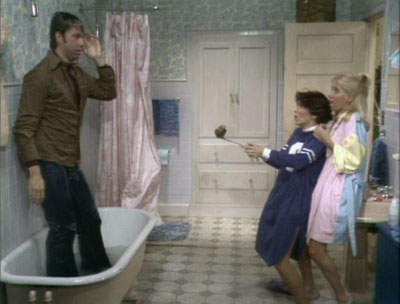
In case you don’t remember or are under 30, the pilot opens with two women, bombshell Chrissy (Suzanne Somers) and petite Janet (Joyce DeWitt) cleaning up the remnants of the previous night’s party. Their modest two bedroom apartment isn’t much worse for the wear, except for a punch ladle that has turned green from soaking in a mysterious alcoholic liquid. They quickly discover a man asleep in their bathtub. They wake him by turning on the shower and wielding the discolored ladle as a weapon.

The man in the tub is Jack (John Ritter). He’s a little doofy, and taken with Chrissy, but seems like a reasonably nice, normal guy. The women are looking to replace their previous roommate, for whom last night’s bash was a going away party. The clincher is, he’s an amazing cook. Deciding he would make an ideal roommate, they plan to invite him to move in. Here’s where you have to use your mental wayback machine. Since that would be no big deal, this show could never work today.

Each of the trio has his or her own quirks, but the wacky in the show comes from the Ropers, an older married couple who live downstairs and manage the building. The writers hit us over the head with the fact that Mrs. Roper (Audra Lindley) has a sexual appetite that scrawny Mr. Roper (Norman Fell) just can’t satisfy. This role reversal, if you consider it that, is another point where the show was probably edgy for its day.

When Mr. Roper catches a glimpse of Jack, Janet tells him Jack is a woman. Then, a rather masculine woman shows up to view the apartment. Mr. Roper mistakes her for a man. Thus we’re introduced to this show’s convention of misunderstandings; somebody is always not what somebody else thinks. (Chandler: “I think this is the episode of Three’s Company where there’s some kind of misunderstanding.” Pheobe: “Oh, then I’ve already seen this one.”)

When everything comes out in the open and Mr. Roper finds that the women are planning to have a man move in, he is outraged. However, Janet quickly smooths things over, only we don’t know how until that final moment I mentioned above. So, we’re set up for all kinds of potential misery, with a straight man forced to pretend to be gay, while simultaneously attracted to his hot roommate.

One more thing that would happen today that didn’t then: Jack and Chrissy never get together. Granted, her character left the show after four seasons, to be replaced by other hot blondes. But in a sit-com pilot today, where a guy and two girls were introduced in this situation, it would be almost a given that somebody was sleeping with somebody in the season 1 finale. So watch this show, if not for its campy humor and laughable 70s attire, for the fact that it’s different from what we’re watching these days.

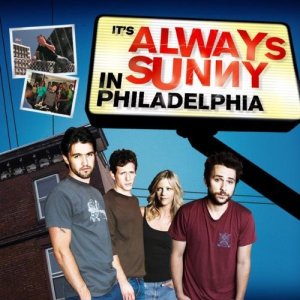
It’s Always Sunny in Philadelphia

Attempts to describe It’s Always Sunny in Philadelphia usually center around how despicable the characters are. If you have watched the show at all, you’ve probably seen the gang–Charlie, Mac, Dennis and “Sweet” Dee–do some pretty despicable things, to everyone around them including each other. The lowest of lowlifes. So, if you’re going to write a pilot about the scum of the Earth and expect people to keep watching, how do you do it?

Not only did the show’s creators, Rob McElhenney (Mac) and Glenn Howerton (Dennis) get their show noticed, they did it on almost no budget. The story of their bargain basement pilot catching the attention of FX, who re-shot it on location is a well-known piece of It’s Always Sunny lore.

If you rewatch the pilot, “The Gang Gets Racist,” you’ll notice something interesting. The gang isn’t that horrible. The episode opens as Dee (Kaitlin Olson) innocently introduces a friend from her acting class, Terrell (Malcolm Barrett), to the three guys as they’re closing up the pub they own.

As Terrell enters, Mac, Dennis, and Charlie (Charlie Day) react with slight alarm, as though Terrell poses a threat. Once Dee explains who he is, they trip all over themselves trying to sound casual and dropping awkward, racially insensitive remarks. So they look like idiots, but it’s easy to buy that they just got caught off-guard. We can relate cuz we’ve all been caught with a foot in our mouth at one time or another. It’s all smoothed over once everyone has some beers and the gang decides to hire Terrell to promote the ailing bar.

As the show unfolds, we meet The Waitress (Charlie Day’s real-life wife, Mary Elizabeth Ellis), who works at the local coffee shop. Dennis observes that Charlie is obsessed with her; the introduction to one of the show’s longest running gags that only intensifies. Charlie is again misinterpreted as a racist when The Waitress enters just in time to hear him quote Terrell’s mention of “n—ers hanging from rafters.” Naturally, she is horrified, but we sympathize with Charlie, seeing him as just a sweet guy with a crush and bad timing.

We start to notice something about Terrell is not what it seems when he ducks a kiss from the gorgeous Dee and instead eagerly embraces Dennis. It’s then quickly revealed that he is gay and his strategy to increase business for the pub is to turn it into a gay bar, a wildly successful undertaking.

A disappointed Dee demands, “How could you not tell me you were gay?” Answer: “I’m a musical theatre actor.” It might only be because I have a musical theatre background, but I love this joke and it’s decidedly simple and mainstream. Something you could say on prime time network TV.

We delve a bit deeper into the characters’ dark sides as we see Dennis lap up attention from gay men like a dehydrated puppy, and then watch as Charlie parades a black date in front of The Waitress to prove he isn’t racist. Meanwhile Mac feels left out because black people don’t take to him like they do to Charlie. Through it all Dee seems pretty normal and nice. Theeeennnn… We get to the climax of the episode.

Dee decides to teach both Dennis and Charlie a lesson and set everything back to normal. Her plan is effective and more than a little shocking–with a twist at the end that makes it even worse.

The pilot gives a good look at the show’s dark sense of humor and its edginess. It’s laugh-out-loud funny. It has fun with political incorrectness. But only now, as the show prepares to launch its eighth season, can we look back and see that it was only Family Guy offensive in 2005. It took a little while to reach what we can now call It’s Always Sunny offensive. It set a bar now being sought (and reached) by such shows as Wilfred and Louis C.K.

So no matter how despicable they get, no matter how much we feel like we need a shower after witnessing their actions, we care what happens to these characters. We’re hooked. Like Dee and Dennis were when they did crack in order to exploit the welfare system.

Here’s a guide to many of the show’s tropes.

The Guild

So I’m sitting at Comic-Con singing along to Dr. Horrible’s Sing Along Blog and loving Felicia Day in spite of her questionable singing ability and thinking “How the hell have I not blogged about The Guild“? (Felicia even stopped by to say hi and thank the fans–she’s adorable.)

In case you’re not familiar, The Guild is a web series that’s been running since 2007, about a group on online gamers. It was created by Felicia Day, previously known in the Whedonverse as Vi on Buffy the Vampire Slayer.

We meet our heroine as she’s having a bad Friday night. She’s sitting at home alone, unemployed, and having not left the house in a week and recently dumped by her therapist. What we quickly realize, though is this is pretty much a normal Friday night for her.

In this 4-minute episode, titled Wake-Up Call, we have just brief introductions to protagonist Codex and the other players in her guild. We flash back to the phone conversation Codex had wherein her therapist dumped her. As the therapist accuses her of lacking motivation to conquer her addiction, Codex fumbles with the computer, participating in a heated guild run. The game is not named but we assume it’s World of Warcraft. (It probably helps to be a gamer, but you don’t have to be one to get the show.)

Each of the other four players is seen in turn, and the show does not shy away from gamer sterotypes. There’s an overweight woman who’s neglecting her kids, an unattractive guy who eats constantly, a skeevy younger guy who weaves sexual innuendo into all conversation, and a perky Asian girl accessing the web on multiple devices at once. One guy, however, is missing, and we’re about to find out why.

It doesn’t take long to realize that this group of disparate warriors is closeknit in a way that only people who have never seen each other can be. “I hear them. It’s good enough for the blind,” Codex tells her therapist. This is the perfect example of this show’s wry style of humor.

However, the line that really sums up our heroes’ situation comes a couple of episodes later: “You can’t log off of your own life.”

The Guild, in many ways, set a precedent for web TV, employing strong writing, production values, and acting, while catering to a niche audience. Here’s an interview Felicia did about the show early in its run.

Pilot-y Tidbits from Comic-Con

H+

This new web series, produced by Bryan Singer, was teased to minimal fanfare–actually, lumped together in a panel with Mortal Combat: Legacy–but it looks highly promising. The premise is that a good chunk of the world’s population has been tied into some futuristic version of the internet, where information is downloaded straight to your brain. Due to a glitch, a third of those people have dropped dead. Those remaining are left to figure out what the frak happened. Here’s a trailer.

What sounds cool about this series is, you will be able to view the episodes (48 total) in the order of your choosing, organizing them by character, chronologically, or geographically. This approach capitalizes on the uniqueness of the medium, rather than just creating a show as one would for television and throwing it up on the web.

Effin With Tonight

This animated series created by former Tonight Show writer Jim Shaughnessy is set to launch on the web at Crackle.com. They screened a clip and it looks pretty damn funny. It stars Patrick Warburton (The Tick, Family Guy, Venture Bros., etc., etc., etc. This guy is in everything.) as well as Joe Cipriano (the voice of Animation Domination). It’s basically an animated late night talk show that parodies everything that Shaughnessy despised about his old gig. And, in the panel, he made no bones about how much he hated it. They’re hoping to take it to a network, but I can see it being about as successful as the equally irreverent and highly underrated Sit Down, Shut Up.

Writing for TV

This was just a random tidbit I picked up in a panel on writing genre TV. It used to be you needed to write spec scripts of existing shows to break into writing. Now, according to the panelists, there is more demand for scribes who have written their own pilots. Still no solid advice on how the hell you get that script into the hands of anyone who gives a damn, but one writer had an interesting story about how she wooed Joss Whedon.

Archer

This was not a pilot, but the first of three-part story arc that will run this September. It was too awesome not to mention. This mini-story takes our hero, “Duchess,” out of his usual surroundings at ISIS and places him on the high seas, and introduces a new character, played by–you guessed it–Patrick Warburton. There are pirates. ‘Nuff said.

Partial or complete pilots of a number of other shows were screened during the Con, including Terra Nova, Alcatraz, Person of Interest, The Secret Circle and Locke & Key. Reviews and opinions abound so I won’t rehash. But the fall season is looking up.

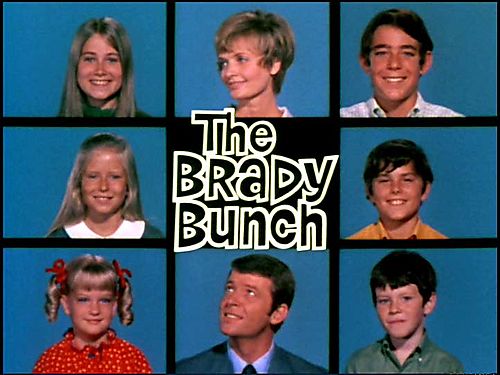
The Brady Bunch

The Brady Bunch–the show as well the members of said ‘Bunch’–have been analyzed to the point where you might want to be beaten to death with a Tiki god statue if you hear one more Brady legend.  Here is some history. And it’s been referenced to death in pop culture. (I still love that bit in Reality Bites about how things don’t go back to normal after a half hour, becuase Mr. Brady died of AIDS.) However, yesterday’s news that Sherwood Schwartz died warrants a mention of this, his most enduring creation.

The pilot episode of The Brady Bunch, “The Honeymoon,” aired on September 26, 1969. Mike and Carol get married in Carol’s parents’ backyard. Then they leave on their honeymoon, only to find that they miss the kids so much that they go back for them–and thus begins five seasons of family love-hate. If you are from this planet you have probably seen it. If not, or if you’re feeling nostalgic, you can watch it here

Two things have always bugged me about this pilot. Although the former Mrs. Brady is mentioned when Bobby struggles with whether to put away his mom’s photo, why does no one mention the former Mr. Martin (Carol’s previous husband)? But more importantly, what’s up with the cat? Tiger, the dog, at least hung around for a few episodes, but the cat, Fluffy, was never seen again after the pilot.