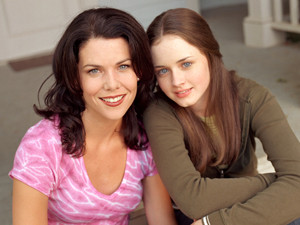
Gilmore Girls

Despite being off the air for two years now, Gilmore Girls still has a strong following, with reruns airing on ABC Family, and plenty of discussion in the blogosphere. This highly successful show must have started off on the right foot, right?

The pilot is thin on actual plot. It’s the kind of pilot that focuses on setting up a world in which a show will take place. I’d say the writers’ intention here was simply to train the audience in how to listen to these characters speak. The rapid fire dialogue filled with nonstop, sometimes obscure, pop culture references, is what makes someone either love or hate this show. When Rory, the cute, 16-year-old protagonist meets a guy, Dean (Jared Padalecki, now on Supernatural), she interrupts her own incessant babbling to say, “I never talk this much.” Already, only a few minutes into this pilot, we know that can’t possibly be true.

The opening scene in which Rory (Alexis Bledel) and her also cute mother, Lorelei (Lauren Graham) sit at the diner discussing a scattershot array of topics heavily weighted toward lip gloss, leaves me feeling a little empty. They come off as vapid girly-girls. Soon enough, though, we find out that Rory reads a lot of classic literature—a character trait that seems forced at this stage. The diner is run by a less-than-friendly guy in a ball cap named Luke who, it is hinted, has the hots for Lorelei. Lorelei is immediately portrayed as the “best friend” type of mom, acting as a pal to her daughter and letting her indulge a caffeine addiction. We see her limits, though, when she runs a flirtatious adult male away from Rory.

So, we are introduced to the quaint New England town of Star’s Hollow, Connecticut, which looks like the next studio lot tour could wander through the background at any moment. There’s the diner—we know it’s important since the episode both begins and ends there—and there’s a very busy inn, where Lorelei works, and naturally, a public school. We find out quickly that everybody knows everybody. Having a new kid in school, in this case Dean, is always a handy device for introducing characters and locations.

The most interesting character is Rory’s Korean best friend, Lane, whose parents are already planning her betrothal to a fiscally promising young man, and who changes clothes on her way to school so her mother doesn’t see her in a Woodstock T-shirt. Her ultra-conservative mother and Lorelei’s friend Sookie are both funny characters, but fall into the common pilot trap of making everyone a stereotype.

The same is true of Lorelei’s parents, rich socialites who live half an hour away, and who have been largely estranged from their offspring. Snarkiness appears to be matrilineal. It is all Lorelei can do to swallow her pride and ask them for the money to send Rory to a private school. I have to wonder, why private school? Star’s Hollow doesn’t exactly seem like the kind of place where metal detectors or drug dogs are de riguer in the high school, and Lorelei is portrayed as a strong, down-to-earth type for whom public school should be good enough. If growing up Gilmore didn’t lead to the life she wanted for herself, why does she want it for her daughter? But, we have to accept the lure of private school to care whether Lorelei can come to an agreement with her parents, and whether Rory can tear herself from her new crush. And, I know teenage girls are fickle—I was one—but she’s really so in love with a guy she talked to for 20 minutes that she is ready to change her whole life’s plan and jeopardize her best pals relationship with her mother?

The whole thing ends with a sickeningly cute exchange.

Luke: You do not want to grow up to be like your mom.

Rory: Sorry. Too late.

Based on this pilot, I hate this show. I watched the last couple of seasons, and found it pretty entertaining. The more mature version of Rory was interesting, her success in college enviable. The teenybopper version, however, and her teenybopper-past-her-expiration-date mom were just annoying. Sorry, fans, I know you are plentiful, but this pilot promises just another teen drama about nothing.
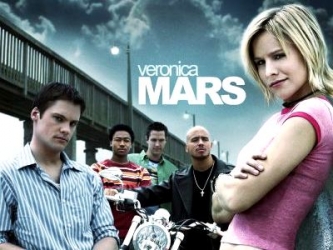
Veronica Mars

This is hard for me to believe, but I had never seen the pilot episode of Veronica Mars in its entirety until today. I started watching in prime time with episode 1.2—with a healthy dose of cynicism—when I was assigned to write about it for a local paper and interview Enrico Colantoni. I had written it off in advance as another Dawson’s Creek-type teen drama. But I fell in love. VM ended up being the first show I can remember that I made sure not to miss, and re-watched episodes, and talked about to friends and co-workers. I worked as an extra on it twice, and an episode was taped where I work. I love this show. And I love pilots. So I have no logical explanation for why I’ve never seen episode 1.1 until now. I write about it with full knowledge of who killed Lily, and all the other secrets that will be revealed, which makes the early hints that much more exciting.

Right away, the theme gritty song, “We Used to be Friends,” grabs you. (Hated when they remixed it for Season 3.) Veronica gives us a succinct and color introduction to Neptune, the town where she lives. It’s populated with the over-privileged and those who work for them.

She’s tenacious: She alone steps forward to help a boy who’s been taped, naked, to a flagpole in front of the high school. She’s smart: She demonstrates thorough understanding of the assigned reading even though she’s dozing in English class. She’s a smartass: When cops come to search her locker, she’s comfortable telling their dog to back off. She’s bitter: Her family isn’t rich and important like the others in town. The bitterness continues as Veronica explains how she used to be in with the cool crowd. Now it looks like her only friend is the new kid, Wallace—the one she freed from the flagpole. There a couple of blue-tinged flashbacks to reveal what her life used to be like, full of parties and BFFs.

After life at school, we see life at work; Veronica’s dad’s P.I. office. Her dad, Keith used to be the town’s Sheriff. (There are lots of “used-to-bes,” in keeping with the theme song.) Currently, V. is trailing Jake Kane on assignment from his suspicious wife. Veronica used to date their son Duncan, and her best friend was their daughter Lily. Lily was murdered, Keith accused Mr. Kane but couldn’t prove anything, was removed from office by recall, and V.’s mom left them. To add insult to injury, people believe it was Keith who leaked a video of the crime scene all over the internet.

The new sheriff immediately found evidence incriminating a Kane employee, and the matter was put to uneasy rest. Also, Lily’s boyfriend, the rich, spoiled bad boy Logan Echolls really, really hates V. In another subplot, V. reveals that she lost her virginity while roofied at some party the year before. This won’t be unraveled until the end of Season 2, but clues are revealed in several episodes along the way. I love when a show asks for a viewer’s long term commitment for payoff.

But wait, there’s more. V.’s mom appears to be shacking up with Jake Kane. The Veronica-Wallace friendship is a little sappy, but it lets the audience see that V. still has a heart, and gives us a look at her mad P.I. skills and twisted sense of humor. She ends up with the local biker gang in her camp, defending her from Logan. It’s a delightfully tangled web. Every little detail will come back in later episodes. Of course, you don’t know that. But the kicker: Keith is still investigating Lily’s murder. That alone lets us know there are plenty of juicy revelations to look forward to.

V. leaves us with this declaration: “I will find out what really happened.” Rest assured, she will.

Weird note: I once saw the first 10 minutes or so of this episode online (in French) and the scene where V. is camped outside the Camelot Motel in her car was the cold open. Here there is no cold open, and that scene takes place mid-episode. Hm.

Here’s an article I wrote about this show early in its run, including an interview with Enrico Colantoni.

UPDATE 8/14/10: For a more thorough analysis of this blog then you probably ever dreamed of, check out this blog.

Pushing Daisies

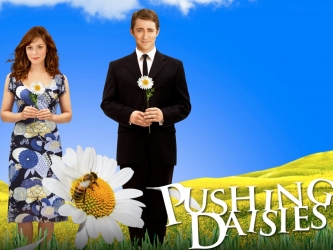
Pushing Daisies KeyartWe know in an instant that Pushing Daisies is going to be an unusual show. The first image we see is of an endless field of bright yellow flowers capped by an impossibly blue sky. A narrator with a deep, storyteller voice tells us that the little boy and his dog running through the flowers are Ned and Digby, along with their ages, down to the minute.

Digby is dramatically run down by a truck, but when Ned touches him, more with curiosity than sadness, the dog jumps up fully alive. Ned, we are told, has the ability to bring dead things back to life. Now pay attention. His mom is struck dead by on the kitchen floor by an aneurysm. Ned brings her back to life. Exactly one minute later, the man across the street drops dead. The dead guy’s daughter is Chuck, the apple of Ned’s eye. When Ned hugs his mom good night, she dies. Again. It’s a complicated gift, and if you missed this first three minutes, I doubt you would make much sense out of the show later on. One touch brings someone back to life, a second kills them. If the person is kept alive for more than one minute, someone nearby dies is his stead.

Fast forward to present day. Ned (the adorable Lee Pace) owns a pie shop. Emerson Cod (Chi McBride), a customer and a private investigator, has recruited Ned to help him investigate murders. It’s a big—and refreshing—leap from the normal cop-with-an-unusual-partner show. Kristen Chenoweth plays the pixie-like waitress Olive, who has a thing for Ned.

Soon, we see Ned and Emerson in action, as Ned sets his watch alarm for one minute and wakes a dead guy to find out how he got that way. Bam, the mystery is solved, and the audience has a sense of how the show will go.

Things become more complicated, however, when the next murder victim turns out to be Chuck (Anna Friel, kind of a British Zooey Deschanel–that’s a good thing), Ned’s childhood crush. He wakes her; she’s spunky, she’s charming, and reveals that the two of them were each other’s first kiss. Awww… Ned can’t bring himself to re-kill her, so after a minute, she is stuck between life and death for good. What really sucks is Ned has found the love of his life and he can’t touch her. Great dramatic tension, if difficult to believe.

The rest of the pilot (titled “Pie-lette”) involves solving Chuck’s murder, and protecting her aunts, Vivian and Lillian, from the killer. The aunt’s back story is that they are former synchronized swimming stars until one lost an eye, and now they are agoraphobics with a penchant for cheese.

To love this show requires buying fully into the premise. You have to treat it like the beautiful storybook that it is and not over-think reality. The characters talk at Gilmore Girls speed, and plays on words fly back and forth like ping-pong balls. Every detail matters. There is a sort of 1950s aesthetic in both the language and the look. Color in this show is a character in itself. Everywhere there are brighter-than-life hues, from the bulbous cherry red lamps in the pie shop to Olive’s floral print wallpaper and matching pajamas.

As with creator Bryan Fuller’s other shows, Dead Like Me and Wonderfalls, not enough people apparently got it. It was, however, nominated for several Emmys, winning for Directing, Editing, Music Composition (2008), Art Direction, Make-up, Costumes, and Best Supporting Actress—Kristen Chenoweth (2009). Honestly, it was one of those impossible to sustain premises, much like in the aforementioned shows, that couldn’t work forever. But the Pie-lette is delicious.

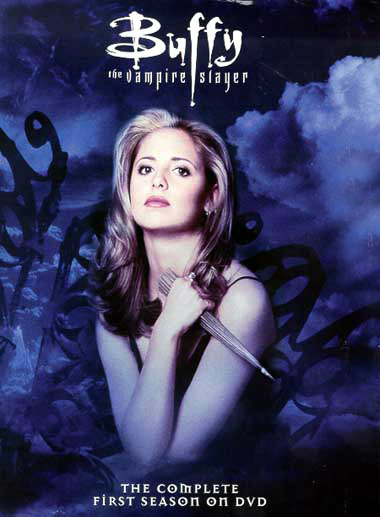
Buffy the Vampire Slayer

“Welcome to the Hellmouth”

There have been numerous articles in the last few years declaring that geeks are now cool. Shows like Big Bang Theory and Glee are held up as proof of this trend. It’s not the Marcia Bradys or the Mike Seavers we want to root for anymore. We love outcasts and braniacs. ComicCon isn’t just for Trekkers anymore. When did the tide turn? My first answer would be with Veronica Mars. But thinking back, there was Freaks and Geeks—short-lived as it was. But, wait. Even before that, there was Buffy. She may have been the original cool social reject; it helped that she was hot.

So imagine it’s 1997. Buffy the Vampire Slayer is a campy film starring Kristy Swanson that you may remember from earlier in the decade. Joss Whedon is not a name you hear regularly, if at all (did you know he was a writer on Toy Story?), and you’ve certainly never heard of a Whedonverse.

The stage, complete with eerie horror movie music, is set when a horny teenage couple break into the high school, apparently to get it on, but—oops—the perky blond chick is a vampire who changes and brutally kills the guy. (Sucks to be that actor. Congratulations, you landed a part in what promises to be a hit teen drama. But you die in the first two minutes.)

For those not familiar with slayerism, the opening credits and voiceover give the gist; in every generation, there is a chosen one, etc., etc. Here, Buffy is the fresh-faced Sarah Michelle Gellar, known mainly as a soap actress.

Buffy’s mom drops her off at her new school in fictitious Sunnydale, CA, where she has apparently transferred following the events of the film. And wouldn’t you know it? Sunnydale is smack on top of the Hellmouth, a portal to all things occult. On Buffy’s very first day, a body turns up in a locker with telltale bite marks on its neck. But we’ll get back to that…

In addition to introducing Hellmouth-adjacent life, the pilot takes as its storyline a typical teenage tale; Buffy’s attempt to fit in with the cool crowd, only to find that she is destined to walk among the outcasts. She approaches her new school with hope for normalcy, but nevertheless carries a sharpened wooden stake in her bag. (“Pepper spray is just so passé.”)

She first befriends the self-centered beauty queen Cordelia (Charisma Carpenter), who picks on the brainy Willow (Alyson Hannigan). Meanwhile, charmingly awkward Xander (Nicholas Brendon) can’t keep his eyes off of Buffy. Willow likes Xander. Mr. Giles (Anthony Head), new librarian in the apparently deserted school library, seems to already know all about Buffy’s slaying ways. So she goes to him when she learns about the locker body.

Vampires live under the city and are gearing up for some huge revolt, called The Harvest. So Buffy’s going to have a busy sophomore year, what with cheerleading, homework, and ass-kicking.

Oh, and I did I mention there is a dark and mysterious, and ridiculously hot guy trailing Buffy around town? We don’t get a name, or much information at all, except that he knows what’s up with the Harvest.

So the pilot gets us off and running with plenty of action, love triangleism, and more on the mysterious guy (who will, of course, be introduced later in the series as Angel), to look forward to. It’s a bit dark, often funny, and has enough eye candy to get addictive. And this is all despite the fact that, objectively speaking, it’s kind of bad. The acting, the dialogue… but stuff can be bad and still plenty entertaining. Just look at the original Star Wars.

For added fun, there is an unaired version of Welcome to the Hellmouth floating around the ‘net.

Memorable quote: (Said all SoCal bitchy) “God, what is your childhood trauma?”

Sex and the City

I have long held mixed feelings about Sex and the City. I never watched it regularly, but caught it here and there. There is something about it that holds my interest and makes me want to watch reruns that I catch while flipping channels; maybe it’s the gorgeous clothes, the excitement of New York City. At the same time, there is something that I really hate about this show. It’s a gut feeling; something primal. The feminist in me screams that something is very wrong, despite the fact that the show purports to be about independent, sexually liberated women.

To get to the bottom of this I decided to watch the pilot, which I had never seen before. I’m going to talk about the pilot as if I’ve never seen another episode, and this is all new. It’s June 1998. Sarah Jessica Parker is known to me as the chick from Girls Just Want to Have Fun… (cue flashback fx)

A narrator, our protagonist, speaks to the audience in voiceover. The story starts out seeming to be about an English journalist who moves to New York and finds love, then loses it. She turns out to be a sort of everywoman, representing single life in today’s New York… and the stereotypes start flowing. Women all want to get married, men don’t. Women are really, really picky about men. All single women are willing to spend $400 on a pair of designer shoes (news to me, but I don’t live in New York).

The information that will ostensibly form the rules of this TV world is delivered in the form of brief monologues by various New Yorkers. We know which ones are going to become regular characters, because they get their names, job titles, and marital status subtitled on the screen. The only guy who has anything remotely non-assholish to say about women, is naturally a computer geek with glasses and awful hair. It’s implicit that single women are friends only with other single women. Or a token gay man.

But, we’re told, a new age is dawning. In 1998, women “get” to treat men as sex objects. Objectification is a gift you give yourself. The four main female characters form a continuum of thought on this subject from bang-anything-that-moves to romance-is-still-possible. They talk about it and talk about it.

At the midpoint, our main character has sex “like a man,” getting hers with someone she hardly knows and then leaving with a thin excuse before he is satisfied. She is chagrined to find out, a few days later, that he’s okay with it. None of the other women fare too well on this particular evening, either. So we’re told that this is what the show is going to be about: women who try to be like men, only to find out that they’re still, you know, women. Through it all, Carrie keeps bumping into a business mogul whose name I don’t ever remember hearing, so we figure this will be a source of sexual tension to last the season, if not the series.

And what’s with all the smoking? Maybe it’s a New York thing. There was that fad in the 90s of women smoking cigars, but is Kim Cattrall with a giant stogie hanging out of her mouth attractive to anyone? At least to anyone who would watch a girl power show?

So here it is, the problem. The show is not really about single life in New York. It’s about the single life of upwardly mobile, hot women with hundreds of dollars to blow on shoes, who feel they’re being empowered by having sex. Now, whether or not promiscuous sex is empowering is, I suppose, a matter of personal opinion. And, Carrie very responsibly has a purseful of ribbed condoms, so we can supposedly write off concerns about safety. But are there only extremes? Hook the guy and start reeling, or simply hook up? We hope the show will be about finding the balance.

Dead Like Me vs. Wonderfalls

Dead Like Me castThe pilots of Dead Like Me and Wonderfalls warrant an old-fashioned, English class compare-and-contrast. Both were created by Bryan Fuller, who has a clearly defined style and a cult following. Despite being a consulting producer on the awesome first season of Heroes, Fuller seems to have earned a reputation as the creator of brilliant but cancelled shows.

Each of these two shows could be called a “genre” show. Or as an acquaintance of mine put it, “the kind of show that people who go to ComicCon like.” Their premises required a strong suspension of disbelief, which probably would have been strained over the course of three, four, five seasons. (Just look at Heroes. How many times is the world going to need saving, for Christ’s sake?)

Dead Like Me and Wonderfalls both feature young, smart, misanthropic, take-no-shit, female protagonists with male-sounding names. By the ends of their respective pilots, both George of D.L.M. and Jaye of Wonderfalls have acquired super powers. Okay, powers. Neither of them understands why she was chosen to wield these dubious abilities.

Jaye is given assignments by inanimate animals come-to-life. George is tasked with helping souls leave the bodies people who die in grisly accidents. Both start off “refusing the call,” a step in the hero’s journey, but find that acceptance is not optional. Each has the Gen-Y apathetic thing down pat. The pilots find Jaye using her degree from Brown to work an hourly retail job, and George, a college drop-out, grudgingly accepting a job at a temp agency.

Both shows introduce casts of relative unknowns, with the exception being Mandy Patinkin in D.L.M. The supporting characters are all pretty flawed, but you might say the ones on Wonderfalls have more redeeming qualities. Those on D.L.M., being dead, have no incentive to overcome their narcissism, substance abuse issues, or general assholery. (Not that they’re not likeable.) Even George’s parents, still alive, are jerks. This is a good place to mention that each protagonist is completely misunderstood by her upper middle-class parents.

Each show opens with a legend; the Maid of the Mist and the frog that unleashed death. Both skirt religion despite having supernatural themes. (George mentions god in the legend, but specifies that it’s with a lower case “g.”) Both shows achieve, somehow, a moral middle ground. We end each pilot wondering whether the transferring of souls or the obedience to talking chotzkies is good or bad. There are no villains, and our heroes aren’t particularly heroic. Things just are as they are. Destiny. Maybe that is why these shows didn’t generate sufficient viewer interest. People like black and white.

Both shows have a “look” that I don’t know enough about television technology to explain properly. Something about the lighting and camera work reminds you that you’re not dealing with Desperate Housewives.

Now for a few differences. D.L.M. uses a New Kid on the Block approach, where the world of the show (death) already exists, and the character is introduced to it along with the audience. Since the character is clueless, everything can be explained without making the script feel too heavy with exposition. Wonderfalls jumps right in. Something changes in the life of the protagonist on this particular day, and we don’t know why it happens when it does. We don’t understand what is happening any more than she does. You have to stick with Wonderfalls for a while to figure it out, a quality I personally enjoy in a show.

D.L.M. had the advantage of being on cable. You just know both of these protagonists have potty mouths, but only George gets the satisfaction of throwing the “f” word around. And it’s so damn dark. The pilot finds George having to reap a kindergardener. A kindergardener. Yet, amidst all the death—the body count is at least 5 in this one episode—the pilot ends on a hopeful note. In death, George may find a way to make peace with her family and her identity.

Memorable quote: “I excel at not giving a shit.” – George

Wonderfalls

WonderfallsWonderfalls aired for just four weeks in spring 2004. So clever, so misunderstood; much like the show’s heroine. It was created by Bryan Fuller, the man behind Dead Like Me.

We open with the legend of the “Maid of the Mist,” a Native American Princess who sacrificed herself to Niagara Falls to satisfy an angry god. This tale of destiny will become a theme of sorts. The story is recounted by protagonist Jaye (Caroline Dhavernas), an apathetic, 24-year-old sales clerk at a gift shop at the falls.

Next, we have the convenient plot device of an old high school classmate dropping by. This gives the audience the chance to learn that Jaye was uncool in high school, majored in Philosophy in college, and has wound up “over-educated and unemployable.”

We get to the show’s premise when a tiny wax lion figurine come to life and talks to Jaye. She faints, and soon her WASPy family swoops in to shunt her off to a shrink. At the shrink’s office, a monkey-shaped bookend follows suit with the lion figure.

And, we’re off. Inanimate objects talk to this chick. We’re never told exactly why—in the pilot or ever. Is she crazy? Gifted? A modern version of the Maid of the Mist? Dr. Dolittle meets Joan of Arc? Do these talking things want her to commit good or evil? We keep watching to figure it out. It’s all so weird, and coupled with the snarky dialogue, this makes for engaging viewing. 

The love interest character, Eric (Tyron Leito, lately of Being Erica), has an intriguing back story, too. He has run away from his cheating new wife to hide behind a bar in Niagara Falls. Will he go home? Will his wife track him down? Will he fall for Jaye? More importantly, will she fall for him, or will she be too distracted by her newfound powers/psychosis?

The look of this show is great. Shot on location, it feels very real and unglamorized. You can practically feel the damp, cold weather. The grey backdrop makes the animated figures and shlocky, colorful souvenir shop pop.

By the end of the pilot, Jaye loses a promotion to a mouth-breathing dork, gets yelled at by a customer, makes a UPS guy cry and later, almost kills him, gets arrested for disorderly conduct, is busted stealing from the shrink, and has her mother advise her to “do something” with her hair. It’s a pretty shitty week. Some good comes out of it; Jaye has a bonding moment with her polar opposite sister, and begins to accept was is apparently her destiny.

People love an underdog. Especially one with smarts and a matching smart mouth. It all makes Jaye a great character and her journey a fun one. Unfortunately, it didn’t last. The premise was probably too far-fetched to be sustainable beyond one season, anyway.

Here’s the UNAIRED pilot.

Freaks and Geeks

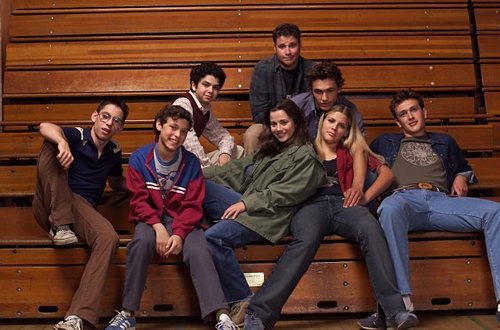
In honor of its 10th anniversary, I decided to watch the pilot of a little show that lasted only 18 episodes, Freaks and Geeks.

It’s 1980 in Michigan. High school kids are doing high school things. Each social group is shown in the first minutes with its own little musical intro. Not much explanation is needed since, if you went to high school in the 80s—or ever—you know all the players.

The main plot centers around an older sister, Lindsay and younger brother, Sam, a freak and a geek, respectively. The brother is an adorable pre-growth spurt John Francis Daley (Bones’ Lance Sweets). Other recognizable faces abound: James Franco, Seth Rogan, and Jason Segel.

Although it’s by and large just another school day, for a pilot there has to be something in transition. We eventually find out that Lindsay has been acting differently since the death of her grandmother. She’s less interested in being a mathlete, and more interested in becoming friends with a bunch of stoners. She’s also a defender of the weak, be it her brother or the token retarded kid.

The characters are three-dimensional and engaging. I can imagine getting to know them over the season would be a fun ride. And I must give the show kudos for bucking a stereotype for having a cheerleader who’s not a total bitch.

This show has been lauded by fans for being cutting edge. Maybe it was. Today geeks are cool, and maybe this show paved the way. But really, the geeks aren’t even that geeky, compared to say, the cast of The Big Bang Theory. And it has a similar aesthetic to My So-Called Life, which debuted 5 years earlier. Other shows debuting in the fall of 1999 included Big Brother, Judging Amy, Law & Order: SVU, The West Wing, and Angel. Maybe Freaks & Geeks stood out by way of comparison to adult-centered dramas and reality shows. What is this show anyway, a comedy or a drama? At any rate, it didn’t last, but it did launch writer Judd Apatow and several successful acting careers.

Quotable line: “She’s a cheerleader. You’ve seen Star Wars 27 times. Do the math.”

My So-Called Life

I pretty much missed the 90s as far as TV is concerned, so once in a while I “discover” a show that other people raved about back then, but I’ve never seen. That was the case with My So-Called Life.

The first thing you notice is all the darkness and slow-mo. That’s how this show paints high school—full of deep feelings and crucial choices. It’s easy to laugh off, but if you think back to how life looked through teenage eyes, it’s pretty accurate. I knew I was interested in this show when, two minutes in, the main characters says, in her deep, almost bored voice-over: “Cheerleaders… can’t people just cheer… on their own?”

Angela Chase (Claire Danes) is the poster child for grunge-era angst, a teenager who ends sentences with “…because if I didn’t I would die, or something.”

As the show begins, she has just changed best friends, a sea change moment in a teenage life, from a quiet, mousy, yearbook club type to a loud, nervy, club-going type. On advice from the new BFF, Rayanne (A.J. Langer), Angela has dyed her hair red. Her new hair color stands for her new outlook on life, rebellion against her mother, and her determination to get The Guy, the gorgeous Jordan Catilano (Jared Leto).

The use of narration, which sounds so realistic, eliminates the need for a lot of exposition. (Too much exposition sinks a pilot fast than anything. Case in point, the new Jenna Elfman show that premièred this week. I couldn’t make it past the first two minutes, let alone remember the title.) Since teenagers have this self-reflective inner monologue running a mile a minute anyway—at least I did—the voice over thing works perfectly.

“Lately I can’t even look at my mother without want to stab her repeatedly,” thinks Angela. The show is great at capturing familial awkwardness. Mom tiptoes awkwardly around Rayanne and the apparently gay Ricky. Dad mutters awkwardly at the sight of his pubescent daughter emerging from the bathroom in a towel. “My boobs have come between us,” Angela observes.

There are so many quote-worthy lines in this one episode, I could just transcribe the whole thing. It’s so edgy and honest, even 15 years in retrospect.

“My parents keep asking how school was. That’s like asking, ‘How was that drive-by shooting?’” I don’t know if they hired actual 15-year-olds to write this or what, but I love it. Seriously, though, Winne Holzman was the creator, and she went on to write the book of the musical Wicked, about the ultimate female misfit.

And god, the clothes. Flannel and plaid everywhere. Big, dumpy dresses with boots. I had these clothes. Maybe it’s better that I’m enjoying this in retrospect, as a piece of nostalgia. Maybe in 1994 it would have seemed blasé. Who knows? But in 2009 I’m glad it’s available on Hulu.

UPDATE: This show begins airing on the Sundance channel April 25, 2011

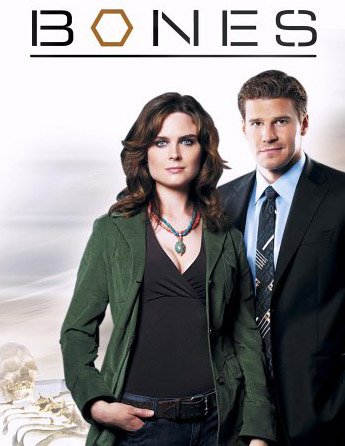
Bones

I must start by saying this is my favorite show currently on TV. It’s funny, suspenseful, well-written, and demands some level of viewer commitment to follow, to say nothing of the eye candy.

What I love about the pilot is it doesn’t feel like a pilot. Special Agent Sealy Booth (David Boreanaz) and Dr. Temperance “Bones” Brennan (Emily Deschanel) have worked together before. They don’t like each other much, but there is respect, and none of that weirdly forced sexual tension usually found on shows where a man and a woman are partners. (Suggestions of romance come later for these two.)

We meet secondary character Angela first. She flashes her boobs to a clerk for information at Dulles airport. Brennan is flying in from Guatemala, where she was identifying remains in a mass grave, and she gets detained by Homeland Security for having a skull in her bag. It turns out Booth is behind this embarrassing little episode. He needed to snatch her up to help with a potentially high-profile murder case.

And, we’re into the week’s (largely forgettable) mystery. Do we care who murdered a congressional intern? Not really. Do we care how this seasoned FBI agent and genius scientist are going to work together? Hell yeah; the show is now in its fifth season.

Always with this show, the B Plot is far more interesting than the A Plot. The A Plot serves as a backdrop on which to paint character traits. In this mystery, for example, we learn that Booth is tactful, even reverent, when dealing with a victim’s family. Bones would rather lay out all the facts, feelings be damned. But nothing about these character development tactics is unique to the pilot. With every episode, the characters grow. In my opinion, Booth and Bones’ relationship doesn’t even begin to hit its stride until episode 15, when Booth saves Bones’ life for the first time.

We get briefly introduced to the other “squints,” Jack and Zach, and their boss, Dr. Goodman, who only lasted one season. We have plenty of time to learn about all of them.

The pilot gives us one quintessential moment to hang onto throughout the series; indeed I believe it was used in commercials for the show throughout Season 1. Booth: “C’mon, we’re Scully and Mulder.” Bones: “I don’t know what that means.” She doesn’t. Her ignorance of pop culture is used as a joke again and again. Oh, right, the pilot also includes Bones’ ex-boyfriend showing up to reclaim his TV. We see that Bones isn’t likely to miss him or it.