Defying Gravity

I knew when I first saw this show it was going to break my heart. It was too cool to hold up on network TV. It blends science fiction with relationship drama and a hint of philosophy, somewhere between Firefly and Being Erica. It started airing during the summer of 2009, it went away, it came back it went supposedly on hiatus, and in the end the only place to see the last episodes was on DVD.

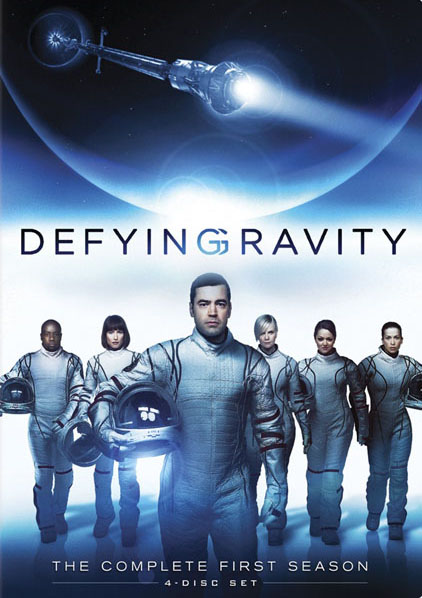
The story is partially in flashbacks, but the “present” is the year 2052 and a group of astronauts is about to embark on a landmark journey to seven planets, over six years. The story is told primarily through the eyes of the first character we meet, Maddux Donner (Ron Livingston). The opening scene is dark and concerting, showing us a sad picture of Donner’s life at home with his father, who is either an alcoholic or senile, or both. The dreary room is lit only by the television where a group of smiling astronauts is introduced. Donner’s father asks, “Which one are you?” A flashback shows us the tragic end to Donner’s space travel career, as he is forced to leave the surface of Mars amid a storm with two crewmates still on the planet’s surface.

Although the next scene is one of exuberant celebration, opening the pilot this way sets a tone that we, the viewer, cannot shake. Heartbreak lurks beneath the glossy, high-tech surface in this future. The episode is sprinkled with mentions, by the ground control team, of an “it” that is being kept secret from the crew. To be honest, these didn’t catch my attention on first viewing, but in hindsight they hold much significance.

The next character we meet is Zoe Barnes (Laura Harris, playing the polar opposite of her Dead Like Me character). With a simple look between her and Donner, the romantic tension is established. Later in the episode it is suggested, if not spelled out, that the two characters have a history.

Ted Shaw (Malik Yoba) was Donner’s partner on the Mars mission, and though the two of them still work for the International Space Organization, they are marked forever as the men who abandoned their crewmates.

The Mission Commander is Rollie Crane, whose new wife Jen is also part of the mission. Also on the crew are Nadia, Paula, Ajay, Evram, and Steve. We get a snippet of each one as they talk into a camera, reality show-style.

The show’s creators didn’t waste time or energy making the future look “futuristic.” A bar still looks like a bar, and people still wear jeans and tees. They saved the budget for the ship, The Antares. There are beautiful images of the expanse of space, seen through panoramic windows in a shining, pristine vehicle.

The business of explaining the technology is accomplished by having one of the crew members, Paula, carry around a mini-DV camera and talk to an audience of school children. There are holes in the science, of course. It is explained that the astronauts’ suits have special fibers that pull them toward the floor of the ship in the absence of gravity. Yet, their hair lays flat. Not being a physicist, I am probably missing other problems as well, but the story is exciting enough to let those go.

Odd things are happening to both Donner and Zoe. Donner is having dreams about being on the mission and seeing Zoe float naked out into the vacuum of space. Zoe is hearing the far-off sound of a baby’s cries. In flashbacks, we are filled in on the fact that Zoe got pregnant during training, but had an illegal abortion. These moments are just breadcrumbs at this stage but promise to lead to something amazing, possibly frightening.

The twist in the plot comes when two of the crew members, Rollie and Ajay, already aboard the space station orbiting the Earth, suddenly develop identical and unusual heart conditions. Before the ship can start on the mission proper, Donner and Ted must be subbed in for the two ailing astronauts. Ted  knows the secret—whatever it is—that mission control is keeping from the crew.  The question raised, the theme of the episode, is whether fate determined who was on the mission and who was not. We are promised more back story about the training, which may answer that question. But the show appears to be one that will raise as many questions as it answers.

Though many viewers blinked and missed Defying Gravity, I’m not the only one to appreciate it; here is a good analysis from Spill.com.
Surface

NBC has been toying with science fiction for years now, with a few hits and many misses. Surface is one of the latter, being cancelled after 15 episodes in 2005-06.

The show introduces us to four separate locations and character groupings: some kids in North Carolina, the crew of the U.S.S. Ronald Regan in Antarctica, a group of fishing buddies in Louisiana, and an oceanography team in Northern California. It establishes the strangely-connected-incidents-happening-to-otherwise-unconnected-people-in-disparate-places element that Heroes would do more successfully a year later.

We meet the kids first. Since they’re out drinking and screwing around we can expect something bad to happen, so the suspense builds quickly when one of them, Miles (Carter Jenkins) is separated from the boat. The Scary Thing we’re expecting is more mysterious, since we are not sure what we’ve seen. A dark creature slithers from a buoy into the water, freaking out the kid who witnesses it. But it’s forgotten pretty quickly when the Coast Guard busts the kids for drinking.

The scene on the aircraft carrier has the air of an action movie, something that would star Harrison Ford. A gruff military officer has little patience for the “civilian biologist” and his team who have come to check out an abandoned submarine.

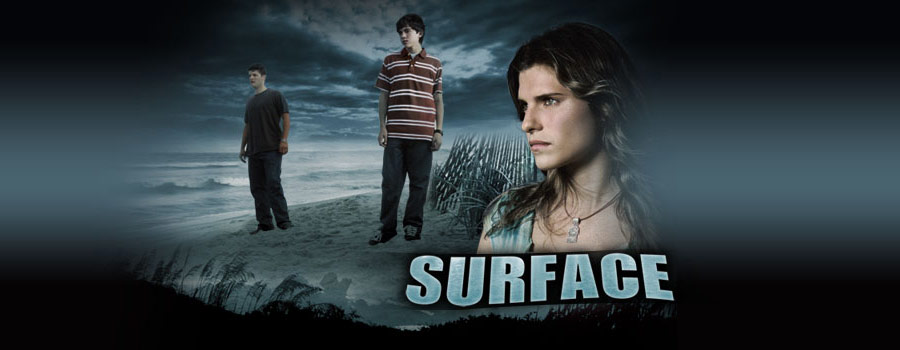
We spend the most time with the oceanography team. The hero is Marine Biologist Dr. Laura Daughtery (Lake Bell). She is the divorced mother of a little boy. The introductory scene of these characters is warm and humorous, conveying that Laura both loves her son and refuses to take any crap from him. She holds a pair of scissors, ready to cut the ear off of his stuffed pal until he agrees to get ready to go to his dad’s.

Once we have gotten to know Laura as a woman, we see her as a researcher. She is off to visit some vents on the ocean floor in an expensive submersible. “More people have been to the moon than have been to the hot vents,” she informs us. Despite being a supposedly highly respected scientist, Laura has a decidedly girlish air, wearing her hair loose and chewing gum while she works; you can decide whether this is endearing or just makes her hard to take seriously. Weird note: in this super high-tech craft she writes with a pen and paper? You would think she’d at least have a laptop.

Things get intense while Laura is on her dive, with some pretty cool special effects and a moment where we would think she was a dead woman if the writers hadn’t invested so much time in introducing her.

The juxtaposition of different settings, and different tones, keeps the audience off balance, always waiting to grasp onto the common thread. We know that thread is some type of sea creature, but just what kind of danger it represents remains unknown until one of the fishermen is killed.  Before long, intimidating government officials have arrived to learn more about Laura’s encounter.  Why are people on TV always smart asses when they’re being questioned by the authorities?

The most exciting moment of the episode comes when one of the creatures bursts out of a fish tank, where Miles has stowed an egg. The moment isn’t a complete surprise, but the look on Miles’ mother’s face is pretty entertaining.

This pilot feels really long. It’s as if you’ve sat through a whole SyFy original movie (which is okay if you’re into that). Perhaps too much is revealed too early. Coming right out with the mention of sea monsters, and even showing them to us, probably could have waited an episode or two. It seems like these writers wanted to tell the whole story in the pilot instead of drawing it out. I have not seen any subsequent episodes, but perhaps this is why the show didn’t last.

Cliffhanger or Closure? Top 5 of Each

Pilots, when well executed, make the viewer want to come back for more. However I’ve noticed that pilots fall along a continuum in terms of how they leave you feeling at the end. Some just get the action going, and then abruptly end. They leave you chomping at the bit for episode 2 because you just have to know what happens next. Some shows, say 24, couldn’t work any other way. (That show is such an obvious example it’s not worth listing below.)

Other pilots are more self-contained. Sure, they introduce characters and situations and, ideally, make you want to keep watching. Yet, they wrap up neatly and can be enjoyed again and again like mini-movies.

Still others lie someplace in between. Here are five of the best at either end of the spectrum. It’s by no means an exhaustive list; as I’ve said before I don’t claim to have seen every pilot, or even every great pilot out there! (BTW, spoiler alert.)

What else should be on the list? Let me know in the comments or on Twitter.

Best Pilots that Leave You Hanging

Veronica Mars – So. Much. Stuff. Happening in this pilot. We just get a taste of the Lily murder, which will keep us guessing even after it’s solved.

Heroes – Again, this pilot just scratches the surface of everything that is set to happen. Absolutely no questions are answered.

Jericho – The ending of this pilot scared the bejeezus out of me. You see the map of the U.S. with all these pushpins marking places that were nuked and ask, “Just how bad is this disaster?”

The Walking Dead – Did the sight of Rick in that tank and the sound of the voice over the intercom not make you just want to hit the fast-forward button to the following Sunday?

How I Met Your Mother – This leaves you hanging not for a week, but for… well, it’s been five freaking years. How did you meet their mother for f’s sake?

Best Pilots that Can Stand Alone

The Simpsons – It’s a Christmas special. Need I say more?

Studio 60 on the Sunset Strip – This was so good, it is inexplicable why the series went so far downhill. It was a prodigal son (or sons) story that wrapped up beautifully.

Friends – It’s a happy ending to a story about a woman who walked out on her wedding. It offers possibility—will Ross get Rachel?—but it’s a happy ending.

Glee – This necessarily had to be good all by itself because it aired way before the season actually started. And it wildly succeeded.

Dead Like Me – This pilot delves deeper than it needs to, explaining the whole back story of the character plus the rules of the show’s world all in one go. But even with all the change she’s just faced, George gets a sense of closure by going to see her mom.

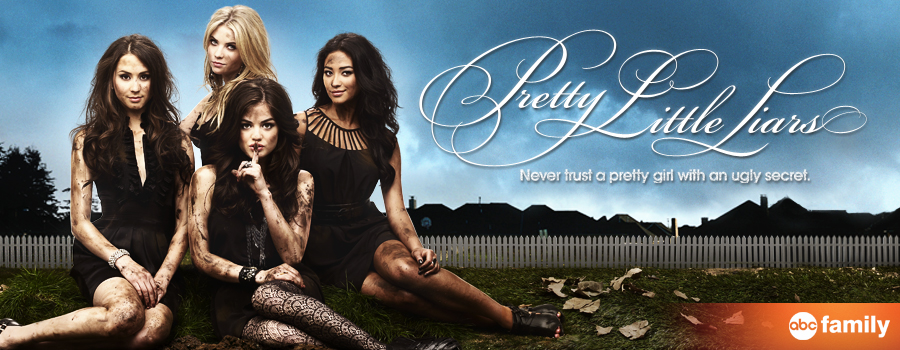
Pretty Little Liars

ABC Family is hyping the heck out of the Season 2 premiere of Pretty Little Liars in January, so time to catch up. This show that looks something like Desperate Housewives for teenagers has a slick look and sinister-sounding previews.

The pilot opens in full-on horror movie mode. A group of cute girls are sitting around a candle-lit barn while the wind howls against the creaky door. They’re creeped out by a sound from outside and stand, as a group, ready to face terror. It turns out to be just their friend sneaking up on them. We do a 180 into a much-too-quick scene of some slumber party chatter. (Is the fact that they like Beyonce important, or is this just an awkward attempt at natural-sounding teen banter?) Then they pass a big cup filled with some dark liquid. There’s a mention of the beverage making people share secrets, and one of them says, “Our secrets are what keep us close.” This last quote is imbued with a kind of weight cluing us into its importance.

In the morning the last girl to have arrived, Alison (Sasha Pieterse, who showed up in the later, less-watchable episodes of Heroes), has disappeared. Up to this point we have jumped from one situation to another with lightening speed and absolutely no chance for character development. So are we shocked that this girl is gone? Not really.

At last we start getting to know one of the girls, Aria (Lucy Hale of Privileged). One year has passed since the opening scenes, and Aria’s family has just moved back to town after her father’s sabbatical in Europe. Aria’s mother (Holly Marie Combs) encourages her to reconnect with her friends, but clearly things have changed. In fact, we are reminded at every turn how much things have changed. This is one example of how this show tells the audience things rather than showing them.

The town is Rosewood, Pennsylvania, the kind of pretty East Coast town with an air of evil reminiscent of Amityville. Aria’s return to school gives the opportunity for exposition and further character introductions. It’s the “Prodigal Son/Daughter” pilot formula. Although Aria’s mother points out for the audience that a year is a long time in the life of a 16-year-old, it feels like the passage of time is treated a little too seriously. “I almost didn’t recognize you,” says a classmate to Aria. “Last time I saw you, you had a pink streak in your hair.”

 The only point about the school social hierarchy that seems important to remember for now is that a formerly geeky girl, who our heroines picked on, is now popular and cute (translation, she got contacts). In scenes with each of the four remaining girls, Aria, Spencer, Hanna, and Bianca, we begin to see that honesty is not a virtue in Rosewood. They lie, they shoplift, and they flirt with sisters’ boyfriends. Each of the girls receives a mysterious message—either by text or note—warning her that someone is watching her unethical behavior, and signed “A.”

Alison’s body is discovered, and a funeral is held. At this point we’ve begun to suspect that one or more of the girls might know more than they’re saying about Alison’s death. Yet, from the cryptic conversation of the girls combined with the semi-anonymous messages, it seems she might not really be dead. Certainly these pretty little liars have a secret, but it turns out that their secret—one of them, anyway—concerns not Alison, but a girl named Jenna.

It’s clear there are a lot of layers here, and while the delivery may not be the most sophisticated, the show promises to ask for some loyalty on the part of the audience. It’s great when a pilot leaves you with no clue what’s going on, and this one does that.

The Walking Dead (in retrospect)

I always say that pilot can only be truly appreciated in retrospect. You can’t know how good it is until you see how the whole season—sometimes the whole series—plays out. So I’ve waited until now to blog about The Walking Dead.

This show, which had a 6-episode first season on AMC, has been reviewed and analyzed extensively, for the most part favorably (in places like these.) So I won’t bother raving about how entertaining, exciting and original it is. Though it is all of those things.

The thing to understand about this show is, it’s not a zombie show. It’s a suspenseful, end-of-the-world drama that just happens to have zombies. The pilot lets us know that, giving us rich character introductions and a bleak, ominous landscape.

The opening scene lets us know something isn’t right. A police officer, Rick Grimes (Andrew Lincoln), parks his squad car and makes his way through an intersection littered with overturned vehicles. Beyond that he finds an abandoned camp site where bodies rot in cars. Rick appears completely calm, as though he is finding only what he expected. And, while the sight of him putting a bullet in the forehead of a little girl with a teddy bear and half a face packs a punch to the audience, it doesn’t seem that out of the ordinary for Rick.

In hindsight this opening scene feels odd. Where are we? When are we? When Rick first leaves the hospital, trying desperately to figure out what happened to the world during his coma, he is understandably freaked out. He doesn’t know the ways of the new frontier until at least episode 2. Suddenly it’s not clear when in the timeline of the show this scene takes place; maybe we haven’t seen it yet? Why did the writers choose this point of attack? Just to shock us with Cindy Lou Who getting her head blown off? Rick shows much more emotion when, mid-way through the pilot, he shoots the half-woman crawling across the lawn.

A flashback is used to set up the relationship between Rick and his partner, Shane (John Bernthal). This relationship is crucial to the story arc, and its position in the script suggests that. The writers don’t miss a chance to also mention Lori (Sarah Wayne Callies), the woman who will represent the point in their love triangle. In the chase of a suspect, Rick and Shane are clearly the competent ones. More importantly, they’re both basically good guys. They have each other’s backs, and together they defend the public good. These characteristics will leave us torn as the story unfolds, unable to paint Shane as a hero or villain. This will prove especially true in the opening scene of episode 6, in a flashback to when the hospital was overrun with zombies. The relationship between the men is also a source of frustrating dramatic irony later in the pilot, when Rick radios through to the campsite having no idea Shane is there.

We don’t get to know any of the other characters in the campsite at this stage. We see just enough to see that a group of survivors is making the best of it on the outskirts of town.

The pilot spends a good chunk of its 66 minutes having us get to know the character Morgan (Lennie James); he has a big dramatic introduction and the possibility of a reunion with Rick for later on. There’s no payoff through, at least this season. Morgan, although a rich character, winds up being no more than a device for explaining the world to the viewing audience. (I, for one, want to know if he ever shoots his wife).

One of the questions running through this episode—for viewers, not the characters—was “how far will they go?” This is a horror show on basic cable. The opening with the little girl gives a pretty strong hint, but we wonder how gross, how shocking, how scary AMC will be. The show does not disappoint in this respect.  The pilot leaves us with a bizarre, gag-worthy gut feast that didn’t let us forget about the show until the following Sunday.

Fringe

Fringe, from its beginning, is a character driven show. It’s a procedural, to be sure, but the pilot lets us know that three strong personalities are going to drive the action: FBI Agent Olivia Dunham (Anna Torv), Peter Bishop (Joshua Jackson), and Dr. Walter Bishop (John Noble).

We don’t meet Olivia as badass cop woman. We meet her as she is falling in love, in bed with the object of her affection, sweet and almost demure. This is a reversal of the typical female action hero who is usually tough first, vulnerable later. It’s not as if Olivia’s a wimp; we see her in action soon enough. She’s part of a joint task force reporting to Homeland Security, which is called upon when a planeload of civilians die inexplicably mid-flight. Within in minutes we find Olivia chasing down a suspect and, after that, putting her brains to work to solve a mystery. During the chase her romantic and professional partner, John, is hit by an explosion. He winds up comatose, poisoned and dying from an unidentified contaminant.

John is introduced too early to survive. People who are happily together at the start of a drama pilot are destined to be torn apart. But that won’t stop our heroine from trying to save him.

Trying to discover the nature of the poison, Olivia is soon on the trail of a mysterious and insane researcher, Dr. Bishop, living in an institution. She demonstrates her powers of persuasion by travelling to Iraq to coerce the researcher’s genius son, Peter, into coming with her to bust him out. Dr. Bishop worked studied “fringe” science 17 years ago before being locked away in a stony vault.

When the bearded Dr. Bishop turns, ever so slowly and looks up at Olivia, we know we are meeting a powerful character. “I knew someone would come,” he intones. A bit like Temperence “Bones” Brennan, Walter thinks in pure facts. He may be a genius but his social interactions are painful to witness.

The episode is filled with quiet moments; long, awkward pauses at once suspenseful and humorous. Everyone has moments when a parent embarrasses them. It’s just more intense when said parent is a mental patient. Peter sure hates Walter, but as the viewer, we’re not sure whether either one has good intentions or bad.

Peter is a total ass to Olivia, but she doesn’t stand for it. You feel her frustration when she says, “You call me sweetheart one more time? I’d really like that.” It’s not an obvious sexual tension between them, as might be expected. Simply, they’re both strong people who know what they want.

As we delve further into the mystery of the poison, we’re introduced to Massive Dynamic, your basic giant, evil corporation. Its founder, a Dr. Bell, is Walter’s former partner. We don’t meet Dr. Bell, but only his Executive Director, a snippy woman with a super cool bionic arm. The pilot is double-length, basically a movie, so suffice it to say, this is only the beginning. We’re promised a future filled with teleportation, astral projection, reanimation and the like. More importantly, Olivia is at a critical juncture in her life and career.

The snowy cold landscape of Boston provides a distinctive atmosphere. The show is filled with interesting visuals: a cow walking down a crowded university hallway, a man with transparent skin, a woman in a tank hooked up to electrodes. Though it gets compared to The X-Files, and it’s even been suggested the two shows take place in the same universe, Fringe is unique in many ways. We know from the pilot that we’re headed down a conspiracy theory rabbit hole, which could easily get cheeseball, but there is promise that these characters will keep us coming back.

Ark

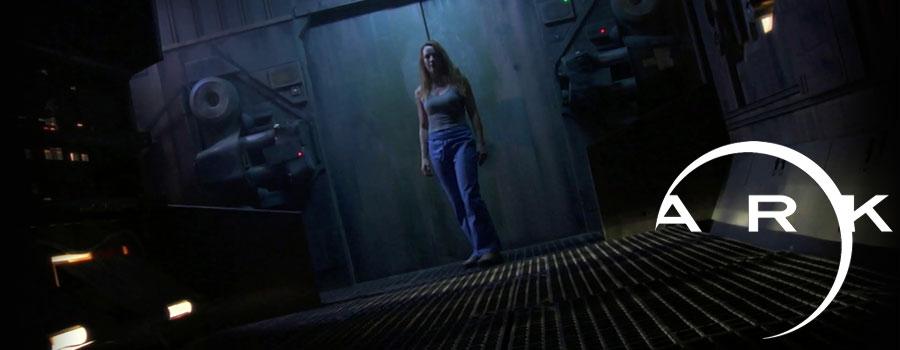
The pilot of this web series functions like a cold open would in a television series. You can barely call it a set-up. We see a character in a situation, and just as we get a wider angle—literally and figuratively—it’s over. The protagonist, whose name as far as we know, is “Mom,” is dozing on a couch in a messy living room. Her child is operating a handheld video camera while trying to wake her up, but she shoos him away. Then, somehow, she is inside a container not much bigger than a coffin. Saying any more would be a spoiler. As a pilot, this is light on exposition, big on suspense; great combo.

Ugly Betty

As suggested by the title of Ugly Betty, the show is all about Betty, Betty Suarez, and how she is less-than-Hollywood-attractive.  So the very first image we see is of her face, all glasses and braces right in the camera. America Ferrera can say a lot with a few contortions of her brace face. As the camera pulls back we find that she is waiting in the opulent lobby of a building, waiting to be interviewed for a job. After a short, awkward conversation with a glamorous-looking woman, she is bounced out on her fat-by-Hollywood-standards butt. It’s not for lack of trying; her first few onscreen moments encapsulate all of this character’s eager, ambitious, sunny motivation. As the doors to Meade publications are slammed in her face, a distinguished looking figure watches from above.

Next we find Betty at home. One of the best things about this show is its self-referential humor, and we get a peek at that early; telenovellas fill the Suarez’s living room. But more on that later.  Much is revealed about Betty’s father, sister, and nephew, as well as her boyfriend (Kevin Sussman of Big Bang Theory),  in a handful of lines. Justin (Mark Indelicato), the nephew, is the standout here, exhibiting a flamboyance that strains the edges of his 10-year-old form; he will play a critical role in informing the audience about what’s happening in the fashion world.

That sphere is the next one we must get to know. Daniel Meade (Eric Mabius) is the newly appointed editor-in-chief of Mode Magazine, a publication of Meade, and the distinguished man from earlier is his father, the owner of the company.

Although this doesn’t look to be a big day in Betty’s life career-wise, it may be a big one personally. Rumor has it her boyfriend is about to propose. However, on TV expected breakups are always proposals and expected proposals are always… Walter is in love with someone else.

At the first commercial break, Betty gets The Call. She is being hired, after all, as assistant to the editor-in-chief at Mode. It seems too good to be true, and we know there are reasons forthcoming.

The parade of characters continues as we meet the Mode receptionist, Amanda, Vanessa Williams’ uberdiva Wilhelmina and her sycophantic assistant Mark. Then there’s this photographer guy who’s friends with Mark. And they save the best for last—Christina (Ashley Jensen), the wisecracking Scottish seamstress. She’s the only seemingly normal one.

Before we’re halfway in to this pilot, we’re caught up in so many colorful storylines and people swirling around Betty it’s easy to worry it will all turn into a brownish sludge. But each one if vivid enough to stand out among the rest.

Amanda is sleeping with Daniel. Daniel is sleeping with everyone. The former editor of the magazine may or may not be dead. Wilhelmina wants Daniel fired, and Daniel wants Betty to quit. And that’s just the beginning. It is very soap opera-y but that’s where the telenovella schtick comes in to play. By presenting these Mexican soap operas in parallel, Ugly Betty in effect parodies itself. We can forgive the schmaltz and buy in. There’s even a slight tear-jerker moment.

We don’t get to know Betty too well in this first episode, though we like her as we’re conditioned to like characters who make it in life by hard work and pluck rather than by looks and money. She’s pathetic enough to make us feel better about our lives, but sympathetic enough to hang with. So, we’re prepped and ready to go on this journey with her, knowing it’s going to be nothing if not interesting.

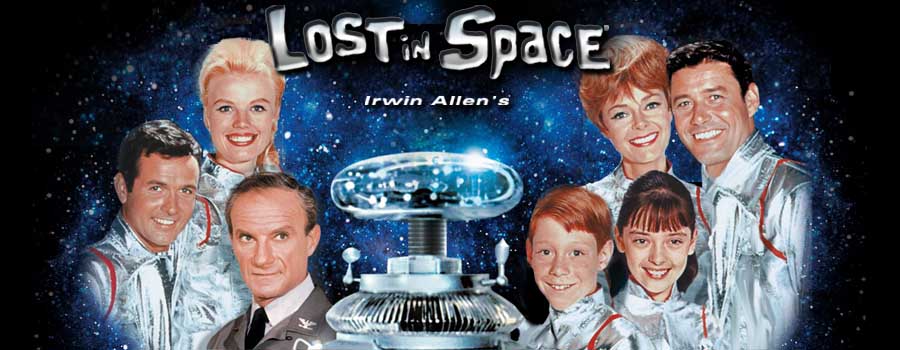
Lost in Space

With a show set in a future that is now the past, it would be easy to simply pick apart the inaccuracies and laugh at the technology (and ask the age-old question, “Where is my jetpack?”) But I won’t do that. I’m going to examine the pilot of Lost in Space for what it is—a first episode designed to introduce the premise for a series.

Okay, I lied. First I have to make fun of one thing.

It’s 1997 as the Robinson family is being loaded aboard the Gemini 12 for a 100-year voyage to Alpha Centauri where they hope to colonize a sort of overflow zone for the bustling Earth. By setting this technologically advanced endeavor in 1997, the creators showed great faith and ambition in the abilities of mankind. Not so much for womankind. This is “the first time in history that anyone but an adult male has passed the International Space Administration’s grueling physical and emotional screening.” They could foresee space colonization but not female astronauts? Crikie. 

Dr. John Robinson (Guy Williams), his wife Dr. Maureen Robinson (June Lockhart), their three children, Judith, Will, and Penny, and their assistant Donald are put into suspended animation and launched into space. An 11-minute introduction explains all of the circumstances, narrated by a news anchor. The mood is ominous as the world watches a historic moment. The set is a busy space station, filled with tense-looking individuals and complicated-looking machinery. The mood as the ship lifts off is more somber than celebratory. Shortly after launch, the ship encounters an asteroid field, it’s passengers are jostled around in their slumber, and the Gemini 12 is reported lost in space.

The tone then shifts as we jump ahead to 2001 and find the Robinsons surviving on a distant planet. The set up for this section is also narrated, as Dr. Robinson reads from a journal. At last, 12 minutes in, we hear the characters speak on screen and finally start to get a sense of their personalities.

Spooky music continues the air of foreboding introduced in the opening, but there are moments of levity. The children bicker and goof off, like any siblings. The whole family falls instantly into societal patterns recognized by the show’s 1960s audience. Mother and older sister prepare dinner and do laundry, the younger kids play with toys and pets, and the menfolk work outside the home.

What we know about the planet is that it has extremes in temperature, a variety of flora and fauna, and at least one sea. And as in nearly all science fiction shows, the air pressure, oxygen level and gravity are exactly comparable to Earth. We can assume it’s not Alpha Centauri, since our heroes have journeyed for just three years to get there (and because Alpha Centauri is a star system, not a planet, but there I go nitpicking). Nevertheless, the Robinsons seem to have brought all the right equipment.

The homestead is complete with appliances and alien pets. Things are powered with solar batteries. (Why couldn’t Gilligan’s castaways have thought of that?) The show has fun demonstrating the fantastical advances of the future. The washing machine, for example, washes, dries, and packages clothes in plastic wrapping all in seconds.

Naturally there is a hook-up in the works between 19-year-old daughter Judith and the hot young Ph.D. How could her parents not have seen that coming? Shark jumping is inevitable with a cast of six.

By the end of the episode, the travelers have stumbled upon some kind of tomb that suggests other human-like beings live here, or did. So, it looks like they will have plenty left to discover, enough to last a few seasons. The action is intense and some of the special effects aren’t terrible. The episode leaves us in suspense, always a strong move for a pilot. This is actually an unaired pilot, so there is a character not introduced until the actual pilot. Either way, it stokes the imagination—even today—and sets the stage for high adventure. And unlike its contemporary Star Trek, it introduces characters for each member of the family to relate to. So if you can suspend your disbelief in accept it as fantasy, it’s pretty fun.

Charmed (Unaired)

Blogging about the Charmed pilot, “Something Wicca This Way Comes,” has been on my to-do list for some time, but how much more fun is it to cover the unaired pilot? It’s available on YouTube (legally or not I couldn’t say).

In a nutshell, Charmed is the story of the Haliwell sisters, Phoebe, Piper (Holly Marie Combs) and Prue (Shannen Doherty), who learn that they are witches, each with a unique power.

The setup in this version of the pilot is identical. Some of the footage looks to be the same as what aired. Two sisters living in their dead grandmother’s San Francisco house are joined by their third, black sheep sister returned from New York. In the meantime, a detective is trying to solve a series of murders of young women. These events are set against the backdrop of a raging thunderstorm, lending an air of foreboding.

The most unmistakable difference is that Phoebe, the youngest sister, is played not by Alyssa Milano but by Lori Rom, who went on to play a recurring role on Party of Five. This Phoebe is more down-to-earth, lacking the perkiness Milano brought to the role. The trick to Phoebe is that we, the audience, have to like her even though she annoys the heck out of Prue. She needs an impishness that Rom doesn’t pull off. Rom dresses dumpier too; the costumers later made the most of Milano’s hot bod.

Phoebe drives the action throughout the story, so it was important to get the casting right. Her curious nature catalyzes the discoveries that bring the sisters their powers. She is the only one brave enough to venture into the attic when directed there by a spirit board. She recites the incantation that instills the powers, and she continues to read the Book of Shadows and educate her sisters about witchcraft. As the Phoebe character is described, “She has no vision, no sense of the future.” This observation is one of many examples of ironic foreshadowing in the pilot, since Phoebe gains the power to see visions of the future.

In both versions, character introductions and exposition evolve pretty naturally, with one glaring exception. Phoebe asks Piper, “I’m glad you’re still with Jeremy. Where did you meet him anyway?” The answer hints at the “twist” to come, wherein Jeremy is a warlock specifically preying on the sisters. It’s not particularly surprising when he pulls a knife (an athame) on Piper in an abandoned building.

What I’ve never understood about this pilot—this version or the final one—is why they try so hard to be truthful to what Wicca is all about while at the same time making it so far-fetched. Both versions open with an anonymous woman setting up an alter and calling the gods/goddesses to oversee a ritual. The writers explain to us what at athame is and make a point of explaining the Wiccan rede and that witches are not evil—obviously important if we’re to sympathize with the protagonists. This point is subtly different between the two versions, actually. In the unaired pilot, Phoebe says, “A true witch is a good witch,” and in the aired pilot she says, instead, “A witch can be either good or evil.” Either way, the powers of the witch in the opening, and the Haliwell witches, are the stuff of science fiction.

  There are some details missing from the unaired version—tattoos on the murder victims,—and some things that are done better. In the unaired version, Phoebe’s bike accident makes her look foolish, reminiscent of Stacy in Wayne’s World. Prue’s conversation with Detective Andy Trudeau is much shorter, giving less basis for their future relationship. The aired version contains some back story about the Haliwells’ father; Prue doesn’t like him, and only Phoebe is still in touch with him. Basically, the aired version gives more information to build on for the future.

In the end, the women have to overcome their various levels of skepticism about witchcraft and stand together—literally—chanting about “the power of three.” This climactic scene embodies the theme of the whole show, that the three (never mind that one of them gets replaced) have to learn to count on each other.

Happy Halloween!