Reboot!

It seems like you can’t go a day without hearing about another upcoming reboot of an old movie or TV show. Currently, viewers of the small screen are speculating about new takes on Charlie’s Angels, Wonder Woman, Beavis and Butthead, Dallas, Miami Vice, Teen Wolf… there’s even been the threat of a Bryan Fuller-helmed Munsters remake.*

A pilot for a reboot has a unique task. There is the assumption that most viewers are already familiar with the property, and there is going to be a niche audience that is much more than familiar. The diehard fans are poised to critique every detail.  So what makes a pilot for a reboot successful?

There are two ends of the spectrum when it comes to approach. At one end, the pilot could say to the viewer, “Forget everything you knew about previous incarnations of this property.” The story basically starts over, in the present day. V is an example. Viewers need not have a clue about the 1980s mini-series and following TV series. In fact, they might be better not having seen the original and having the whole lizard reveal spoiled for them.

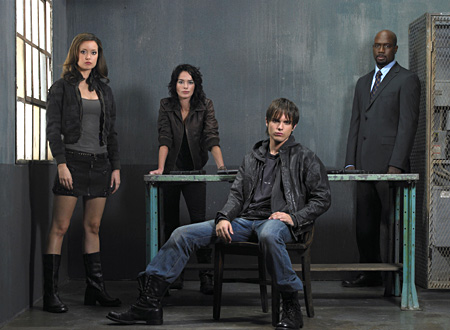
At the other end, a pilot can dive in to a storyline already in progress. Terminator: The Sarah Connor Chronicles does this really well. We last saw Sarah and son John in 1991, when John was about 12 years old, so the show now has to bring us up to 2008, when it debuted. The pilot opens in 1999 and, staying faithful to the timeline set forth by the movies, John is introduced as a teenager. We learn in the opening scene Sarah is haunted by the same nightmares of worldwide destruction that we remember. In order to get us to the right year, the writers have the new Terminator, played by Summer Glau, bring the characters forward in time to 2008. If you’re actually new to this, it’s likely you just won’t care about these characters. It’s also likely you’ve been living under a rock.

On the lighter side, 90210 stuck with the timeline set forth by its predecessor, Beverly Hills 90210. The newer show had some fun updating viewers on the lives of characters we once knew, even bringing some of them back so we wouldn’t always be stuck remembering them with hideous hairstyles.

According to Ramon Rodriguez, who has been cast as Bosley, the new Charlie’s Angels is set to go in a new direction. However, the movies already took a big step away from the camp of the original series. So what, exactly, are they moving away from? And do we care? Does a show’s pedigree matter, or only that it’s good?

There’s still a long way to go with all of the aforementioned reboots, and no telling how much restructuring they will go through on their way to the airwaves—if they even make it that far. Then will each one be a 90210? Or a Melrose Place? Once they debut, fans will no doubt have their expectations well in place.

*Here’s an update on the Bryan Fuller Munsters remake, 8/11/11

Square Pegs

Sarah Jessica ParkerGiven the current surge in nostalgia for the 80s, it’s a good time for Hulu to reintroduce the world to Square Pegs. From 1982, the show centers around two geeky high school girls trying to fit in. It stars Sarah Jessica Parker, even before Footloose and Girls Just Wanna Have Fun. Her co-star is Amy Linker who, according to IMDB hasn’t done anything since 1985. What I remember about this show is that the two lead actresses were on the cover of Dynamite magazine. Anyone? Dynamite magazine?

The show begins with the two of them talking, in voiceover, about their intentions to infiltrate the right cliques. “This year we’re gonna be popular,” the one with a slight Northern accent declares, “Even if it kills us.”

The pilot opens, as you might expect, on the first day of school. As the opening scene unfolds, at a pep rally, we learn that the one offering popularity instructions was braces-wearing Lauren (Linker). Glasses-wearing Patty (Parker) is her willing follower on the road to coolness. (See that? Glasses and braces are universal shorthand for geeky. Apparently Linker was also wearing padding to make her look fat, but she is only Hollywood fat, if anything.)

Lauren’s superior knowledge of who’s who gives the audience a chance to learn some names and ranks. The dreamiest guy in school is Larry Simpson. The most popular girl is Jennifer (Tracy Nelson – one of those Nelsons), who has a Princess Diana thing going on. Being popular also means talking with a Valley Girl accent, peppered with ‘like’s and ‘ya know’s. “Gross me out the door” she declares in once scene, prompted by nothing.

The pep rally scene also introduces Jami Gertz as Muffy Tepperman, the Patty Simcox of the group, and the token black student, L.D. The latter performs a song-and-dance number with the hideousness only the 80s could conjure.

For some reason the kids are dressed like it’s February, but forgetting that, the fashion paints us squarely in the 80s. Not in the send-up way that shows depict the 80s today, but realistically. )Seriously, we didn’t wear Madonna gloves and stirrup pants every day.) There are some really specific references to pop culture of the time too, like to a particular Budweiser commercial.

It takes a few scenes to get a feel for the tone of this show. Although it’s a half-hour comedy, it doesn’t feel like a sit-com. It’s single camera, with a lightly used laugh track. There’s a weightiness to it that would be seen in later shows like Freaks and Geeks and My So-Called Life, and still later, Glee. It’s nice to see high school girls drawn as intelligent and articulate, even if they do still turn to butter in the presence of dreamy senior boys. Although Patty is heartbroken to learn that Larry isn’t into her, she responds with, “Larry, you needn’t reproach yourself.” Actually, much of the episode’s humor derives from her intense seriousness.

Oddly, we never see any of the characters’ home lives. In a show of this kind, we expect to see fights with parents, rule breaking and groundings. The pilot takes us from the pep rally, to lunch, to gym class, and finally to a school dance. As a side note and further sign of the times, the Waitresses appear as the band playing the school dance. It’s as if the writers are letting us know that school is these characters’ whole world, which is how it often feels at age 14. “My life is over,” Patty observes at the end. And we know her life will end in some little way every week, because that what happens in high school.

Deaths of 80s TV Stars

With the recent passing of Gary Coleman and now, Rue McClanahan, I have been hoping to locate the pilot episodes of Diff’rent Strokes or The Golden Girls. (I haven’t come across them online, so I may have to go old school and drive over to Blockbuster.) And, who can forget that Andrew “Boner” Koenig from Growing Pains took his own life not long ago? It gets you thinking about how a character can make such an impression. It is as if we all knew Arnold Jackson, Blanche Devereaux and Boner personally. When you’re a kid, especially (as I was when these shows aired) the folks you hang out with for half an hour a week can seem as real as your neighbors. We laughed with them through their daily mishaps, and cried with them in the “very special” episodes.

So without rewatching the pilot of Diff’rent Strokes, I can still share this part from memory. When the kids arrive at Philip’s house, Arnold brings along his pet fish, which is black, and which he introduces as his goldfish. Philip says, “I’ve never seen a black goldfish before.” Arnold replies, “That’s okay, he’s never seen a rich white man before.”

Okay it’s not brilliant, but it sticks with me 30 years later. Thanks, Gary, Rue, and Andrew for the memories.

Pilot Episode of… wait for it… Doogie Howser M.D.

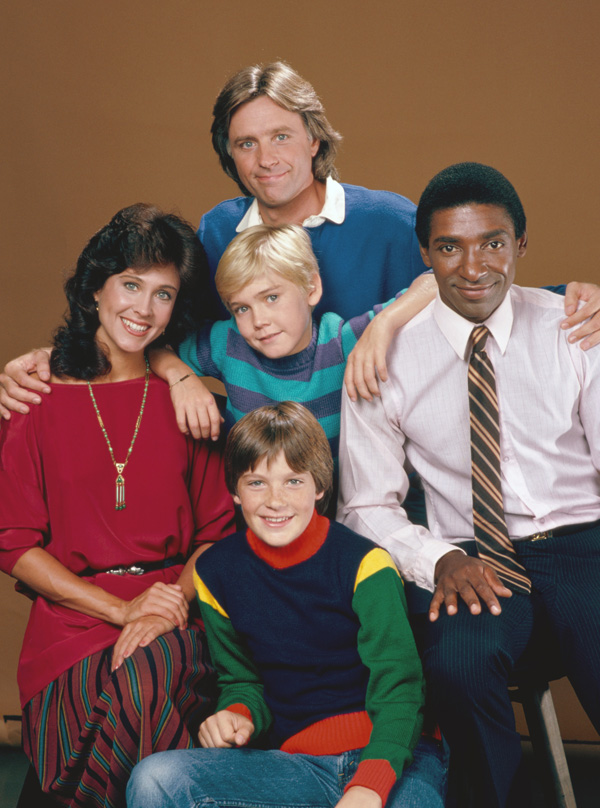
Oh, the multitudes of pop culture jokes this show spawned. But once upon a time in 1989, it made its debut. The show opens with a 16-year-old kid taking his driving test in a Volvo station wagon. His overbearing mother has tagged along. When they see an accident ahead of them, the kid speeds up and jumps out of the car to assist. He amazes the police officers on the scene by taking charge and adjusting the victim’s leg to restore circulation. It’s a great, surprising opener that lets the viewer know all he or she needs to know. The opening credits fill in the details, with newspaper headlines about the child prodigy, Doogie Howser (Neil Patrick Harris), acing the SATs, graduating from Princeton, and becoming an M.D. all by age 14. And for an extra flourish of heroism, there’s one about how he delivered a baby in a mall. Nothing says 80s teenagerhood like a mall.

Next, Doogie is at the hospital, and we get a feel for the workplace dynamic. This is followed by a scene at home, where we see Doogie’s life as a normal teenager, goofing around with his buddy and making big plans for the upcoming school dance.

It’s a story of contrasts; the “regular” kid living in the same body with the genius medical professional. The poor kid gets pressure from all sides. His parents hassle him like all parents of teenagers, plus patients and other doctors don’t always take him seriously. (And he’s cute as a button!) Over dinner, his father speaks the theme of the show: “Emotional maturity is not a function of genius, it’s a function of experience.” We, the viewers, are going to be along for the ride as this young man gains some of that experience.

It’s got it’s amusing moments; Doogie’s horny boy banter with friend Vinnie (Max Casella) is, if not predictive of the Bro Code, at least typical of adolescent boys, and what’s not funny about that? And Doogie and Vinnie’s revenge scheme on doctor who embarrassed Doogie is a good chuckle. But this isn’t a laugh-out-loud kind of show. We get a sad story about how Doogie had leukemia as a child and went through chemo. He shares his experience with a sick child in need of a heart transplant. The tone is actually quite Scrubs-like, humorous moments contrasted with serious ones. There’s even a goofball musical sequence of Doogie getting dressed for the dance to Tone Loc’s “Wild Thing.” It’s followed soon by, in real Scrubs fashion, a heart-wrenching patient death. Doogie ends the episode typing into his computerized diary, “Kissed my first girl. Lost my first patient.” Again, contrasts. Also these experiences being firsts, it’s the right place in this character’s life to start telling his story.

I think I only ever watched this show once or twice when it aired, and I’m sure I had never seen the pilot. As a NPH fan, I was so excited to find that it’s now on Hulu. It’s fun looking at it through the lens of subsequent shows, but even standing alone, the pilot promises a sweet, touching, and unusual show.

The Oprah Winfrey Show

Since Oprah recently announced that she will end her powerhouse talkshow for good in 2011, I thought it might be fun to track down the “pilot” episode. (I don’t know if it’s called a pilot for a talk show.) The closest I have come, so far, is an entry on imdb. It recalls that the guests that day, September 8, 1986, were Charlene Blaine, Chris McWatt, and Seka.

Who?

Charlene Blaine, has been working continuously on such highly successful shows as The Love Boat: The Next Wave (will have to dig up that pilot), but in 1986 it looks like she had appeared on one episode of Magnum P.I., as “Bed Race Girl.” The website http://www.famouswhy.com has a blank entry for her. Famous why, indeed. Chris McWatt has exactly 3 acting credits listed. And Seka…. Could possibly by Seka Mirkovic, who appeared a single film in 1973.

Was Oprah that lame? Did her show actually go from a showcase of unknowns to arguably the launch pad for the campaign of our current President? Really, I’m asking. I don’t remember. I was in elementary school.

To her, I suppose, credit, she was responsible for Liberace’s last public appearance, in December 1986. Maybe her roster improved quickly as she caught on with the public.

Oprah has a DVD box set available called The Oprah Winfrey Show: 20th Anniversary Collection, but there is no mention in the description of the premiere episode. If anyone has this, or knows where to find the pilot please let me know!

Silver Spoons

Yes, Silver Spoons, the sit-com from the 80s. We Gen X-ers tend to have fond memories of this show, up there with Diff’rent Strokes and Gimme A Break. But do we remember how it all began?

It’s just another day in the life of millionaire Edward Stratton III (Joel Higgins)—riding a toy train, playing the full-size arcade version of Pac-Man—until his accountant shows up to inform him that he’s squandered all his riches. Not five minutes later, a tow-headed military school student (Ricky Schroeder) shows up to announce that he’s Stratton’s son. Stratton reacts to these two pieces of life-changing news with uncanny calm. And, man, it’s amazing they didn’t wear out the laugh track.

Computers were new and exciting in 1982. When little Ricky Schroeder tossed of the phrase “random access memory,” most viewers probably had no clue what that was. Computers run everything in the Stratton mansion from the drapes to the bank accounts, and we understand that the kids is going to have a better understanding of the technology than the father.

Ricky plays dumb with the accountant, who demonstrates how to use the big, mysterious computer with the clunky telephone modem, to view Stratton’s finances. This leads to the revelation that the accountant is a big, fat crook.

Stratton sends Ricky back to school, then regrets it, and—dressed a swamp thing—asks him to return and live in Chateau de Pac-Man.

Two-thirds of the way through we get a brief introduction the freaking adorable Jason Bateman as Ricky’s classmate. (We have to wait two years for Alfonso Ribeiro.)

It’s kind of amazing now the way emotional life decisions are glossed over like deciding what to order at Jack-in-the-Box. I guess that’s why, back then, “very special” episodes stood out as shark-jumpers. The very mention of sadness warranted a character speaking to the camera at the end, telling us the number of the national suicide hotline.

I think that today, even on sitcoms, crises are treated with a little more seriousness. Maybe in the carefree, big-hair 80s we just weren’t ready.