Knights of Prosperity

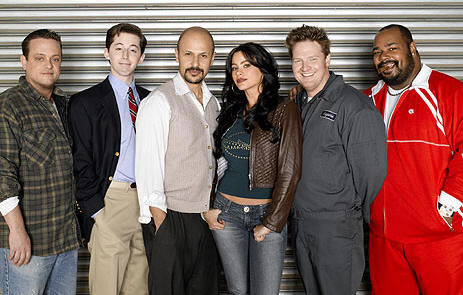
You can’t help but be drawn in by a show that is just plain weird. A guy wakes up. He gets ready for work in his dump of an apartment, accompanied by the music of Journey. He’s a middle-aged high school dropout who works as a janitor. In the show’s first minutes, he is spurred to better his life by witnessing his co-worker’s undignified demise while cleaning a urinal. And, somehow, by the first commercial break, he has assembled a group of ragtag wannabe thieves to rob Mick Jagger.

It’s like, really? This is a premise for a show? They have T-shirts. They have binoculars. They have an intern. It’s a little reminiscent of the geeks in Office Space trying to get into the embezzlement racket.

The show stars Donal Logue, who is not a household name, but recognizable from a role in the terrible Grounded for Life, and redeemed by roles in some good indie films like The Tao of Steve.

Comedic pilots seem to work well when they move fast, throwing information and characters at you so that you can’t blink lest you miss something. Knights does that. We meet a Middle Eastern cab driver who used to be a lawyer, a big black dude with a broken heart, a wise-cracking New Yorker stereotype, and a hot Latina who invites herself into the group.

The goal, in this episode, is not to complete the robbery. It is to complete phase one of Operation Dick Mick, which is to obtain the key to his luxury Manhattan apartment. Ostensibly, each subsequent episode will lead our antiheroes to another phase of the plan until they succeed (or fail?) at the final heist. Then what? Next year, they’ll rob the Kardashians? Only nine episodes ever aired—and I’ve only seen this one—so I don’t know. (Though it was rumored they would later target Kelly Ripa and Ray Romano.) Apparently the show was originally titled Let’s Rob Mick Jagger, but perhaps that was too limiting??

I can’t say the pilot left me dying to see what happens next. It felt more like a predictable screwball heist movie than a series—the kind of thing you might commit to for 90 minutes but not 22 half-hour episodes. But it’s different, which is why I’ve taken the time to write about it. Oh, and there’s a Star Wars reference. Always good.

Memorable quote: “We’re like Robin Hood. We’re stealing from the rich to give to the poor—us.”
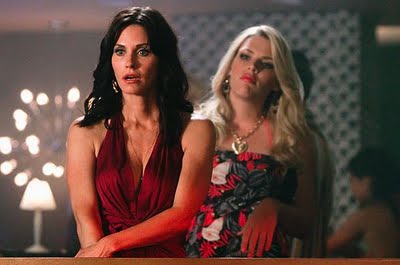
Cougar Town

It’s easy to think you have this show all figured out based on the title and a few teasers. I wanted to give it a chance to defy my expectations. I prepared to be offended by sexist/ageist jokes.

I must say it’s refreshing to hear women be obnoxiously sexist, and not under the guise of feminism like those materialistic know-it-alls on Sex in the City. This was genuinely funny. And the name “Cougar Town” actually refers to the high school football field, although the double meaning comes through loud and clear.

Courteney Cox, as Jules, is a riot. She is very close to the Courtney Cox we remember from Friends, with a little older-and-wiser edge. Even though she is still gorgeous, I think it’s great that the show opens with her checking out all her imperfections in the mirror. (I saw an interview where she confirmed that is it’s really her body we see.) This from the actress who was reportedly a size 0 when we knew her as Monica Gellar. Also, I was delighted to see Christa Miller of Scrubs, who must have majored in snarkiness in drama school.

I love that, despite her purported intentions to go all cougar on the boys of her community, Jules is actually really uncomfortable when a man comes a-calling. She retains some dignity this way; she’s not Stiffler’s mom. Plus, we’re set up from the first few minutes to expect that she’s going to fall for her divorced, similarly-aged neighbor.

The poor son. His mother’s cleavage is all over town on real estate posters and his dad is cutting the lawn at his high school. We don’t worry about him too much, though—what teenager isn’t embarrassed by their parents? Jules shows that she does care by standing up for him towards the end.

By the time Jules ends the episode by hitting the sheets with a 20-something, we’ve gotten to know her. I for one felt like she was just trying to enjoy life, not that she has turned into some sort of sexual predator, as the term “cougar” might imply. If this show lasts as long as Friends, however, we should hope that she won’t spend the entire decade on the prowl. It could get old.

Memorable lines: “Give me twenty bucks. I’ll buy you a drink.”

[Son taking banana away from mom] “You’re not allowed to eat these any more.”

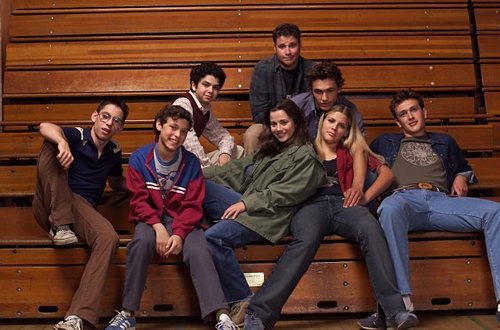
Freaks and Geeks

In honor of its 10th anniversary, I decided to watch the pilot of a little show that lasted only 18 episodes, Freaks and Geeks.

It’s 1980 in Michigan. High school kids are doing high school things. Each social group is shown in the first minutes with its own little musical intro. Not much explanation is needed since, if you went to high school in the 80s—or ever—you know all the players.

The main plot centers around an older sister, Lindsay and younger brother, Sam, a freak and a geek, respectively. The brother is an adorable pre-growth spurt John Francis Daley (Bones’ Lance Sweets). Other recognizable faces abound: James Franco, Seth Rogan, and Jason Segel.

Although it’s by and large just another school day, for a pilot there has to be something in transition. We eventually find out that Lindsay has been acting differently since the death of her grandmother. She’s less interested in being a mathlete, and more interested in becoming friends with a bunch of stoners. She’s also a defender of the weak, be it her brother or the token retarded kid.

The characters are three-dimensional and engaging. I can imagine getting to know them over the season would be a fun ride. And I must give the show kudos for bucking a stereotype for having a cheerleader who’s not a total bitch.

This show has been lauded by fans for being cutting edge. Maybe it was. Today geeks are cool, and maybe this show paved the way. But really, the geeks aren’t even that geeky, compared to say, the cast of The Big Bang Theory. And it has a similar aesthetic to My So-Called Life, which debuted 5 years earlier. Other shows debuting in the fall of 1999 included Big Brother, Judging Amy, Law & Order: SVU, The West Wing, and Angel. Maybe Freaks & Geeks stood out by way of comparison to adult-centered dramas and reality shows. What is this show anyway, a comedy or a drama? At any rate, it didn’t last, but it did launch writer Judd Apatow and several successful acting careers.

Quotable line: “She’s a cheerleader. You’ve seen Star Wars 27 times. Do the math.”

Community

So, how about a brand, spanking new show? Community, which premiered September 17, is set at Greendale Community College, and apparently designed to exploit every stereotype you ever had about community college.

The school’s Dean, incompetent from the very first moment of the show, serves as a fitting introductory device, asking, “What is community college?” As he names off the different “types” found in a community college, the camera shows us each principal character, matching those descriptions.

The expositional responsibility soon shifts to Jeff (Joel McHale), a lawyer who is going back to school to right some old wrongs:

“I thought you had a Bachelor’s from Columbia.”

“Well now I have to get one from America.”

Ba-dump, bump.

Jeff forms a fake study group to hit on a hot girl, and it quickly turns into a real study group, where we get to have all misfits from the various social groups thrown together. We get a diversity officer’s wet dream of colors, ages, and genders. (Thankfully, there’s no wheelchair-bound guy to give an excuse for easy disabled jokes.) There’s no reason to believe this group of people would willfully stay together. It’s one of those premises you just have to accept to get on with the show.

The thing is, Jeff thinks he’s got community college in the bag with an old client/friend, Professor Duncan (The Daily Show’s hilarious John Oliver), running the department, who’s going to get him the answers to every test. But Duncan wants to teach Jeff a lesson in integrity. So Jeff has no answers, and he ends up having to stay with the group.

If nothing else, the episode deserves credit for its Breakfast Club references and for being dedicated to the recently departed John Hughes.

It’s a pretty typical pilot. It’s got the “New Kid on the Block” thing going for it, where it’s everybody’s first day in a new universe, so the audience gets introduced to everyone/thing along with the characters. Nobody has any gigantic hurdles set up for them, though. Ostensibly, we’ll get to each one’s inner turmoil in later episodes. I can’t say I’m dying to find out about those. We’ll see if it lasts.

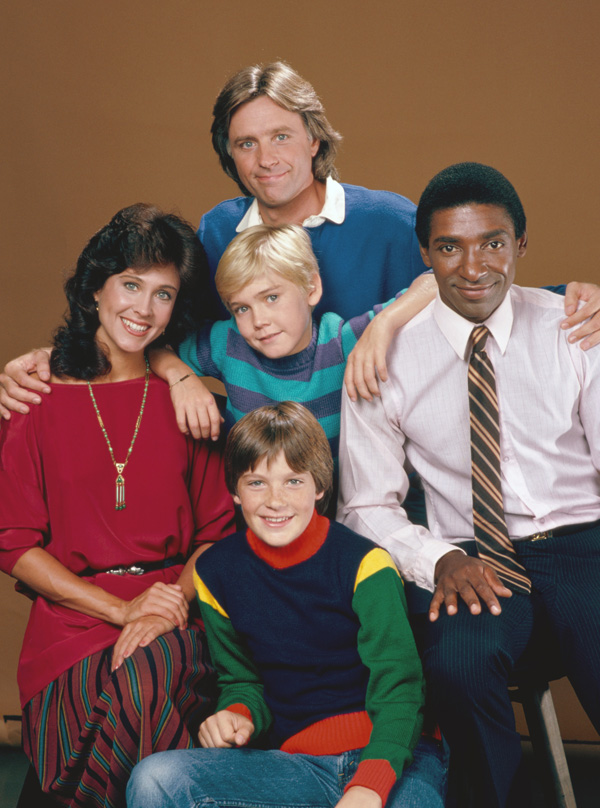
Silver Spoons

Yes, Silver Spoons, the sit-com from the 80s. We Gen X-ers tend to have fond memories of this show, up there with Diff’rent Strokes and Gimme A Break. But do we remember how it all began?

It’s just another day in the life of millionaire Edward Stratton III (Joel Higgins)—riding a toy train, playing the full-size arcade version of Pac-Man—until his accountant shows up to inform him that he’s squandered all his riches. Not five minutes later, a tow-headed military school student (Ricky Schroeder) shows up to announce that he’s Stratton’s son. Stratton reacts to these two pieces of life-changing news with uncanny calm. And, man, it’s amazing they didn’t wear out the laugh track.

Computers were new and exciting in 1982. When little Ricky Schroeder tossed of the phrase “random access memory,” most viewers probably had no clue what that was. Computers run everything in the Stratton mansion from the drapes to the bank accounts, and we understand that the kids is going to have a better understanding of the technology than the father.

Ricky plays dumb with the accountant, who demonstrates how to use the big, mysterious computer with the clunky telephone modem, to view Stratton’s finances. This leads to the revelation that the accountant is a big, fat crook.

Stratton sends Ricky back to school, then regrets it, and—dressed a swamp thing—asks him to return and live in Chateau de Pac-Man.

Two-thirds of the way through we get a brief introduction the freaking adorable Jason Bateman as Ricky’s classmate. (We have to wait two years for Alfonso Ribeiro.)

It’s kind of amazing now the way emotional life decisions are glossed over like deciding what to order at Jack-in-the-Box. I guess that’s why, back then, “very special” episodes stood out as shark-jumpers. The very mention of sadness warranted a character speaking to the camera at the end, telling us the number of the national suicide hotline.

I think that today, even on sitcoms, crises are treated with a little more seriousness. Maybe in the carefree, big-hair 80s we just weren’t ready.

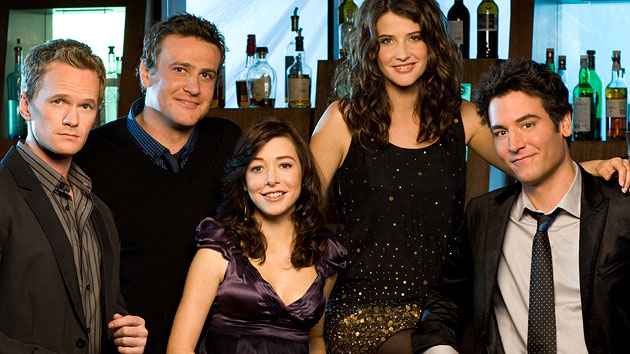
How I Met Your Mother

It used to be that you watched a show if you happened to be home with nothing else to do on the right day at the right time. There was the VCR in the 80s, but how reliable was that? Now that shows are available on DVD, and can be easily recorded with DVR, and are often available online, there is no reason not to watch shows from beginning to end (if a show warrants it). We are aware of continuity among episodes. As a side note, prior to the 90s, did anyone know the titles of individual episodes of shows, or that episodes even had titles?

As a result I think that television producers and writers have become more concerned with season-long or even series-long plotlines. Rather than each episode being its own one-off story where everything goes back to normal at the end (a recurring joke on The Simpsons) things change from episode to episode. I would venture to say that Friends pioneered this concept for sitcoms. Perhaps CSI did it for dramas, although I cannot claim extensive knowledge of that show or its spinoffs.

But I digress… How I Met Your Mother has a clear story arc. It’s right in the title. I took notice of this show part-way through its second season and quickly recognized that it needed to be viewed from the beginning to be fully appreciated.

The pilot opens, in the year 2030, with a voice telling two uncomfortable looking teens on a sofa that it is about to regale them with the story of “how I met your mother.” So we figure, that’s what the pilot is going to be about. Boy meets girl. Boy goes on date with girl. Boy professes love for girl way too soon. So is she “your mother”? For that matter, is the narrator “your father”?

Toward the end, Ted (the aforementioned Boy) tells Robin (aforementioned Girl), “if some hypothetical woman were to bear with me through all this, I think I’d make a damn good husband.” So our heads are dancing with visions of what the future will hold for this 20-something, good-looking, idealistic New Yorker. In his longtime friends Marshall and Lily, who have just gotten engaged, we see the possibilities. And in his smooth-talking, suit-wearing wingman Barney, we see the opposite possibilities. But we have possibilities.

The episode ends with the narrator telling the kids, “That, kids, is the story of how I met your Aunt Robin.” Irritated teenager: “I thought this was the story of how you met mom!” Narrator: “Like I said, it’s a long story.” How could you not keep watching after that?