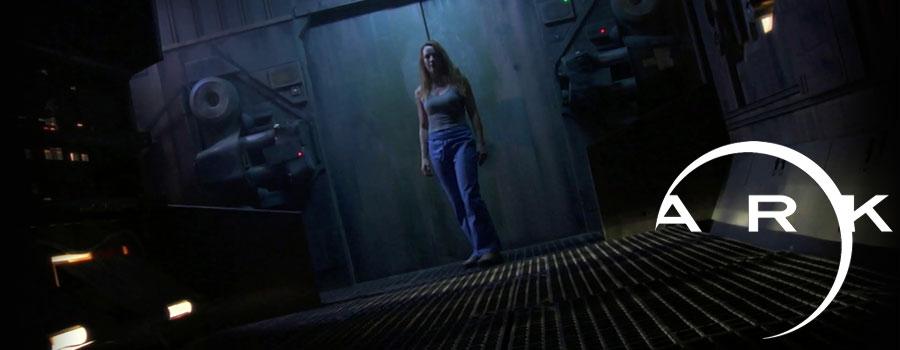
Ark

The pilot of this web series functions like a cold open would in a television series. You can barely call it a set-up. We see a character in a situation, and just as we get a wider angle—literally and figuratively—it’s over. The protagonist, whose name as far as we know, is “Mom,” is dozing on a couch in a messy living room. Her child is operating a handheld video camera while trying to wake her up, but she shoos him away. Then, somehow, she is inside a container not much bigger than a coffin. Saying any more would be a spoiler. As a pilot, this is light on exposition, big on suspense; great combo.

Ugly Betty

As suggested by the title of Ugly Betty, the show is all about Betty, Betty Suarez, and how she is less-than-Hollywood-attractive.  So the very first image we see is of her face, all glasses and braces right in the camera. America Ferrera can say a lot with a few contortions of her brace face. As the camera pulls back we find that she is waiting in the opulent lobby of a building, waiting to be interviewed for a job. After a short, awkward conversation with a glamorous-looking woman, she is bounced out on her fat-by-Hollywood-standards butt. It’s not for lack of trying; her first few onscreen moments encapsulate all of this character’s eager, ambitious, sunny motivation. As the doors to Meade publications are slammed in her face, a distinguished looking figure watches from above.

Next we find Betty at home. One of the best things about this show is its self-referential humor, and we get a peek at that early; telenovellas fill the Suarez’s living room. But more on that later.  Much is revealed about Betty’s father, sister, and nephew, as well as her boyfriend (Kevin Sussman of Big Bang Theory),  in a handful of lines. Justin (Mark Indelicato), the nephew, is the standout here, exhibiting a flamboyance that strains the edges of his 10-year-old form; he will play a critical role in informing the audience about what’s happening in the fashion world.

That sphere is the next one we must get to know. Daniel Meade (Eric Mabius) is the newly appointed editor-in-chief of Mode Magazine, a publication of Meade, and the distinguished man from earlier is his father, the owner of the company.

Although this doesn’t look to be a big day in Betty’s life career-wise, it may be a big one personally. Rumor has it her boyfriend is about to propose. However, on TV expected breakups are always proposals and expected proposals are always… Walter is in love with someone else.

At the first commercial break, Betty gets The Call. She is being hired, after all, as assistant to the editor-in-chief at Mode. It seems too good to be true, and we know there are reasons forthcoming.

The parade of characters continues as we meet the Mode receptionist, Amanda, Vanessa Williams’ uberdiva Wilhelmina and her sycophantic assistant Mark. Then there’s this photographer guy who’s friends with Mark. And they save the best for last—Christina (Ashley Jensen), the wisecracking Scottish seamstress. She’s the only seemingly normal one.

Before we’re halfway in to this pilot, we’re caught up in so many colorful storylines and people swirling around Betty it’s easy to worry it will all turn into a brownish sludge. But each one if vivid enough to stand out among the rest.

Amanda is sleeping with Daniel. Daniel is sleeping with everyone. The former editor of the magazine may or may not be dead. Wilhelmina wants Daniel fired, and Daniel wants Betty to quit. And that’s just the beginning. It is very soap opera-y but that’s where the telenovella schtick comes in to play. By presenting these Mexican soap operas in parallel, Ugly Betty in effect parodies itself. We can forgive the schmaltz and buy in. There’s even a slight tear-jerker moment.

We don’t get to know Betty too well in this first episode, though we like her as we’re conditioned to like characters who make it in life by hard work and pluck rather than by looks and money. She’s pathetic enough to make us feel better about our lives, but sympathetic enough to hang with. So, we’re prepped and ready to go on this journey with her, knowing it’s going to be nothing if not interesting.

Lost in Space

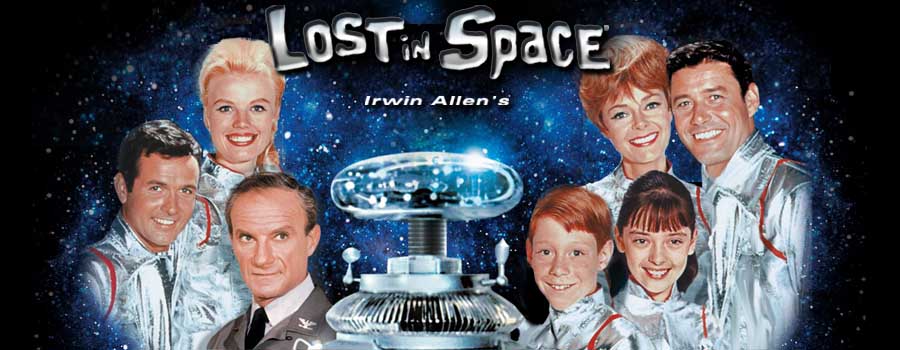
With a show set in a future that is now the past, it would be easy to simply pick apart the inaccuracies and laugh at the technology (and ask the age-old question, “Where is my jetpack?”) But I won’t do that. I’m going to examine the pilot of Lost in Space for what it is—a first episode designed to introduce the premise for a series.

Okay, I lied. First I have to make fun of one thing.

It’s 1997 as the Robinson family is being loaded aboard the Gemini 12 for a 100-year voyage to Alpha Centauri where they hope to colonize a sort of overflow zone for the bustling Earth. By setting this technologically advanced endeavor in 1997, the creators showed great faith and ambition in the abilities of mankind. Not so much for womankind. This is “the first time in history that anyone but an adult male has passed the International Space Administration’s grueling physical and emotional screening.” They could foresee space colonization but not female astronauts? Crikie. 

Dr. John Robinson (Guy Williams), his wife Dr. Maureen Robinson (June Lockhart), their three children, Judith, Will, and Penny, and their assistant Donald are put into suspended animation and launched into space. An 11-minute introduction explains all of the circumstances, narrated by a news anchor. The mood is ominous as the world watches a historic moment. The set is a busy space station, filled with tense-looking individuals and complicated-looking machinery. The mood as the ship lifts off is more somber than celebratory. Shortly after launch, the ship encounters an asteroid field, it’s passengers are jostled around in their slumber, and the Gemini 12 is reported lost in space.

The tone then shifts as we jump ahead to 2001 and find the Robinsons surviving on a distant planet. The set up for this section is also narrated, as Dr. Robinson reads from a journal. At last, 12 minutes in, we hear the characters speak on screen and finally start to get a sense of their personalities.

Spooky music continues the air of foreboding introduced in the opening, but there are moments of levity. The children bicker and goof off, like any siblings. The whole family falls instantly into societal patterns recognized by the show’s 1960s audience. Mother and older sister prepare dinner and do laundry, the younger kids play with toys and pets, and the menfolk work outside the home.

What we know about the planet is that it has extremes in temperature, a variety of flora and fauna, and at least one sea. And as in nearly all science fiction shows, the air pressure, oxygen level and gravity are exactly comparable to Earth. We can assume it’s not Alpha Centauri, since our heroes have journeyed for just three years to get there (and because Alpha Centauri is a star system, not a planet, but there I go nitpicking). Nevertheless, the Robinsons seem to have brought all the right equipment.

The homestead is complete with appliances and alien pets. Things are powered with solar batteries. (Why couldn’t Gilligan’s castaways have thought of that?) The show has fun demonstrating the fantastical advances of the future. The washing machine, for example, washes, dries, and packages clothes in plastic wrapping all in seconds.

Naturally there is a hook-up in the works between 19-year-old daughter Judith and the hot young Ph.D. How could her parents not have seen that coming? Shark jumping is inevitable with a cast of six.

By the end of the episode, the travelers have stumbled upon some kind of tomb that suggests other human-like beings live here, or did. So, it looks like they will have plenty left to discover, enough to last a few seasons. The action is intense and some of the special effects aren’t terrible. The episode leaves us in suspense, always a strong move for a pilot. This is actually an unaired pilot, so there is a character not introduced until the actual pilot. Either way, it stokes the imagination—even today—and sets the stage for high adventure. And unlike its contemporary Star Trek, it introduces characters for each member of the family to relate to. So if you can suspend your disbelief in accept it as fantasy, it’s pretty fun.

Charmed (Unaired)

Blogging about the Charmed pilot, “Something Wicca This Way Comes,” has been on my to-do list for some time, but how much more fun is it to cover the unaired pilot? It’s available on YouTube (legally or not I couldn’t say).

In a nutshell, Charmed is the story of the Haliwell sisters, Phoebe, Piper (Holly Marie Combs) and Prue (Shannen Doherty), who learn that they are witches, each with a unique power.

The setup in this version of the pilot is identical. Some of the footage looks to be the same as what aired. Two sisters living in their dead grandmother’s San Francisco house are joined by their third, black sheep sister returned from New York. In the meantime, a detective is trying to solve a series of murders of young women. These events are set against the backdrop of a raging thunderstorm, lending an air of foreboding.

The most unmistakable difference is that Phoebe, the youngest sister, is played not by Alyssa Milano but by Lori Rom, who went on to play a recurring role on Party of Five. This Phoebe is more down-to-earth, lacking the perkiness Milano brought to the role. The trick to Phoebe is that we, the audience, have to like her even though she annoys the heck out of Prue. She needs an impishness that Rom doesn’t pull off. Rom dresses dumpier too; the costumers later made the most of Milano’s hot bod.

Phoebe drives the action throughout the story, so it was important to get the casting right. Her curious nature catalyzes the discoveries that bring the sisters their powers. She is the only one brave enough to venture into the attic when directed there by a spirit board. She recites the incantation that instills the powers, and she continues to read the Book of Shadows and educate her sisters about witchcraft. As the Phoebe character is described, “She has no vision, no sense of the future.” This observation is one of many examples of ironic foreshadowing in the pilot, since Phoebe gains the power to see visions of the future.

In both versions, character introductions and exposition evolve pretty naturally, with one glaring exception. Phoebe asks Piper, “I’m glad you’re still with Jeremy. Where did you meet him anyway?” The answer hints at the “twist” to come, wherein Jeremy is a warlock specifically preying on the sisters. It’s not particularly surprising when he pulls a knife (an athame) on Piper in an abandoned building.

What I’ve never understood about this pilot—this version or the final one—is why they try so hard to be truthful to what Wicca is all about while at the same time making it so far-fetched. Both versions open with an anonymous woman setting up an alter and calling the gods/goddesses to oversee a ritual. The writers explain to us what at athame is and make a point of explaining the Wiccan rede and that witches are not evil—obviously important if we’re to sympathize with the protagonists. This point is subtly different between the two versions, actually. In the unaired pilot, Phoebe says, “A true witch is a good witch,” and in the aired pilot she says, instead, “A witch can be either good or evil.” Either way, the powers of the witch in the opening, and the Haliwell witches, are the stuff of science fiction.

  There are some details missing from the unaired version—tattoos on the murder victims,—and some things that are done better. In the unaired version, Phoebe’s bike accident makes her look foolish, reminiscent of Stacy in Wayne’s World. Prue’s conversation with Detective Andy Trudeau is much shorter, giving less basis for their future relationship. The aired version contains some back story about the Haliwells’ father; Prue doesn’t like him, and only Phoebe is still in touch with him. Basically, the aired version gives more information to build on for the future.

In the end, the women have to overcome their various levels of skepticism about witchcraft and stand together—literally—chanting about “the power of three.” This climactic scene embodies the theme of the whole show, that the three (never mind that one of them gets replaced) have to learn to count on each other.

Happy Halloween!

Slings and Arrows

No one ever thanks the stage manager. If you have ever worked in theatre, you know that when the stage manager gives you a cue backstage, such as “five minutes,” you respond, “thank you five minutes,” or at least “thank you.”It’s not only polite but it’s practical, as it lets the stage manager know that he/she has been heard, and that everyone is on the same page. Never, ever is this done on TV or in movies. It drives me nuts. Slings and Arrows, a now-cancelled Canadian dramedy seems like a show that would get this detail right, but maybe they do things differently in the land of Rod Stewart and Robin Sparkles. The show is pretty authentic in other ways.

The pilot plot is a tale of two theatres. One is desperately poor, with plumbing issues and unpaid electric bills. It’s actually called Theatre Sans Argent. The other one is a big ol’ commercial theatre complete with a corporate sponsor. Both are getting ready to open works by Shakespeare. It’s not immediately clear what the relationship between the two is, but we get to that.

Geoffrey (Paul Gross), the cockeyed optimist who runs the broke company fancies himself an artiste. He’s full of bombast about the ability of theatre to rise above mundane problems like money. “A theatre is an empty space,” he declares, making a Peter Brook reference only theatre geeks would get. He backs up his claims, though, with a realistic onstage tempest created using only sound and lights on a bare stage.

At the helm of the fancy theatre, New Burbage Theatre Festival, is Oliver (Stephen Ouimette), also a pompous airbag but meaner. He abuses his backstage staff as well as his actors. He is directing a production of A Midsummer Night’s Dream while simultaneously navigating administrative politics. The company sponsoring his season has a new CEO, and though she’s as chipper as a protocol droid, we’re not sure if she’s a friend of the arts or The Man.

The show goes on for the latter. At the former, the landlord tries to evict the company, so the artistic director chains himself to the building in protest making the evening news. Oliver catches the coverage—in the middle of his opening—and the connection begins to become clear.

Geoffrey and Oliver are a classic example of Foe Yays. (For a full explanation of HoYays, FoeYays and their relatives check out TV Tropes.) They’re a bit like Dr. X and Magneto. Peter Parker and Harry Osborn. Guys who used be bros and now they hate each to the point of obsession. There is a lot of back story going on and a lot of set-up for future relationships. The women in these men’s lives are introduced, as are a few other company members.

It’s not easy to predict where the season is going to go, because it’s not easy to even label this show. It’s kinda funny, but not in a ROTFL way. And it’s dramatic, but without being too heavy. And it’s about a subject that is anything but mainstream. So it’s not an easy thing to sum up. That should be a good thing, but in this case, the pilot is an amorphous blob. Maybe multiple viewings will reveal new layers. It ran for 3 years so maybe they get it in Canada

Ghost Whisperer

I’ve watched various episodes of Ghost Whisperer over time, in no particular order. I’m always slightly confused because there are different characters on it every time I happen to catch it. Sometimes Camryn Manheim is on it, sometimes Jamie Kennedy, sometimes Jay Mohr and, in the episode I caught today, Aisha Tyler. So I had to get to the bottom of this and see the original cast in action. A lot of shows switch actors and characters over time, in response to ratings or whatever, but we must assume that the pilot is the closest thing to the creator’s real vision.

To introduce Melinda (Jennifer Love Hewitt) the writers present her to us as a little girl. At a funeral for an old man, she has a predictable interaction with the deceased’s ghost, sharing a secret message with his widow. If you came into this viewing with no idea what the show is about, that takes care of it quickly and cleanly.

We then find the adult Melinda at her wedding reception, perhaps suggesting some parallel between this day and the one at the long ago funeral. She has a heart-to-heart with her new brother-in-law that reveals a few details about her husband Jim (David Conrad). He is a paramedic who recently lost a patient.

The newlyweds move into a new house, the house becoming the source of things creepy that will form the plot of the episode. Melinda immediately starts seeing weird stuff, but since that ghost in the cold open was such a sweetie it’s not quite clear why these new ones are scary.

The show’s “rules” are spelled out through a coffee house conversation Melinda has with her best friend Andrea (Aisha Tyler).  She utters an adage that seems to carry great weight: “Places aren’t haunted. People are haunted.”  Yet, the new house certainly seems haunted, and Melinda claims that ghosts don’t usually make house calls.

The pilot plot revolves around the ghost of an M.I.A. Vietnam soldier (Jensen Ackles) who is looking for his wife. He—or someone—yells at her in a dream, something that apparently happens to her regularly. She tracks down the soldier’s son (Balthazar Getty). Although Melinda has been assisting sprits for most of her life, she’s really awkward and embarrassed when it comes time to talk to the living relatives.

By this point, I’m wondering why the writers bothered with the cold open of Melinda as a child. If they were telling us that the talking to ghosts thing is old hat for her, then why does it seems so fresh and scary in her adulthood? Why did they choose her wedding day as the point of attack for this story?

The other unexplained circumstance is that Melinda has recently promised her husband she’ll cut back on the ghost counseling business. Yet her husband seems okay with her vocation, at least until he has his own crisis of faith about being a paramedic. Finally, a Shamylan-style twist keeps this pilot from completely dying on the vine.

Eventully, of course, she reunities father and son through a tearful exchange one-sided exchange. She paraphrases what the ghost says—something I’ve noticed she does in other episodes as well—going to far as to correct his grammar. But I guess you’d be smug, too, if you had supernatural powers.

When all is done and the dead have gone into the light, this pilot doesn’t leave me feeling that I’ve gotten to know these characters. It has been more about how life, death, and afterlife work, and we’ve had that spelled out at least a thousand times since Carol Anne got sucked into the TV. The next episode could just as well be about a different ghost whisperer, solving another ghost’s quest for closure. So, as a pilot I wouldn’t say this episode carries its weight. And with all the subsequent changes one feels like there must have been a lot of “this show would be pretty good if only…” Although it ran for 5 seasons, the network finally threw in the towel last year. (A rumor that ABC is going to pick it up was apparently unfounded.) Jennifer Love Hewitt says an emotional good-bye here.

Hellcats

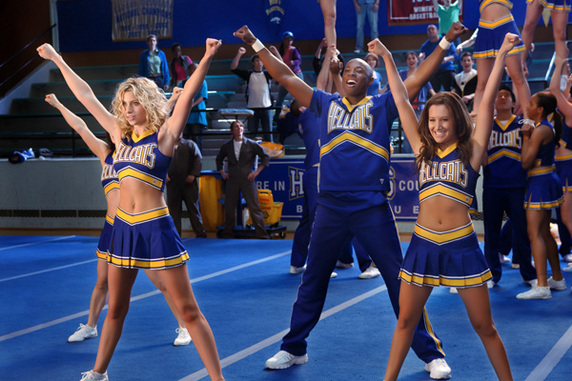
You might call it lazy to have the entire setting and premise of a show laid out via voiceover from the protagonist right at the start of your pilot, but it’s not as bad as having cheerleaders practice in front of a really obviously green screened college campus. Hellcats does these two things in its first minute. Not a good first impression. The protagonist in this case is a gorgeous blond law student who we should take seriously because she rides a bike everywhere and helps her mom make ends meet during these rough economics times. But we’re shown that she has a heart because she acts slightly concerned when a cheerleader eats it during practice.

Lest you think that I watched this pilot just to hate on it, know that I had hopes. I love cheerleader related stuff—Bring It On is one of my faves—and as a huge Veronica Mars fan, I do not believe that a low budget CW show can’t be great. Getting into the predictable story, Hotty McBicycle (still haven’t caught her name) is about to lose her scholarship and has to find a new one stat. She expresses her desperation to someone in the administrative office thus: “You know what gets me through? Hope.” It gets worse: “You kill my hope, you kill me.” The dialogue hurts. It hurts. But not as much as the way she teaches herself to cheer. Are you ready for this? She watches Bring It On. For the uninitiated, this underrated San Diego-filmed movie is all about how cheering should be taken seriously as a sport. Hotty must have fast forwarded to the cheering parts.

Hotty gets into it with the head cheerleader, Savannah (Ashley Tisdale) early. This gives the plot a conveniently-placed obstacle. But at the try-outs, Hotty, oh yeah, it’s Marti, wows the coach by ignoring the choreography and busting out her own routine. She doesn’t know gymnastics terminology but can tumble like Mary Lou Retton. She makes an offhanded reference to “training” since she was 16, but it’s not remotely believable that she gets put on a college cheerleading squad. Later it comes out that she did gymnastics in high school, but it’s too little too late.

Marti has to move into cheerleader housing called Cheer Town, leaving her devoted but obviously irresponsible mother behind. This sets up potential future mother-daughter strife story lines. We get to know the coach, her boyfriend, and her ex-lover who is also the new football coach. Their story holds some at least some possibility for being interesting.

Marti makes nice with the head cheerleader, and her real nemesis turns out to be the girl who got injured in the opening. So that’s kind of a twist. Marti attacks her with, “Do you invent your own catty metaphors, or is there like a book?” Ow. Ow, it hurts. At the other end of the spectrum, she catches the eye of strapping male cheerleader Lewis.

Glee has convinced us that cheerleaders live in their uniforms. The Hellcats wear their uniforms to practice. Why is this necessary? Yeah, they look good in them. But do the producers have to spoon feed us everything in the pilot? What’s even more annoying is that they spontaneously, somehow, know a complicated routine complete with lifts, at their first practice. Speaking of Glee, this show is its antithesis. Do we really think that a whole group of high school kids have the pipes of Broadway stars and can learn 3 or 4 songs a week, and always have appropriate costumes at the ready? Yes! Because Glee draws us in and convinces us that we’re watching a musical, where the joy of the moment overrides our skepticism. Hellcats is just plain contrived. I don’t care how plucky you are or how small your waist is, you can’t just be a cheerleader because you watch a movie. Gahhh!

Cleopatra 2525

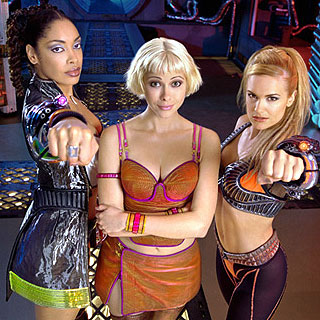
This show, which could have been called “Boobs in Space,” was brought to my attention by a former roommate who watched it to fill up the space between Baywatch episodes. It is so campy and awful, I was delighted to find it on Hulu. What I didn’t remember was that one of the main three actresses is Gina Torres, Zoe from Firefly!

You have to hand it to these writers—they need all of a minute and a half to show us just what a  joyride in the cheesmobile we’re in for. We open on an interior shot of the now-dilapidated Sistine Chapel. Shot of a bunch of hot people in really skimpy, “futuristic” looking out fits. Some talk about going to “the surface.” A disembodied voice prodding them to go up there. The main character snapping her buggy-looking goggles into place, saying defiantly, “Let’s do it.”

Here’s the premise: a woman in 2001 went in for a boob job. Something went wrong with the anesthesia, and she was cryogenically frozen until they could find a cure (for anesthesia?) She is now waking up—spontaneously—in the year 2525. She’s been brought to a medical lab that looks like something out of Barbarella to be harvested for spare organs, wearing a costume reminiscent of the chick in The Fifth Element. Oh, and spoiler alert, she’s a stripper.

Before we meet our heroine, Cleopatra (Jennifer Sky – who?), we follow her soon-to-be new BFFs, Helen and Sarge (Victoria Pratt), in battle. They tromp around underground in the most uncomfortable looking space armor I’ve ever seen. Their cleavage, midriffs and legs are in some serious danger should a laser battle take place. By the end of the first scene the man has turned on the women. They discover him to be a cleverly-named “betrayer robot.” Clearly the women are the only heroes here, nothing unexpected in the era of Xena Warrior Princess.

The enemies in this underground future are robotic creatures called bailies. Before they get to the level boss, though the women still have to fight off the betrayer bot. He’s got laser vision that makes Superman look like a punkass. Defeating him involves some snazzy moves designed to show off the women’s hot bods. After that, Cleo attacks Sarge for no discernable reason other than that chick fights are hot.

When Sarge asks Cleopatra, “You’re very concerned about the way you look, aren’t you?” you have to laugh. And hope that the show’s creators are not actually taking this stuff seriously. The plot of this particularly story is resolved pretty easily, thanks to a handy talent of Cleo’s that has nothing to do with her cleavage. Aaaand, by the end of 22 minutes everyone is happy and ready to fight evil together. Cleo is surprisingly accepting of her circumstances. So if she’s not going to take this seriously, why should we? Answer: we shouldn’t. If you abandon all sense of reality and logic, you might have fun with this show.

New Amsterdam

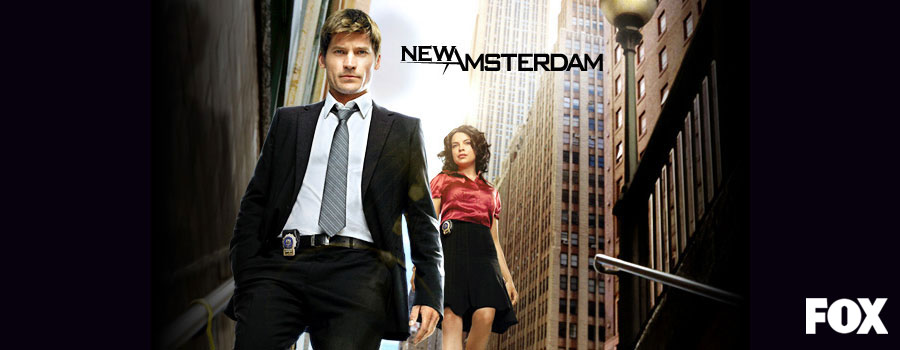
Since I tend to love shows cancelled by Fox, I had to check out New Amsterdam, which I vaguely remember being advertised. It’s about a cop with unique knowledge due the fact that he’s been alive a long time… like, a supernaturally long time. If John Doe and Journeyman didn’t last, what made them think this would?

From the get-go the city is a character. We open with a noir-ish voiceover by the main character, John (Nikolaj Coster-Waldau) describing New York and all that he’s seen happen in it over the years. It’s reminiscent of Angel describing Los Angeles at the beginning of that pilot.

The show sets up a juxtaposition of romance and violence that could become a theme. While John tangos with, and then makes love with, a woman we don’t really meet, flashbacks of a battle scene are interspersed. In the battle, which appears to be set in colonial America*, John is run through with a sword while defending a Native American woman.

Once we have a feel for the character and his story, we learn what he’s doing in the present day. Naturally, he’s a cop. What supernatural being residing in a major metropolitan area wouldn’t spend his days fighting crime? And, naturally, he’s got a mismatched partner of the opposite sex, as TV cops tend to have. She tells us her name twice in the space of a minute: Eva Marquez (Zuleikha Robinson). Perhaps we’re supposed to hate her. We do.

As the odd couple is investigating a crime scene, John takes off after a suspect, chasing him into a subway station. John is doing this whole smooth cop thing, disarming the suspect with his fearlessness, when a certain woman steps off the train. John collapses to the ground for no visible reason, and is rushed to the hospital where the doctors try in vain to revive him. To the resounding ER chants of “clear!” we see a parallel memory of John lying among a group of Native Americans. The oxygen mask in the present is contrasted with the burning sage from the past. The Native American woman who he defended earlier explains that John will never die until he finds “the one” and their souls are wed. In the present, John dies, has his toe tagged, and then wakes up and walks out of the morgue. We surmise this has happened before.

John has a confidante, Omar (Stephen Henderson) who is in on this story. He’s a wise, old, African American bartender… can we have a bigger cliché, please? With everyone else, we assume John’s immortality is a secret, although he is pretty loose with the clues. He casually mentions 609 ex-girlfriends, or five-thousand-some-odd days sober. Apparently he doesn’t care whether anyone knows, either because they wouldn’t believe him anyway, or there is nothing anyone can do to hurt him.

John and Eva (god, she’s a bitch) continue working their case, seeking the killer of a celebutante named Chloe. This mystery-of-the-week is pretty standard, existing to let us, or the network execs, know what to expect in the coming season. John drops bombshells of personal information at the right moments, like when he tells the victim’s mother, “He was six, my son.”

The twist that sets the show apart from other cop dramas is, of course, John’s extensive knowledge of New York. He has a lot of contacts, having been around a while. There is a creepy encounter with an ex-girlfriend, now pushing 90, who holds a clue to the case.

In the meantime, a doctor from the hospital where John died—the woman from the subway—is curious where her corpse got to. She’s doing her own little investigation. Sooner or later the two are bound to meet, and perhaps that will lift the spell. The question is, does the viewer want to slog through cheesy weekly cases to get there?

Some behind the scenes information and interviews can be found here.

*According to the show’s description this scene is set in 1642, but you wouldn’t necessarily know that.

Rubicon

Rubicon, a new show on AMC has a cool title (a metaphor for a point of no return) and a cool tag line: “Not every conspiracy is a theory.” So I decided to see what they mean by that.

Things start off simply. A quote appears: “An invisible empire has been set up above the forms of democracy.” We’re asked to guess who said it, Ted Kacyzinski or Woodrow Wilson. Naturally the answer is the less obvious, and by extension, the more eerie, Wilson.

Next we see some kids running happily through the show. They’re shot from above, lending a starkness that says their happiness will be short-lived. A woman, we assume their mother (Miranda Richardson), joins in their game, while inside the stately manse, a man (their father? grandfather?) reads his morning newspaper. A four-leaf clover is pressed into the paper, giving him pause. He proceeds upstairs and blows his brains out.

The opening credits speak to anyone who is a fan of Dan Brown and the like. Numbers, symbols, words, and images are circled or connected, hinting at sinister hidden messages all around us. One of the images is of a freeway off/on-ramp “clover,” and immediately in the next scene people are sorting out a crossword clue about a four-leaf clover. So we’ve got a theme that is none too subtle.

Our protagonist is Will Travers (James Badge Dale), a moody academic. He is apathetic when a female co-worker reminds him it’s his birthday and offers to buy lunch. Will attends a staff meeting, which serves as an introduction to the other characters. Tanya, the most junior staff member, is chastised by Grant for forgetting the doughnuts. Grant is a jerk. Miles is a bearded version of Will. David, their boss (Peter Gerety), looks the part of esteemed university professor, complete with elbow patches. He gives each member of the team a cryptic assignment, starting with observing missile silos. It’s not entirely clear what this workplace is, or what the characters do. But that’s okay, because the real story seems to be Will’s obsession with a particular set of crossword puzzles.

Will brings the puzzles to David, for the elder gentleman’s expertise. There seems to be a pattern in the puzzles hinting at a mysterious fourth branch of government, the branches being symbolized by—you guessed it—clover leaves. It seems like a huge stretch to the viewer, but we have to buy that these guys are smart enough to see meaning where we laypeople would not. David gives him the brush off, only to pounce on the puzzles himself once Will is out the door. He in turn shows them to his boss, Kale (Arliss Howard).

A big reveal comes at lunchtime when Tanya asks Miles why Will walks around looking like his cat died. Miles replies, sanctimoniously, “Try wife and child. Try 9-11.” It’s a little ham-handed but adds an important layer to Will’s character. Another detail, this one handled with welcome subtlety is the revelation that David is Will’s father-in-law. “They’re gone,” he says. “It’s just something both of us have to accept.”

[SPOILER ALERT] David, we find is carrying the burden of knowing whatever Big Event is about to happen that will set off the storyline for the series. He warns Will to leave town, and then is killed in a train accident. Will, like any good conspiracy theorist, doesn’t accept that it was an accident. He reluctantly takes David’s job when it is rather insistently offered.

He enlists the help of a colleague, introducing us to another key character, Ed. Ed has that whole wise old hermit thing going on, so we figure he’s going to know some things.

So will the show be about solving David’s murder? Or about the crossword puzzle plot? Or both? And what of the man who killed himself in the opening? The pilot, though it has an arc, doesn’t really have an ending; and that’s a good thing. We’re in for some mellow-drama, to be sure, but it’s got the necessary hook.