Surface

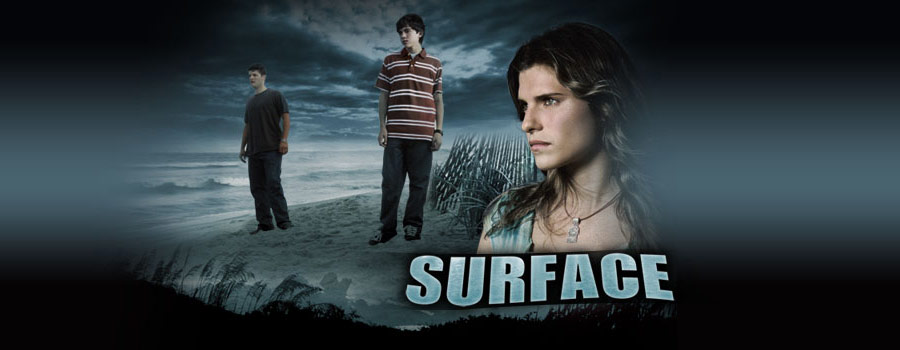
NBC has been toying with science fiction for years now, with a few hits and many misses. Surface is one of the latter, being cancelled after 15 episodes in 2005-06.

The show introduces us to four separate locations and character groupings: some kids in North Carolina, the crew of the U.S.S. Ronald Regan in Antarctica, a group of fishing buddies in Louisiana, and an oceanography team in Northern California. It establishes the strangely-connected-incidents-happening-to-otherwise-unconnected-people-in-disparate-places element that Heroes would do more successfully a year later.

We meet the kids first. Since they’re out drinking and screwing around we can expect something bad to happen, so the suspense builds quickly when one of them, Miles (Carter Jenkins) is separated from the boat. The Scary Thing we’re expecting is more mysterious, since we are not sure what we’ve seen. A dark creature slithers from a buoy into the water, freaking out the kid who witnesses it. But it’s forgotten pretty quickly when the Coast Guard busts the kids for drinking.

The scene on the aircraft carrier has the air of an action movie, something that would star Harrison Ford. A gruff military officer has little patience for the “civilian biologist” and his team who have come to check out an abandoned submarine.

We spend the most time with the oceanography team. The hero is Marine Biologist Dr. Laura Daughtery (Lake Bell). She is the divorced mother of a little boy. The introductory scene of these characters is warm and humorous, conveying that Laura both loves her son and refuses to take any crap from him. She holds a pair of scissors, ready to cut the ear off of his stuffed pal until he agrees to get ready to go to his dad’s.

Once we have gotten to know Laura as a woman, we see her as a researcher. She is off to visit some vents on the ocean floor in an expensive submersible. “More people have been to the moon than have been to the hot vents,” she informs us. Despite being a supposedly highly respected scientist, Laura has a decidedly girlish air, wearing her hair loose and chewing gum while she works; you can decide whether this is endearing or just makes her hard to take seriously. Weird note: in this super high-tech craft she writes with a pen and paper? You would think she’d at least have a laptop.

Things get intense while Laura is on her dive, with some pretty cool special effects and a moment where we would think she was a dead woman if the writers hadn’t invested so much time in introducing her.

The juxtaposition of different settings, and different tones, keeps the audience off balance, always waiting to grasp onto the common thread. We know that thread is some type of sea creature, but just what kind of danger it represents remains unknown until one of the fishermen is killed.  Before long, intimidating government officials have arrived to learn more about Laura’s encounter.  Why are people on TV always smart asses when they’re being questioned by the authorities?

The most exciting moment of the episode comes when one of the creatures bursts out of a fish tank, where Miles has stowed an egg. The moment isn’t a complete surprise, but the look on Miles’ mother’s face is pretty entertaining.

This pilot feels really long. It’s as if you’ve sat through a whole SyFy original movie (which is okay if you’re into that). Perhaps too much is revealed too early. Coming right out with the mention of sea monsters, and even showing them to us, probably could have waited an episode or two. It seems like these writers wanted to tell the whole story in the pilot instead of drawing it out. I have not seen any subsequent episodes, but perhaps this is why the show didn’t last.


Cliffhanger or Closure? Top 5 of Each

Pilots, when well executed, make the viewer want to come back for more. However I’ve noticed that pilots fall along a continuum in terms of how they leave you feeling at the end. Some just get the action going, and then abruptly end. They leave you chomping at the bit for episode 2 because you just have to know what happens next. Some shows, say 24, couldn’t work any other way. (That show is such an obvious example it’s not worth listing below.)

Other pilots are more self-contained. Sure, they introduce characters and situations and, ideally, make you want to keep watching. Yet, they wrap up neatly and can be enjoyed again and again like mini-movies.

Still others lie someplace in between. Here are five of the best at either end of the spectrum. It’s by no means an exhaustive list; as I’ve said before I don’t claim to have seen every pilot, or even every great pilot out there! (BTW, spoiler alert.)

What else should be on the list? Let me know in the comments or on Twitter.

Best Pilots that Leave You Hanging

Veronica Mars – So. Much. Stuff. Happening in this pilot. We just get a taste of the Lily murder, which will keep us guessing even after it’s solved.

Heroes – Again, this pilot just scratches the surface of everything that is set to happen. Absolutely no questions are answered.

Jericho – The ending of this pilot scared the bejeezus out of me. You see the map of the U.S. with all these pushpins marking places that were nuked and ask, “Just how bad is this disaster?”

The Walking Dead – Did the sight of Rick in that tank and the sound of the voice over the intercom not make you just want to hit the fast-forward button to the following Sunday?

How I Met Your Mother – This leaves you hanging not for a week, but for… well, it’s been five freaking years. How did you meet their mother for f’s sake?

Best Pilots that Can Stand Alone

The Simpsons – It’s a Christmas special. Need I say more?

Studio 60 on the Sunset Strip – This was so good, it is inexplicable why the series went so far downhill. It was a prodigal son (or sons) story that wrapped up beautifully.

Friends – It’s a happy ending to a story about a woman who walked out on her wedding. It offers possibility—will Ross get Rachel?—but it’s a happy ending.

Glee – This necessarily had to be good all by itself because it aired way before the season actually started. And it wildly succeeded.

Dead Like Me – This pilot delves deeper than it needs to, explaining the whole back story of the character plus the rules of the show’s world all in one go. But even with all the change she’s just faced, George gets a sense of closure by going to see her mom.

Fringe

Fringe, from its beginning, is a character driven show. It’s a procedural, to be sure, but the pilot lets us know that three strong personalities are going to drive the action: FBI Agent Olivia Dunham (Anna Torv), Peter Bishop (Joshua Jackson), and Dr. Walter Bishop (John Noble).

We don’t meet Olivia as badass cop woman. We meet her as she is falling in love, in bed with the object of her affection, sweet and almost demure. This is a reversal of the typical female action hero who is usually tough first, vulnerable later. It’s not as if Olivia’s a wimp; we see her in action soon enough. She’s part of a joint task force reporting to Homeland Security, which is called upon when a planeload of civilians die inexplicably mid-flight. Within in minutes we find Olivia chasing down a suspect and, after that, putting her brains to work to solve a mystery. During the chase her romantic and professional partner, John, is hit by an explosion. He winds up comatose, poisoned and dying from an unidentified contaminant.

John is introduced too early to survive. People who are happily together at the start of a drama pilot are destined to be torn apart. But that won’t stop our heroine from trying to save him.

Trying to discover the nature of the poison, Olivia is soon on the trail of a mysterious and insane researcher, Dr. Bishop, living in an institution. She demonstrates her powers of persuasion by travelling to Iraq to coerce the researcher’s genius son, Peter, into coming with her to bust him out. Dr. Bishop worked studied “fringe” science 17 years ago before being locked away in a stony vault.

When the bearded Dr. Bishop turns, ever so slowly and looks up at Olivia, we know we are meeting a powerful character. “I knew someone would come,” he intones. A bit like Temperence “Bones” Brennan, Walter thinks in pure facts. He may be a genius but his social interactions are painful to witness.

The episode is filled with quiet moments; long, awkward pauses at once suspenseful and humorous. Everyone has moments when a parent embarrasses them. It’s just more intense when said parent is a mental patient. Peter sure hates Walter, but as the viewer, we’re not sure whether either one has good intentions or bad.

Peter is a total ass to Olivia, but she doesn’t stand for it. You feel her frustration when she says, “You call me sweetheart one more time? I’d really like that.” It’s not an obvious sexual tension between them, as might be expected. Simply, they’re both strong people who know what they want.

As we delve further into the mystery of the poison, we’re introduced to Massive Dynamic, your basic giant, evil corporation. Its founder, a Dr. Bell, is Walter’s former partner. We don’t meet Dr. Bell, but only his Executive Director, a snippy woman with a super cool bionic arm. The pilot is double-length, basically a movie, so suffice it to say, this is only the beginning. We’re promised a future filled with teleportation, astral projection, reanimation and the like. More importantly, Olivia is at a critical juncture in her life and career.

The snowy cold landscape of Boston provides a distinctive atmosphere. The show is filled with interesting visuals: a cow walking down a crowded university hallway, a man with transparent skin, a woman in a tank hooked up to electrodes. Though it gets compared to The X-Files, and it’s even been suggested the two shows take place in the same universe, Fringe is unique in many ways. We know from the pilot that we’re headed down a conspiracy theory rabbit hole, which could easily get cheeseball, but there is promise that these characters will keep us coming back.

Ugly Betty

As suggested by the title of Ugly Betty, the show is all about Betty, Betty Suarez, and how she is less-than-Hollywood-attractive.  So the very first image we see is of her face, all glasses and braces right in the camera. America Ferrera can say a lot with a few contortions of her brace face. As the camera pulls back we find that she is waiting in the opulent lobby of a building, waiting to be interviewed for a job. After a short, awkward conversation with a glamorous-looking woman, she is bounced out on her fat-by-Hollywood-standards butt. It’s not for lack of trying; her first few onscreen moments encapsulate all of this character’s eager, ambitious, sunny motivation. As the doors to Meade publications are slammed in her face, a distinguished looking figure watches from above.

Next we find Betty at home. One of the best things about this show is its self-referential humor, and we get a peek at that early; telenovellas fill the Suarez’s living room. But more on that later.  Much is revealed about Betty’s father, sister, and nephew, as well as her boyfriend (Kevin Sussman of Big Bang Theory),  in a handful of lines. Justin (Mark Indelicato), the nephew, is the standout here, exhibiting a flamboyance that strains the edges of his 10-year-old form; he will play a critical role in informing the audience about what’s happening in the fashion world.

That sphere is the next one we must get to know. Daniel Meade (Eric Mabius) is the newly appointed editor-in-chief of Mode Magazine, a publication of Meade, and the distinguished man from earlier is his father, the owner of the company.

Although this doesn’t look to be a big day in Betty’s life career-wise, it may be a big one personally. Rumor has it her boyfriend is about to propose. However, on TV expected breakups are always proposals and expected proposals are always… Walter is in love with someone else.

At the first commercial break, Betty gets The Call. She is being hired, after all, as assistant to the editor-in-chief at Mode. It seems too good to be true, and we know there are reasons forthcoming.

The parade of characters continues as we meet the Mode receptionist, Amanda, Vanessa Williams’ uberdiva Wilhelmina and her sycophantic assistant Mark. Then there’s this photographer guy who’s friends with Mark. And they save the best for last—Christina (Ashley Jensen), the wisecracking Scottish seamstress. She’s the only seemingly normal one.

Before we’re halfway in to this pilot, we’re caught up in so many colorful storylines and people swirling around Betty it’s easy to worry it will all turn into a brownish sludge. But each one if vivid enough to stand out among the rest.

Amanda is sleeping with Daniel. Daniel is sleeping with everyone. The former editor of the magazine may or may not be dead. Wilhelmina wants Daniel fired, and Daniel wants Betty to quit. And that’s just the beginning. It is very soap opera-y but that’s where the telenovella schtick comes in to play. By presenting these Mexican soap operas in parallel, Ugly Betty in effect parodies itself. We can forgive the schmaltz and buy in. There’s even a slight tear-jerker moment.

We don’t get to know Betty too well in this first episode, though we like her as we’re conditioned to like characters who make it in life by hard work and pluck rather than by looks and money. She’s pathetic enough to make us feel better about our lives, but sympathetic enough to hang with. So, we’re prepped and ready to go on this journey with her, knowing it’s going to be nothing if not interesting.

Slings and Arrows

No one ever thanks the stage manager. If you have ever worked in theatre, you know that when the stage manager gives you a cue backstage, such as “five minutes,” you respond, “thank you five minutes,” or at least “thank you.”It’s not only polite but it’s practical, as it lets the stage manager know that he/she has been heard, and that everyone is on the same page. Never, ever is this done on TV or in movies. It drives me nuts. Slings and Arrows, a now-cancelled Canadian dramedy seems like a show that would get this detail right, but maybe they do things differently in the land of Rod Stewart and Robin Sparkles. The show is pretty authentic in other ways.

The pilot plot is a tale of two theatres. One is desperately poor, with plumbing issues and unpaid electric bills. It’s actually called Theatre Sans Argent. The other one is a big ol’ commercial theatre complete with a corporate sponsor. Both are getting ready to open works by Shakespeare. It’s not immediately clear what the relationship between the two is, but we get to that.

Geoffrey (Paul Gross), the cockeyed optimist who runs the broke company fancies himself an artiste. He’s full of bombast about the ability of theatre to rise above mundane problems like money. “A theatre is an empty space,” he declares, making a Peter Brook reference only theatre geeks would get. He backs up his claims, though, with a realistic onstage tempest created using only sound and lights on a bare stage.

At the helm of the fancy theatre, New Burbage Theatre Festival, is Oliver (Stephen Ouimette), also a pompous airbag but meaner. He abuses his backstage staff as well as his actors. He is directing a production of A Midsummer Night’s Dream while simultaneously navigating administrative politics. The company sponsoring his season has a new CEO, and though she’s as chipper as a protocol droid, we’re not sure if she’s a friend of the arts or The Man.

The show goes on for the latter. At the former, the landlord tries to evict the company, so the artistic director chains himself to the building in protest making the evening news. Oliver catches the coverage—in the middle of his opening—and the connection begins to become clear.

Geoffrey and Oliver are a classic example of Foe Yays. (For a full explanation of HoYays, FoeYays and their relatives check out TV Tropes.) They’re a bit like Dr. X and Magneto. Peter Parker and Harry Osborn. Guys who used be bros and now they hate each to the point of obsession. There is a lot of back story going on and a lot of set-up for future relationships. The women in these men’s lives are introduced, as are a few other company members.

It’s not easy to predict where the season is going to go, because it’s not easy to even label this show. It’s kinda funny, but not in a ROTFL way. And it’s dramatic, but without being too heavy. And it’s about a subject that is anything but mainstream. So it’s not an easy thing to sum up. That should be a good thing, but in this case, the pilot is an amorphous blob. Maybe multiple viewings will reveal new layers. It ran for 3 years so maybe they get it in Canada

Ghost Whisperer

I’ve watched various episodes of Ghost Whisperer over time, in no particular order. I’m always slightly confused because there are different characters on it every time I happen to catch it. Sometimes Camryn Manheim is on it, sometimes Jamie Kennedy, sometimes Jay Mohr and, in the episode I caught today, Aisha Tyler. So I had to get to the bottom of this and see the original cast in action. A lot of shows switch actors and characters over time, in response to ratings or whatever, but we must assume that the pilot is the closest thing to the creator’s real vision.

To introduce Melinda (Jennifer Love Hewitt) the writers present her to us as a little girl. At a funeral for an old man, she has a predictable interaction with the deceased’s ghost, sharing a secret message with his widow. If you came into this viewing with no idea what the show is about, that takes care of it quickly and cleanly.

We then find the adult Melinda at her wedding reception, perhaps suggesting some parallel between this day and the one at the long ago funeral. She has a heart-to-heart with her new brother-in-law that reveals a few details about her husband Jim (David Conrad). He is a paramedic who recently lost a patient.

The newlyweds move into a new house, the house becoming the source of things creepy that will form the plot of the episode. Melinda immediately starts seeing weird stuff, but since that ghost in the cold open was such a sweetie it’s not quite clear why these new ones are scary.

The show’s “rules” are spelled out through a coffee house conversation Melinda has with her best friend Andrea (Aisha Tyler).  She utters an adage that seems to carry great weight: “Places aren’t haunted. People are haunted.”  Yet, the new house certainly seems haunted, and Melinda claims that ghosts don’t usually make house calls.

The pilot plot revolves around the ghost of an M.I.A. Vietnam soldier (Jensen Ackles) who is looking for his wife. He—or someone—yells at her in a dream, something that apparently happens to her regularly. She tracks down the soldier’s son (Balthazar Getty). Although Melinda has been assisting sprits for most of her life, she’s really awkward and embarrassed when it comes time to talk to the living relatives.

By this point, I’m wondering why the writers bothered with the cold open of Melinda as a child. If they were telling us that the talking to ghosts thing is old hat for her, then why does it seems so fresh and scary in her adulthood? Why did they choose her wedding day as the point of attack for this story?

The other unexplained circumstance is that Melinda has recently promised her husband she’ll cut back on the ghost counseling business. Yet her husband seems okay with her vocation, at least until he has his own crisis of faith about being a paramedic. Finally, a Shamylan-style twist keeps this pilot from completely dying on the vine.

Eventully, of course, she reunities father and son through a tearful exchange one-sided exchange. She paraphrases what the ghost says—something I’ve noticed she does in other episodes as well—going to far as to correct his grammar. But I guess you’d be smug, too, if you had supernatural powers.

When all is done and the dead have gone into the light, this pilot doesn’t leave me feeling that I’ve gotten to know these characters. It has been more about how life, death, and afterlife work, and we’ve had that spelled out at least a thousand times since Carol Anne got sucked into the TV. The next episode could just as well be about a different ghost whisperer, solving another ghost’s quest for closure. So, as a pilot I wouldn’t say this episode carries its weight. And with all the subsequent changes one feels like there must have been a lot of “this show would be pretty good if only…” Although it ran for 5 seasons, the network finally threw in the towel last year. (A rumor that ABC is going to pick it up was apparently unfounded.) Jennifer Love Hewitt says an emotional good-bye here.

Modern Family

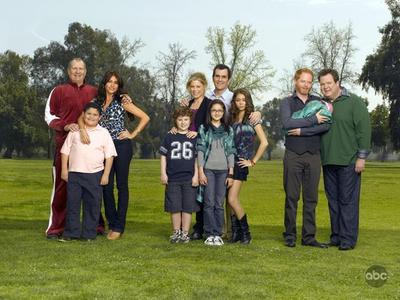
I’ve been feeling like I missed the boat on Modern Family, having pretty much ignored it last season. But since it made such a great showing at the Emmy’s and sounds like it’s here to stay, I figure I check out this pilot. If you haven’t watched it yet, maybe this will help fill you in, too.

The show opens in sit-com 101 mode, with a family starting their day with breakfast in the kitchen. It hits you with a good guffaw right at the top. The dad is yelling for the kids, and the daughter enters with, “Why are you guys yelling at us when we’re way upstairs? Why don’t you just text us?” After that there’s a bit about the daughter’s skirt being too short and the parents having baby oil on the bedside table. These may not be the most original jokes we’ve ever heard about offspring and ‘rents, but they’re delivered pretty fast and furious. This show isn’t going to waste our time. Continue reading

Cleopatra 2525

This show, which could have been called “Boobs in Space,” was brought to my attention by a former roommate who watched it to fill up the space between Baywatch episodes. It is so campy and awful, I was delighted to find it on Hulu. What I didn’t remember was that one of the main three actresses is Gina Torres, Zoe from Firefly!

You have to hand it to these writers—they need all of a minute and a half to show us just what a  joyride in the cheesmobile we’re in for. We open on an interior shot of the now-dilapidated Sistine Chapel. Shot of a bunch of hot people in really skimpy, “futuristic” looking out fits. Some talk about going to “the surface.” A disembodied voice prodding them to go up there. The main character snapping her buggy-looking goggles into place, saying defiantly, “Let’s do it.”

Here’s the premise: a woman in 2001 went in for a boob job. Something went wrong with the anesthesia, and she was cryogenically frozen until they could find a cure (for anesthesia?) She is now waking up—spontaneously—in the year 2525. She’s been brought to a medical lab that looks like something out of Barbarella to be harvested for spare organs, wearing a costume reminiscent of the chick in The Fifth Element. Oh, and spoiler alert, she’s a stripper.

Before we meet our heroine, Cleopatra (Jennifer Sky – who?), we follow her soon-to-be new BFFs, Helen and Sarge (Victoria Pratt), in battle. They tromp around underground in the most uncomfortable looking space armor I’ve ever seen. Their cleavage, midriffs and legs are in some serious danger should a laser battle take place. By the end of the first scene the man has turned on the women. They discover him to be a cleverly-named “betrayer robot.” Clearly the women are the only heroes here, nothing unexpected in the era of Xena Warrior Princess.

The enemies in this underground future are robotic creatures called bailies. Before they get to the level boss, though the women still have to fight off the betrayer bot. He’s got laser vision that makes Superman look like a punkass. Defeating him involves some snazzy moves designed to show off the women’s hot bods. After that, Cleo attacks Sarge for no discernable reason other than that chick fights are hot.

When Sarge asks Cleopatra, “You’re very concerned about the way you look, aren’t you?” you have to laugh. And hope that the show’s creators are not actually taking this stuff seriously. The plot of this particularly story is resolved pretty easily, thanks to a handy talent of Cleo’s that has nothing to do with her cleavage. Aaaand, by the end of 22 minutes everyone is happy and ready to fight evil together. Cleo is surprisingly accepting of her circumstances. So if she’s not going to take this seriously, why should we? Answer: we shouldn’t. If you abandon all sense of reality and logic, you might have fun with this show.

IKEA Heights

Sometimes a new show is wonderful just for its weirdness. Just hearing the background of IKEA Heights  (created by Channel 101) got me saying, “must watch!” A group of young, enterprising filmmakers and actors shot a mini soap opera for the web in IKEA. Genius! You’ve got all your sets right there: bedrooms, kitchens, a restaurant. The best part however, is that they did it during regular business hours without IKEA knowing what was going on. They’re already my heroes. This may or may not have been inspired by a scene in 500 Days of Summer, but it’s pretty original.

The show begins where any melodrama should; in bed. A couple wakes up, they have some words. The words aren’t that important. There’s some tension in the relationship, blah, blah. The important thing about the scene is to get your head around the setting. The guy is in his clothes. The lighting is awful. There’s one of those signs on the bedside table telling you how much the Frngl costs.

The opening credits are fun, too. If you’ve ever shopped at IKEA you know the sights, from the Japanese ceiling lamps to the posters of meatballs. The filmmakers take advantage of all the possible “sets,” with moving on to a kitchen scene, where no water flows from the tap, to an office where the desk is clearly priced at $300, and then the pillow department, which stands in for a factory.

The main character is James, and he’s got some pretty big problems. His glamorous wife is cheating, he’s not doing so well at work, and he’s got a missing brother. Or something. Like I said, it doesn’t really matter what’s going on. The actors enjoy every second of this, milking the silliness for all it’s worth. The show wouldn’t work any other way. There actually is a plot, too, complete with a cliffhanger ending enticing us to keep watching. This is the kind of thing that wouldn’t exist without the web and the whole DIY ethos it brings.

Web Therapy

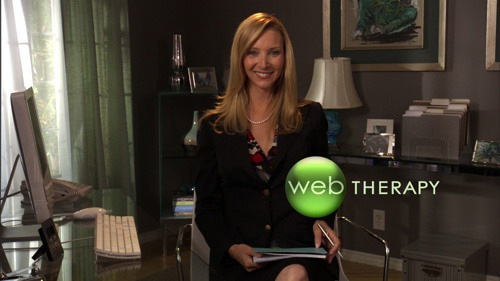
When Lisa Kudrow first looked at the camera, smiled her patronizing smile and said, “Hi, I’m…” I swear I thought she was gonna say “Regina Phalange.” It’s always an adjustment to accept an actor we’ve watched for a long time as one character, as another. And this Fiona Wallace character has the air of Phoebe Buffay putting on her Regina alter ego. In other words, she’s not exactly natural. But that’s not the idea. This pilot lets us know immediately what tone it’s going to take.

We see the desktop of Fiona’s computer as she gets to work conveying the show’s premise. She is a therapist (legitimate?) treating people via the web in three-minute sessions. The pilot is actually seven minutes long which, when we’ve been prepared for three, feels a bit long. The funny thing about media made for the web is we demand brevity.

Visually, it’s super simple, and it’s really just one joke. Fiona is treating a nerdy man named Richard. They greet each other with “it’s so nice to see you,” etc. even though it’s the first session, so we’re prepared for a history. It slowly comes out that they’ve had a relationship, possibly romantic. Each has his/her own perception of past events though, and both are a little nuts, so we’re not sure whose version of reality to buy.

Based on this first episode, the premise seems thin for an ongoing show, but somehow it’s in its third season. I haven’t watched to find out, but hopefully a season arc emerges, keeping the viewer coming back. Perhaps we haven’t seen the last of Richard; but how much sexual tension can you build showing two characters who aren’t even in the same room? Web shows tend to figure these things out as they go.