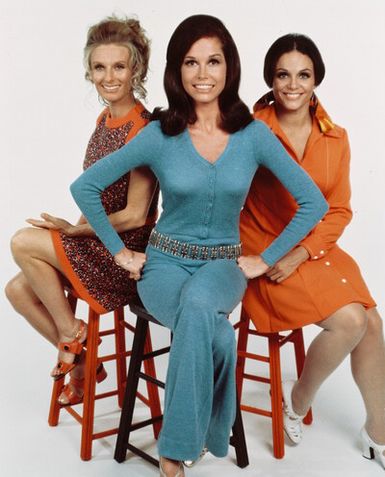
Mary Tyler Moore

Mary Tyler Moore, a.k.a The Mary Tyler Moore Show is considered to be such a seminal work of television that I’m a little embarrassed to admit that I had never seen it before. In my defense, I wasn’t born yet when it came on the air. But, it turns out, the show is so relevant and, for lack of a better word, timeless, that it is thoroughly worth watching in 2011. Apart from the landline phones and typewriters dotting the set, it could be a show currently on the air. Even the clothes don’t look dated.

The show opens with the theme song–no cold open–and that sequence lays the basis; our protagonist is moving to a new city to make a new start, on her own. We meet the thin and stylish Mary Richards as she arrives to look at an apartment. Showing her the real estate is friend Phyllis (Cloris Leachman–OMG, that’s Maw-Maw!), with grade school-aged daughter Bess in tow. We learn that Phyllis lives downstairs while a woman named Rhoda, who Bess calls Aunt Rhoda, lives upstairs. Rhoda herself (Valerie Harper) is revealed a moment later, positioned from the start as a foil to Mary.

Phyllis is charged with the task of telling the audience Mary’s story, by telling it to Rhoda. For two years, Mary supported a doctor named Bill through his medical residency, only to find him unwilling to get married. A lot is implied with this story, both about women’s expectations of marriage in general, and about Mary as an individual. Even today some women might expect a marriage proposal as a given after two years of dating, in one’s late 20s. (It hasn’t yet been mentioned at this point in the episode, but Mary is 30.)

Mary’s decision to walk away rather than wait around could be given a great deal of discussion–about how it’s brave, liberated, self-respecting, or whatever. But they don’t waste time on that. And it although it may have been an unusual move in 1970, it’s been considered a worthy premise for introducing a strong female character ever since. (Rachel on Friends, Grace on Will and Grace, and Penny on The Big Bang Theory are positive examples. In the pilot of the more recent Happy Endings, the runaway bride character is treated more like a foolish bitch, while we side with the groom.) We could also look at Mary’s actions as petulant; if she can’t have a diamond ring she doesn’t want anything. However, any doubts about Bill’s worth as a partner are put to rest when we meet him later in the episode. He brings Mary stolen flowers and is generally oblivious to her feelings. The breakthrough was that this single female protagonist was a first. Now that it’s more common, it’s no less interesting.

Mary’s home life forms one half of the show’s world, while her new workplace forms the other. She arrives at a the studio of WJM-TV News to interview as a secretary, a job that has already been filled. The boss, curmudgeonly Lou Grant (Ed Asner) whisks her into his office to conduct an interview anyway. His inappropriate line of questions–How old are you? What’s your religion? Would you like a drink?–at first seem to be a sign of the times, ala Mad Men, but then Mary points out that his questions are illegal.

The character of Lou could have come off kind of skeevy, even intimidating, but instead he seems like kind of a teddy bear with a gruff exterior. He shows up at Mary’s house drunk and even though Mary suspects he’s hitting on her, it doesn’t really look that way to the audience–today’s audience, at least.

Mary gets the job of Associate Producer which, Lou tells her, pays $10 less a week than the secretarial job she came for.  “If you can get by on $15 less a week, I’ll make you Producer,” he says.” “No, no,” she says, “I think all I can afford is Associate Producer.” The humor flows naturally from the conversation this way. On my first viewing I didn’t even notice the laugh tracks — a sign that the jokes are genuinely funny. This one example of dialogue also illustrates Mary’s cheery outlook and, as Lou puts it, “spunk.”

There is no clear set-up for a love interest here, a staple of the modern sit-com. If this were done today Mary would no doubt have a gorgeous buy exasperating neighbor who she instantly hates. Instead, the Mary-Rhoda relationship fills this need, a much more interesting choice that  allows much room for exploring the lives of single women in the city. They continue to fight over the apartment throughout the episode, but the groundwork is there for a true friendship. “You’re really a hard person to dislike,” Mary tells Rhoda, who comes back with, “I’m having a hard time hating you, too.”

Clearly audiences found the whole cast lovable. Lou, Rhoda and Phyllis all got their own spin-offs. You can see why right from the start.
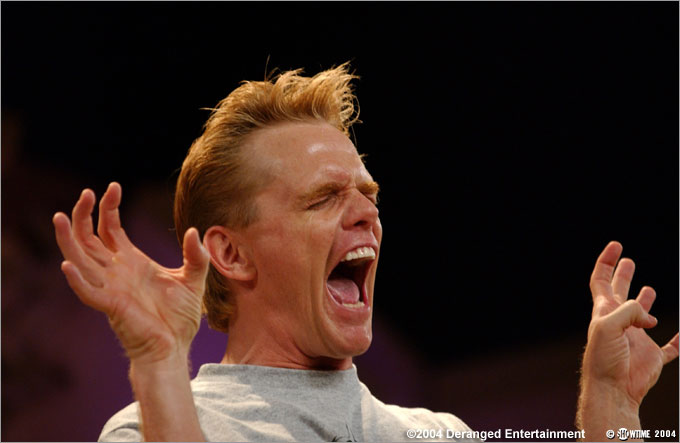
Titus, or Picking your Pilot

When comedian Christopher Titus got a development deal for a sitcom based on his stand-up routine, “Normal Rockwell is Bleeding” it could have been a slam dunk. Instead, his show “Titus,” despite getting decent reviews was cancelled after 3 seasons and some shark-jump-type changes that are usually a telltale sign of a show on the bubble.

(UPDATE: Please see Christopher Titus’s comment below. Network politics were to blame for the cancellation. And lest it seem that I didn’t like the show… I LOVED it. Just thought that first episode wasn’t representative.)

To say his routine is based on his true story of growing up in a dysfunctional family would be an over-simplification. Every comedian grew up in a dysfunctional family. But shows based on stand-up tend to be about family life, with relatively unattractive guys being nagged by better-looking wives and obnoxious kids, with love winning out over all manner of adversity.

In Titus, which debuted in March 2000, Christopher is a single guy still shell-shocked from what he’s been through with his insane family. (“Not as in, ‘your mom is insane,’ but as in, ‘We the jury find the defendant…'”)

It is remarkable when someone like Christopher Titus can not only survive what he went through but embrace it. If you don’t know the whole story watch “Normal Rockwell,” but suffice it to say his dad was the worst imaginable role model and his mom killed her husband and then herself. The series focused primarily on Titus’s relationship with his father, Ken, played with no redeemable qualities by Stacy Keach. His younger brother Dave (Zack Ward) is something of a sidekick, while his friend Tommy (David Shatraw) and girlfriend Erin (Cynthia Watros) round out the cast.

Word is that Titus wanted the episode “Dad’s Dead” to be the pilot. In watching the episode that actually aired as the pilot “Sex With Pudding,” you can see where the show may have gotten off on the wrong foot. It’s freaking awful. In the end, however, the show was cancelled for being too edgy. So maybe the blandness of “Pudding” was an attempt at a safer choice. It makes one wonder how it’s decided in what order a show’s episodes will air. Except in a show where the pilot involves heavy exposition and character introduction, there is some choice available. The first episode of Firefly to air was “The Train Job,” a great episode but not the “pilot.” Could a different choice have changed that show’s fate?

But back to “Sex With Pudding.” Isn’t that an awful title? The episode is not, like most of the others, set in the Titus household, the scene of so much of the referenced crime. It’s not about Christopher’s dad, or about his family at all, aside from the fact that his brother is always hanging around. It’s a stereotypical sitcom story about a jealous guy who thinks his girlfriend is cheating. It opens, as does every episode, with Titus talking directly to the camera in a dimly lit, sparsely furnished room. He talks to the camera about trust. His inability to trust, thanks to his parents, affects his relationship with Erin. But although trust is the theme of the episode, if you will, it’s a story we’ve seen a million times.

Most of the episode is set in Erin’s workplace, a bland office environment that might as well be Veridian Dynamics or Dunder Mifflin. Christopher makes an ass of himself going down there to try and gather evidence. Erin soundly reprimands him in a series of exchanges that tells us nothing about their relationship. And the big twist is, the person who has a crush on Erin, the person calling themselves “Pudding” is a woman. Shock me, shock me, shock me.

By contrast the episode “Dad’s Dead” captures the personality of the show. Christopher opens it with, “The Los Angeles Times states that 63% of American families are now considered dysfunctional. “That means we’re the majority.” He goes on to explain, “Normal people terrify me. They haven’t had enough problems in their lives to know how to handle problems when they come up.” And that’s really what makes him a good “character”–he’s been through some shit and come out stronger.

Titus arrives at the home his dad and brother share to find Dave freaking out. Dave thinks their dad may be dead since he hasn’t emerged from his bedroom for a beer in four days. See, that’s funny. Things get a little scattered midway through, when we meet a nurse that Ken is nailing, but that’s kind of a good thing. It’s not formulaic, and nothing is resolved by the end. Titus is just going to keep on living this life because it’s what he knows. And it will keep on making us laugh–and cringe a little, too. Would anything have been different if “Dad’s Dead” were the pilot?

100th Post: It All Started with a Big Bang

It wasn’t really The Big Bang Theory that inspired me to start this blog; it was Studio 60 on the Sunset Strip. But for my 100th post I wanted to write about a show that I really, really love but for some reason hadn’t written about yet.

Actually there is a reason. I’ve been holding out hope that I would someday get to see the unaired pilot and blog about that, but Chuck Lorre isn’t letting that particular Schroedinger’s cat out of the bag/box. In our minds it will remain simultaneously great and terrible.

…except for the cold open, available on YouTube here: http://youtu.be/jftzOTnB30I (No embed code, for some reason.)

Like the opening scene of the aired pilot, it’s set in a high I.Q. sperm bank, and the dialogue is similar. The main difference is that here, Sheldon Cooper (Jim Parsons) and Leonard Hofstadter (Johnny Galecki) have already made their “deposits,” while in the aired pilot they have a change of heart and leave. Personally, thinking that they couldn’t go through with it makes me like them a little better.

Even in the aired version, this scene feels tacked on, and a few things don’t quite fit with what we now know of the characters. Leonard makes a masturbation joke to Sheldon: “You’re a semi-pro.” (Sheldon? Really?) And donating sperm just isn’t the sort of thing Sheldon and Leonard would do. They never seem to lack for money and Sheldon seems incapable of anything remotely sexual. And Leonard just acts like a jerk telling the receptionist the answers to her crossword puzzle–sure, he’s smart but he’s not a jerk. (Weird trivia: both Parson’s and Galecki’s fathers died in accidents.) 

Once you get past that scene, however, the show comes to life. As the guys trudge up the three flights of stairs past the forever broken elevator in their apartment building, they get a glimpse of the beautiful, tan blonde (Kaley Cuoco, previously the jump-the-shark character addition on Charmed) unpacking in the unit across the hall. A lesser show would have had them do something like trip and fall or stutter when they talk to her. Instead, Leonard extends a heartfelt but off-kilter greeting.

In the original the guys meet a girl on the street—rather than a new neighbor— and let her stay with them. I can’t see them sustaining that plotline for very long. Perhaps the plan was to have the girl eventually take the apartment across the hall.

And who doesn’t love the theme song? It was almost “She Blinded Me with Science,” but the Bare Naked Ladies’ recitiation of the formation of the universe is infinitely more satisfying.

Many of the show’s recurring elements are introduced in the pilot: Sheldon’s spot on the couch, the broken elevator, Leonard’s previous relationship with Joyce Kim (who we later learn was a North Korean spy), and Raj’s inability to talk to women. Also, Sheldon wears a Flash T-shirt, the first in a collection.

One of the great things about TBBT is Penny isn’t just an empty-headed blonde bimbo, though unfortunately this is how she comes across in the pilot. Her reference to astrology acts as short-hand for “she’s a ditz” while her bangs give her a little girl look that she outgrows as the character develops. She even seems to talk in a higher voice than normal. Sheldon, on the other hand, is a little too astute about sexual proclivities. He knows Leonard’s intentions almost before Leonard does.

Raj (Kunal Nayyar) and Wolowitz (Simon Helberg) are introduced about midway. Their characters are fairly one-dimensional and would remain so for at least a season. That goodness they’ve come so far! In hindsight it’s kind of hard to believe that Chuck Lorre, the creator of such douchebags as the Harper brothers also created such loveable characters.

Though Sheldon and Leonard are introduced with equal weight, it’s suggested that Leonard is the one most desiring to sleep with Penny and is thus assumed to be the protagonist. As the show has progressed, it could be argued which one of the guys is actually the star. Sheldon continues to grow as a person, in the meantime garnering Emmy nominations for Jim Parsons, while Leonard has a followed a typical boy-pines-for-girl-gets-girl-then-loses-girl trajectory. Sheldon makes the show. Even on their Comic-Con panels, Parsons tends to grab the spotlight.

Throughout the episode the geek jokes abound, ranging from Klingon Boggle and Luke Sykwalker shampoo to complex equations worked out on a whiteboard just for fun, complete with jokes that no one without a Ph.D. would get. This stuff is just the icing on the cake, though. Although a good portion of us fans are no doubt geeks, the truth is most of us are somewhere in between the guys and Penny on the genius spectrum. We might have Lukeskywalker shampoo (or want some – do they have that at Rite Aid?) but we probably didn’t build anything that’s currently orbiting a moon of Jupiter. If you did, mad props.

…math, science, history, unraveling the mystery that all started with a big bang. (Bang!)

Lovespring International

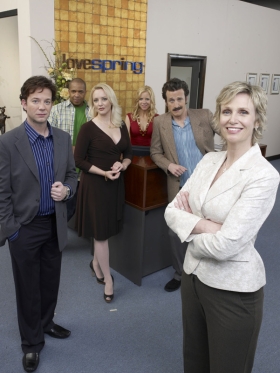
jane lynch lovespring internationalWe’ve probably had enough of the mockumentary format for TV shows. We had probably already had enough of it in 2006 when Lovespring International ran for one basic cable-length season. But damned if it doesn’t make a handy format for introducing all of your characters in a pilot.

The trick is to capture the essence of each character in a just a handful of lines. If you go back to the pilot of The Office and look at Pam’s face when she says, “Jim said mixed berry?” you witness a real where-it-all-began moment. But I digress…

Lovespring International was produced by Eric McCormack of Will and Grace (who guest stars in ep. 2). It was partially improvised and features a cast familiar to fans of improv/sketch comedy. We are introduced to Lovespring International, elite Beverly Hills dating service (located in Tarzana, CA) by each member of the staff telling us what they do.

Victoria Rachford (Jane Lynch) is founder and CEO. Burke (Sam Pancake) claims to “run the place.” Lydia (Wendi McLendon-Covey, of Reno 911 and more recently the inappropriate mother from Bridesmaids) is a Relationship Consultant who asserts that she can find a match for anyone and assures the viewer that she is “married in her heart” to her partner of 20 years. Steve (Jack Plotnik, also of Reno 911), the company psychologist doesn’t mince words about his job saying he is “in charge of weeding out the crazies.” Alex (Mystro Clark) directs client videos, making people appear hotter than they are. Tiffany (Jennifer Elise Cox) is the whiny blond receptionist smacking her gum. Burke reminds us repeatedly that he is in charge of all of these people–we see more of him than anyone else.

All of these introductions might be an effective way to introduce characters quickly, but it feels a bit like spoon-feeding the viewer. Introducing the characters this way tells us a couple of things: It’s going to be an ensemble effort. The workplace is going to be a constant battle of egos. And the irony is going to stem from a bunch of so-called relationship experts who suck at relationships.

The meat of the episode happens as the agency’s top gold-level client files a complaint that too many men are falling in love with her. Victoria, learning that the agency is in danger of losing a major client, threatens to fire someone if they don’t save the account. Lydia comes up with a plan, which Burke co-opts as his own and then turns into a disaster with the assistance of Alex and plenty of booze.

The character we get the least time with, regretably, is Jane Lynch’s Victoria. She is just returning from a vacation in this ep. and it’s looking like her repeated absences are set up to become a bit.

The whole show has a sketch comedy feel that prevents the viewer (me, at least) from feeling really invested in the characters. Maybe it’s the improv element, the mockumentary format, or maybe it’s just the actors’ clowny make-up. It feels like, perhaps they might have grown on you over enough time. The Office felt really weird and cartoonish in the beginning (and the pilot wasn’t well-received), but after a couple of season you could say stuff like, “That is so Dwight.” Maybe the Lovespring crew could have grown on audiences if they had been allowed to hang around long enough.

Archer

You can literally blink and miss things in this pilot*. Watch it twice. Or three times. First just let the absurdity of the situation wash over you, then go back and soak up all the sight gags and the often casually tossed-off hilarious dialogue. Then absorb the animation; it’s amazing, with remarkable depth of field and subtlety of facial expressions. In the scene where Archer is eating breakfast, pause it and just look at the detail of the food on the table; it’s gorgeous.

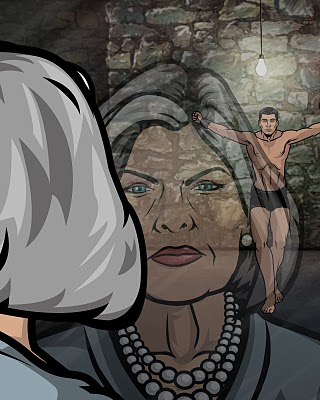
The first moments of the pilot give you the idea you’re watching something really dark. Our hero, Sterling Archer/code name Duchess (H. Jon Benjamin), is about to be tortured for information by an old guy with a vaguely Russian accent and a golf cart battery. But the female face that appears on the far side of the observation window looks far more intimidating.

Thus we have our set-up. Archer is a super spy who works for his mom (Jessica Walter). As evidenced by their first scene together, they’re a solidly matched in toughness, narcissism, and vitriol.

Acher’s uniqueness is its successful mash up of spy action with workplace comedy. It’s like if the chick from Alias went to work at Dunder Mifflin. At ISIS, we get pithy axioms like, “When your co-workers put food in the refrigerator, that’s a bond of trust.” They worry about expense accounts and break room etiquette.

Natch, there’s intra-office schtuping. Archer used to date machine gun-toting uber-bombshell Lana (Aisha Tyler). They broke up over–you guessed it–his mommy issues. This woman scorned is now with Cyril (Chris Parnell), who has no earthly business dating the likes of her. He is so painfully dull that his scene with Archer is literally the only boring moment of the episode.

Archer is sleeping with the secretary, Cheryl or Carol. He can’t get her name right. Remember that–the joke lasts beyond this episode.

Archer pretends he thinks there’s a mole in the office, as a ploy to gain access to the ISIS mainframe. When he is forced to break in, he reveals how painfully inadequate the company’s security is. It turns out there is a mole in the office and he is only caught by complete accident.

This thing is just packed with oddball lines ranging from the unexplained “that thing with the mayonnaise” to the twice-used “Johnny Bench called.” (Look it up. I had to.)

The pilot gives a taste of what every episode will be about; It’s not that the agents are complete bumbling idiots. That would be too easy. They’re totally cool and skilled, it’s just that their extreme self-interest blinds them to half the stuff going on around them. And they hate each other, but it’s as a team that they somehow win the day.

And, whether Archer loves his mother or hates her, he does so too strongly to be healthy. At any rate, they’re eerily alike from their piercing blue eyes, revealed in the pilot’s first moments, to their peculiar vehemence about ants, revealed in the last.

*This is actually episode 1.1, “Mole Hunt.” There is an unaired pilot available on DVD through Amazon.

Pilot Titles

How well do you know the titles of episodes of your favorite shows? Do you even give them a thought? Some shows get pretty creative. Some naming conventions are discussed here.

Pilot episodes are usually just called “Pilot,” possibly because the creators don’t know quite where the show is headed. But some shows have really cool pilot titles. Often, titles are added after the fact, possibly when the show is released on DVD.

Here are some of my favorite pilot titles I’ve come across. See if you can guess what shows they belong to. Answers are after the jump.

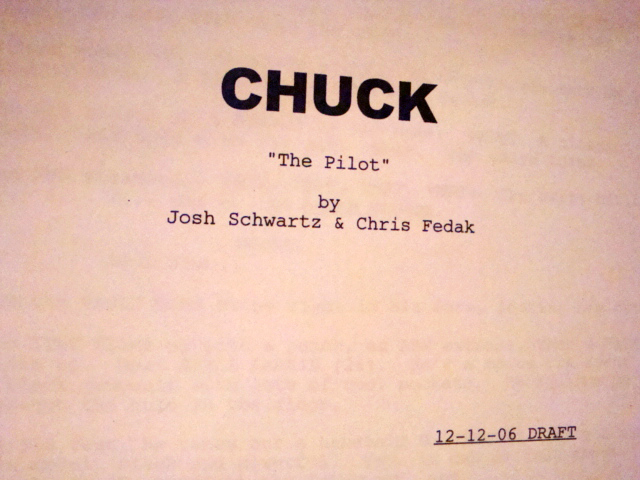
  1. Chuck Versus the Intersect
  2. Welcome to the Hellmouth
  3. Simpsons Roasting on an Open Fire
  4. Pie-lette
  5. Genesis
  6. Days Gone Bye
  7. Space Pilot 3000
  8. The One Where Monica Gets a Roommate, a.k.a. The First One
  9. Sex and Violence (actually a second pilot, whatever that means)
  10. Everybody Lies

Continue reading

That ’70s Show

That ’70s Show has recently started airing on TeenNick, introducing the decade when we didn’t know Vader was Luke’s father* to a generation that wasn’t born yet, so it’s due for a look. Also, star Laura Prepon has been cast in the forthcoming Are You There Vodka, It’s Me Chelsea, so in case you need a reminder who she is…

The official Episode 1.1, which aired in August 1998, is about Eric Foreman (Topher Grace) inheriting his parents’ Vista Cruiser. I’m convinced there was another first episode, an actual pilot, before this. Am I crazy? I remember the pilot as an episode about Donna’s (Laura Prepon) parents going out of town and a rivalry between Eric and Hyde (Danny Materson) for Donna’s affections. And Donna had a younger sister who was never seen again. It felt very pilot-y, like the writers didn’t quite have a handle on the characters yet. Even the opening sequence was a little different, possibly with a different version of the theme song. If anyone knows what in the world I’m talking about please leave a comment! Continue reading

Samantha Who?

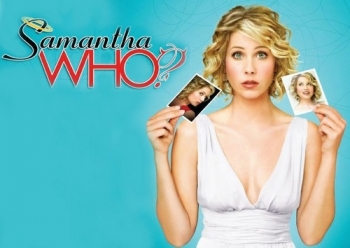
Samantha Who Christina ApplegateSamantha Who was a sit-com in which Christina Applegate played the eponymous character, but Jean Smart, who plays Samantha’s mother, steals the pilot. She opens the show with snarky hilarity not far removed from her character on The Oblongs. Samantha wakes up from a coma to find her mother, Regina, standing over her with a video camera, generating sympathy footage to win a spot on Extreme Makeover: Home Edition. “I don’t care if no one likes her. She’s my daughter,” she trills.

For a sit-com pilot, this one has quite a bit to accomplish. It has to fill us in on a good chunk of back story and essentially introduce us to two versions of the protagonist. It was also a show that built on itself, episode to episode, so the pilot had to start that momentum. It’s a comedy that’s part mystery, keeping viewers on their toes.

Samantha awakes from her coma with retrograde amnesia; she doesn’t remember anyone or anything. Overlook that cliched improbability and indulge in the fantasy the show offers–what would you think of your life if you could view it as a objective outsider? How would you fix what’s wrong with it? We already know that no one likes Samantha, thanks to Regina, but Samantha doesn’t. Her parents seem to at least be there for her, as does her boyfriend Todd (Barry Watson; Matt Camden is all grown up and smoking hot) and her self-described best friend Dena (Melissa McCarthy doing her usual spunky thing). But life is full of surprises for Samantha and, in turn, the audience.

Jennifer Esposito plays  BFF Andrea, a 180-degree switch from her character on Related (did anyone but me watch that show?), but her value as a friend is highly suspect. We first meet her as she and Regina trade punches in a hilarious scene back at the home of Samantha’s parents. The two of them are so evenly matched for understated bitchiness, they could have their own spin-off. Andrea also informs Sam that she hasn’t spoken to her parents in two years; we have to wonder if that’s by Sam’s choice or theirs.

Andrea invites Samantha out to a club and the secrets being to emerge. Each twist builds on the last. We find that Samantha has been cheating on Todd with a married man named Rene, that she actually ditched Dena as a friend back in the seventh grade, and that she can fire off scathing insults at lightening speed when provoked. Oh, and she’s an alcoholic. Martini in hand, she discovers an AA token in her purse–which says more about the kind of friend Andrea is than anything else–and bolts of to a 12-step meeting.

Barry Watson as Todd has a unique task to pull off in all this. He’s perfectly polite, but not at all affectionate with his supposed girlfriend. Their attempt at a kiss is hopelessly awkward. There are no tears of relief that his love has emerged from a coma alive and well; something is definitely off. Yet, he is fully willing to allow Samantha back into their home and demonstrates his attentiveness by reciting personal details about her like that she always sneezes three times. When Samantha asks smarmy Rene how many times she sneezes, he reacts with fear of catching something. So, we’re set up to root for Todd. However, we find out near the end that he broke up with Samantha just before her accident. It’s probably for good reason, based on what we’ve learned of her so far. That leaves us with our season-long question, will they get back together?

The show did well in its first season but viewership dropped off in the second because, really, how long can you believably sustain an amnesia story? By the end of the pilot Samantha has already had one flashback, from the day she and Todd met as she stole his double latte at a coffee shop. Pieces of memory like this are destined to continue episode after episode. The pilot leaves us wondering what else will pop up. It also goes out on a high note with a great Jean Smart moment.

Here’s a video of Jean Smart talking about the show.

Bewitched

The creator of Bewitched, Sol Saks, who passed away last week, wrote only the pilot before moving on to other things. The show would go on to run eight seasons and then live on in syndication, later spawning a best-forgotten movie in 2005. Shows from Charmed to Mad Men can be said to have roots in Bewitched. So old Sol did pretty well for himself with this one script.

Bewitched is the story of married life between a witch and her mortal husband, with ongoing meddling by her mother. The pilot falls back on the crutch of having a disembodied voice narrate the back story, rather than having it unfold naturally. In this case, the latter choice might have worked better, because it almost feels as if these two characters just woke up married. We first get to know the beautiful blond Samantha (Elizabeth Montgomery) and her nerdily handsome ad exec husband Darrin (Dick York) on their wedding night. Somehow, they’ve made it this far without him discovering that she is a witch, or apparently, meeting each other’s families or friends.

It’s not a particularly original premise. Saks admitted to taking inspiration from the play/movie “Bell Book and Candle.” Supernatural families were familiar small screen territory, with The Munsters and The Addams Family premiering the same year.

As Samantha primps in the bedroom of the honeymoon suite, we first see her use her powers to levitate a hair brush. It’s not a bad special effect for 1964. Samantha’s mother appears out of thin air to reprimand her for getting married and attempt to take her away. The mother, Endora (Agnes Morehead), establishes herself as a strong female character, but what else would you expect from a witch? The stereotype of the ugly old hag in a pointy black hat is acknowledged and tossed out with humor. Samantha demostrates equal strength by standing up to Endora, insisting on staying with her new hubby. These are real witches, the show seems to say. (But no recitation of the Wiccan rede.)

Any flicker of feminism is soon extinguished, however. Once Darrin adjusts–with the help of no more than a couple of drinks and the dismissal of his skeptical friends–to Samantha’s witchhood, he basically tells her it’s all good, so long as she learns to cook and keep house. Toward the end, Samantha hints that she will not be without the aid of magic in completing her domestic chores, so there’s the hook to keep the audience coming back. She apparently plans to keep her magic use under her non-pointy hat while her husband remains oblivious. Nice, healthy marriage. We know to expect lots of intereference from Endora, too.

The rest of the pilot plot revolves around a jealous bitch of an ex-girlfriend who invites the newlyweds over for dinner. Man, she’s a bitch. The irony of the non-witch being the evil one here isn’t subtle. Samantha takes her revenge, however, to Darrin’s disapproval. We can see Darrin isn’t going to approve of much. That’s okay, he’ll eventually be recast in one of TV history’s most well-known shark jumps.

Here are ten fun facts about Bewitched.

The Fresh Prince of Bel-Air

The Fresh Prince of Bel-air hardly needs a pilot to introduce its premise. It’s all right there in the theme song. C’mon, you know the words: “Now this is the story all about how/My life got flip-turned upside down…”

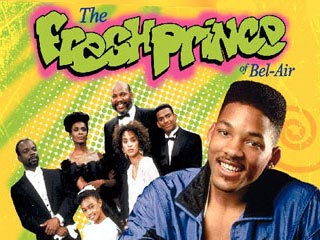
The pilot opens exactly where the intro leaves off, with the ridiculous-looking Fresh Prince, who we know today as alien-and-zombie-busting Will Smith, standing on the columned porch of his Uncle Phil’s giant house, fresh (no pun intended) from West Philadelphia. When the door is answered, Will mistakes the butler, Geoffrey, for his uncle. Has he never met this uncle before? But point taken–Will has never encountered the sort of wealth that employs “help” before.

The Fresh Prince debuted in 1990 but the 80s were still hanging around like a neon fog. The garish colors, the bad sweaters, and the shoulder pads–dear lord, the shoulder pads–are everywhere. The show goes to such lengths to contrast Will’s colorful, goofball ways with the austerity of Bel-air as to be ridiculous. Will can hardly get through a sentence without employing slang like “def” and “dope.” He’s claims to be “street,” as evidenced (I guess) by a Malcolm X poster in his room. But the contrast is more one of pop culture meets high culture than one of poverty meets wealth. Even if it is always sunny in Philadelphia, I just don’t see this cheerful, neon yellow-clad teenager busting a cap in anyone’s ass on its mean streets.

Members of the Banks family parade in one at a time, offering the audience a chance to digest each one. Uncle Phil (James Avery) is a no-nonsense lawyer who wears suits, apparently, just to hang around the house. Aunt Vivian (Janet Hubert Whitten) is gracious and warm. Oldest sibling Hilary (Karyn Parsons) breezes in demanding $300 for a new hat to wear on as Save-the-Ozone celebrity bus tour. Little sister Ashley (Tatyana Ali), clad in a private school uniform is sweet and adorable, and destined to be the only one Will can immediately connect with. (Total side note: Karyn Parsons and James Avery will be reunited on-screen this summer in the new Transformers movie.)

Carlton, played by Alfonso Ribiero is saved for last. He’s something of a vertically-challenged Ken doll, representing the polar opposite of Will. When Will looks into a mirror and imagines his reflection to resemble Carlton’s, a turning point in the episode is reached, and the show’s conflict introduced. Will will not let himself be turned into a Banks.

The rest of the episode revolves around a dinner party where Uncle Phil is entertaining colleagues. It’s suggested that he’s not such a bigshot as he wishes to be–it seems neighbor Ronald Regan has turned down his dinner invitation. Will takes the party by storm, donning the suit pants and jacket he was given in combination with the world’s most hideous tanktop and a hat that I’m pretty sure I got free with purchase at a Wendy’s in 1988. Although we’re supposed to be rooting for Will, it’s hard not to be embarrassed for him in a Michael Scott kind of way. Sparks fly, naturally, and Uncle Phil is furious.

The final scene takes a serious tone that one might expect from a “very special” episode. Will and Uncle Phil find some common ground in their admiration for Malcolm X and learn you can’t judge a book by its cover. It’s kind of sweet, and sets us up for lots of complications to last four seasons. After which the show was cancelled. Before being picked back up for two more seasons. So as ridiculous as it seems, the show certainly found an audience. We have to wait until episode 2 to meet Jazzy Jeff, though.